
AI Theft Controversy: 'This is Fine' Creator Takes Action Against Artisan Startup
TL;DR
- KC Green, creator of the viral "This is Fine" meme, has accused AI startup Artisan of stealing his artwork for a subway ad campaign promoting their AI sales tool without permission or licensing.
- Green is pursuing legal representation and has expressed frustration at being forced to navigate the court system instead of focusing on creating art, with potential precedent in similar cases like Matt Furie's settlement with Infowars over Pepe the Frog.
- The incident highlights ongoing tensions between artists and AI companies over intellectual property rights, as Artisan continues an aggressive marketing strategy that has previously sparked controversy with anti-hiring messaging.
THE UNAUTHORIZED USE: HOW ARTISAN'S AD CAMPAIGN SPARKED OUTRAGE
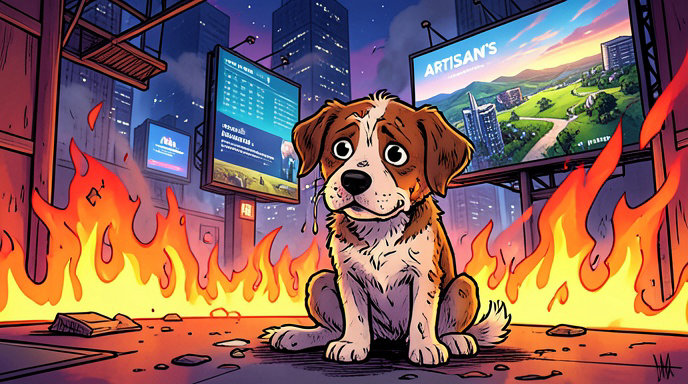
When KC Green discovered that his iconic "This is Fine" meme had been incorporated into a New York subway advertisement, he learned about it not through direct contact with the company responsible, but through social media posts from concerned followers. The ad, created by AI startup Artisan, featured Green's anthropomorphic dog character—originally published in his webcomic "Gunshow" in 2013—with altered dialogue reading "my pipeline is on fire" and an overlay promoting "Ava the AI BDR," Artisan's AI-powered sales representative product.
Green immediately took to Bluesky to express his frustration, confirming that the use was entirely unauthorized. "It's not anything I agreed to," he stated. "It's been stolen like AI steals." His response reflected not only the violation of his intellectual property but also the broader implications of how AI companies operate in the creative space.
THE COMPANY'S RESPONSE: RESPECT WITHOUT ACCOUNTABILITY
When contacted by media outlets about the unauthorized use, Artisan's response was notably brief. The company stated it had "a lot of respect for KC Green and his work" and claimed to be "reaching out to him directly." In a follow-up communication, the company indicated it had scheduled time to speak with Green.
However, this statement conspicuously lacked any acknowledgment of wrongdoing, apology, or indication that the advertisements had been removed from circulation. For Green, the response felt hollow—a public relations gesture rather than genuine accountability for using his art without permission, license, or prior notification.
ARTISAN'S PATTERN OF PROVOCATIVE MARKETING
This incident does not exist in isolation. Earlier in 2026, Artisan launched billboards instructing businesses to "Stop hiring humans." Founder and CEO Jaspar Carmichael-Jack defended that campaign by arguing it targeted "a category of work" rather than people themselves. The "This is Fine" meme appropriation appears to be part of a deliberate strategy of aggressive, boundary-pushing marketing designed to generate attention and controversy.
The pattern suggests that Artisan may view copyright violations and provocative messaging as acceptable costs of doing business in a competitive AI market—a calculation that has now directly collided with an artist unwilling to let his work be exploited without consequence.
GREEN'S LEGAL PATH FORWARD
Rather than accepting Artisan's vague promises of dialogue, Green announced he is "looking into legal representation." The decision came with evident frustration. He expressed dismay at having to "try my hand at the American court system" when that time could be invested in his passion: "drawing comics and stories."
This situation has precedent. Cartoonist Matt Furie pursued legal action against conspiracy theory outlet Infowars for unauthorized commercial use of his character Pepe the Frog, ultimately reaching a settlement. Legal experts note that the Furie v. Infowars case established a floor of approximately $15,000 for this category of intellectual property violation, providing a framework for potential damages in Green's case.
THE BROADER IMPLICATIONS FOR ARTISTS AND AI
Green's situation exemplifies a critical tension in the modern creative economy: as AI companies scale rapidly and seek to establish market presence through bold marketing campaigns, they increasingly appropriate existing creative works without permission or compensation. The ease with which Artisan could modify and deploy Green's meme—a work that has become embedded in internet culture—underscores how AI and digital reproduction have fundamentally altered the landscape for artists seeking to control and monetize their creations.
The incident also raises questions about corporate accountability. Artisan's initial response prioritized public relations over genuine resolution, suggesting the company may have calculated that a brief apology and promise to "reach out" would suffice. Green's decision to pursue legal action signals that at least some creators are unwilling to accept this dynamic.
For the broader creative community, the case serves as both a cautionary tale and a potential precedent. As more AI startups enter the market and seek attention through provocative campaigns, the question of whether artists will tolerate unauthorized use of their work—and whether legal systems will adequately protect intellectual property in the digital age—remains urgent and unresolved.

Get All The Latest Updates Delivered Straight To Your Inbox For Free!