
Meta's AI Unit Faces Employee Revolt Amid Claims of Toxic Work Environment
TL;DR
- Meta’s AI push is colliding with deep employee frustration, with current and former staff describing a workplace shaped by layoffs, performance pressure, and fear-driven management.
- Reports say the company is reorganizing thousands of employees toward AI priorities while also cutting jobs in multiple rounds, adding to morale problems across the organization.
- The unrest appears to stem from a mix of rapid restructuring, unclear mission, and intense internal competition as Meta races rivals in AI.
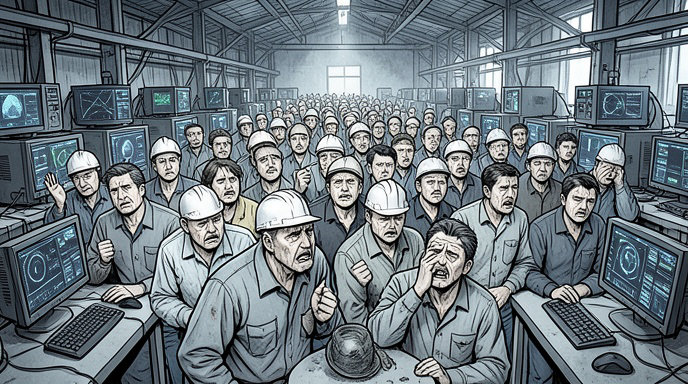
Meta’s AI unit is facing growing employee backlash as reports describe a workplace defined by layoffs, forced transfers, and low morale. Current and former staff have characterized the environment as toxic and fear-driven, while Meta continues to pour resources into AI and reorganize large parts of the company around that strategy.
A morale problem at the center of Meta’s AI push
The complaints are not limited to one team or one bad week. Multiple reports describe workers saying the company’s AI shift has created an unstable atmosphere in which employees feel pressured, uncertain about their roles, and disconnected from the mission.
One former AI researcher reportedly described Meta’s internal culture as so corrosive that it felt like a “culture of fear,” arguing that constant reviews, repeated layoffs, and unclear direction were undermining innovation and morale. Other employees have echoed that message more bluntly, describing the company as toxic, zero-sum, and dominated by internal competition over credit and project ownership.
Layoffs and forced transfers fuel the anger
Meta’s restructuring has been a major source of tension. Reports say the company eliminated roughly 8,000 jobs in one major round while shifting thousands of employees into AI-focused roles, especially in infrastructure and monetization.
The Guardian reported that more than 7,000 workers were told to move into new teams, with some assigned to AI cloud infrastructure and an internal AI agent project called Hatch. The same report said employees viewed the process as disruptive and non-optional, adding to frustration during a period when the company was already preparing broad cuts.
Workers have also pointed to the emotional toll of repeated layoffs. The Verge reported that staff were increasingly unhappy amid looming cuts and the company’s intense AI pivot, with some employees saying Meta no longer looked like a viable long-term career destination.
Why the AI strategy is generating internal resistance
Meta’s AI strategy is moving fast, and that speed appears to be part of the problem. The company has been aggressively building out AI infrastructure and recruiting talent while also trimming other parts of the business, a combination that can leave employees feeling both threatened and excluded from the future of the company.
Some workers also object to the way AI is being integrated into daily work. The Guardian reported that employees were concerned Meta may use monitoring tools that track mouse movements, keystrokes, and laptop interactions as training data for AI systems. Even if those systems are intended to improve productivity or model training, the perception among staff is that management is tightening control rather than building trust.
A pattern of pressure across Meta’s workforce
The unrest in AI is part of a broader pattern inside Meta. Business Today reported that the company’s layoff culture has been described as “unbelievably toxic” after another major round of cuts, while elsewhere employees have complained of historically low morale ahead of additional reductions.
That backdrop matters because Meta has already spent years reshaping its organization around efficiency and now superintelligence ambitions. According to the reports, the company has moved thousands of employees, cut multiple layers of management, and prioritized AI teams over other functions. For workers inside the organization, that has created a sense that job security depends less on performance than on whether their team fits Meta’s latest strategic priority.
What Meta’s leadership is trying to do
Meta’s leadership appears determined to keep the AI buildout on track. The reports indicate that the company is protecting key AI infrastructure and model teams from cuts while redirecting resources toward those areas. That suggests Meta sees the current discomfort as the cost of becoming more competitive in AI rather than as a sign to slow down.
Still, the employee response shows the challenge of running an AI-first transformation at scale. A company with roughly 6,500 people in its AI operation, or more depending on how the units are counted across reorganizations, is trying to move quickly while maintaining morale and retaining talent. The reports suggest those goals are increasingly in tension.
What happens next
For now, the most important question is whether Meta can steady its AI workforce without losing more talent to burnout, resignation, or internal disengagement. Reports of “miserable” employees, fear-driven culture, and forced reassignments suggest the company is winning speed but struggling with trust.
If the latest wave of criticism continues, Meta may face a harder problem than just employee complaints: it may have to prove that its AI strategy can produce results without further alienating the people asked to build it.

Get All The Latest Updates Delivered Straight To Your Inbox For Free!