
Revolutionizing Seafood: The Humanely Killed Fish Robot
TL;DR
- Shinkei Systems has raised $22 million in Series A funding, with Founders Fund co-leading the round to scale its fish-processing robot, Poseidon.
- Poseidon is designed to automate ikejime, a traditional Japanese fish-killing method intended to be faster, less traumatic, and better for meat quality.
- The company is pitching the technology as both a seafood-quality upgrade and an animal-welfare improvement, while also reducing labor-intensive handling on boats and in processing.
Founders Fund backs a robotic bet on better fish
Founders Fund has placed an unusual bet on seafood automation, helping lead Shinkei Systems’ latest funding round as the startup pushes a robot built to humanely kill fish and preserve quality. The company’s system, called Poseidon, sits at the intersection of robotics, AI, and traditional Japanese fish-handling techniques.
Shinkei’s pitch is straightforward: make fish processing more consistent, more humane, and more valuable by replacing a labor-heavy manual step with automation. The startup says its system is designed to bring a refined version of ikejime into modern commercial fishing and seafood supply chains.
What Poseidon actually does
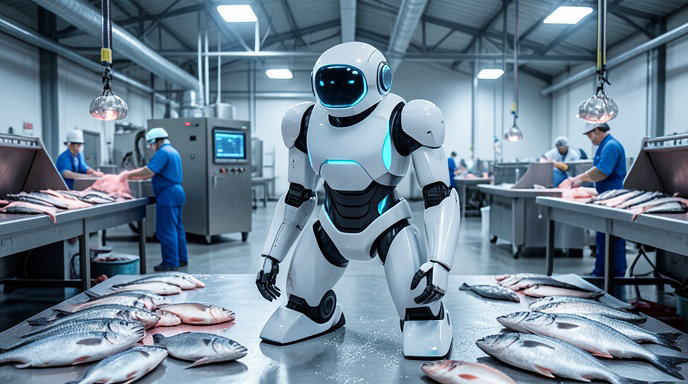
Poseidon is described as a refrigerator-sized robot that fishermen can install on vessels. Using computer vision, it scans each fish, identifies the species, and locates the brain before puncturing it and cutting the gills to bring about a swift death.
That process matters for two reasons. First, it is intended to reduce suffering by avoiding prolonged thrashing or suffocation. Second, it is meant to improve product quality by handling the fish in a way that can extend shelf life and improve flavor.
Why ikejime is central to the company’s pitch
The robot is built around ikejime, a traditional Japanese method of fish dispatch that has long been prized by chefs and seafood experts for producing better texture and freshness. Shinkei is trying to scale that practice beyond niche, labor-intensive manual use and make it practical for more commercial operators.
According to reporting on the company, the goal is not just ethical positioning but operational efficiency: a more repeatable process, less waste, and fish that can last longer from catch to plate. Some coverage says the approach can extend shelf life up to three times.
The funding round and expansion plans
Shinkei raised $22 million in a Series A round co-led by Founders Fund and Interlagos, with additional participation from investors including Yamato Holdings, Shrug, CIV, Jaws, and Mantis. The round brought the company’s total funding to about $30 million.
The new capital is expected to help Shinkei scale its robotics platform and expand its operations. The company has also been described as growing quickly and adding a larger headquarters in El Segundo, California.
The bigger industry question
Shinkei’s rise reflects a broader shift in food technology: automation is increasingly being used not only to cut costs, but to address ethics, quality, and consistency in food production. In seafood, that matters because handling after capture can strongly affect both animal welfare and the final eating experience.
If Poseidon proves reliable at scale, it could give processors and fishermen a tool that supports premium pricing while reducing some of the most labor-intensive steps in the chain. That could make humane fish killing more commercially viable, rather than leaving it as a manual specialty for high-end kitchens.
Why investors are paying attention
For investors like Founders Fund, Shinkei fits a familiar pattern: backing a technically ambitious startup that targets a large, inefficient industry with automation. The company’s appeal is not just the robot itself, but the possibility of modernizing a global seafood market that has traditionally relied on manual expertise.
The combination of AI, robotics, and seafood processing makes Shinkei stand out in a crowded food-tech landscape. And by framing humane slaughter and better taste as the same solution, the startup is betting that ethical production can also be a performance upgrade.
The road ahead
The key test for Shinkei will be whether Poseidon can work reliably in real-world fishing conditions and deliver the quality improvements the company promises. If it does, the robot could become one of the more consequential examples of automation reshaping food production from the waterline upward.

Get All The Latest Updates Delivered Straight To Your Inbox For Free!