
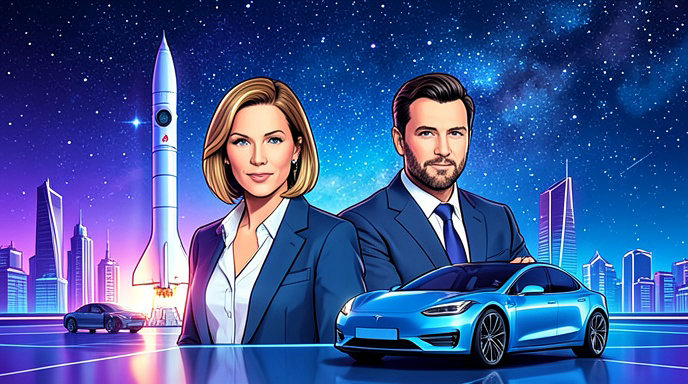
SpaceX and Tesla: The Inevitable Merger?
TL;DR
- Multiple high-profile reports from Bloomberg, Reuters, and CNBC confirm that SpaceX is actively exploring a merger with Tesla or a partnership with xAI ahead of its planned IPO in June 2026.
- Wall Street analyst Dan Ives of Wedbush Securities has raised the probability of a SpaceX-Tesla merger to 80-90%, predicting a completion by the first half of 2027.
- A combined entity would create a conglomerate worth approximately $3.4 trillion, consolidating Musk's control over rocketry, electric vehicles, AI, and social media under a single corporate structure.
SpaceX and Tesla: The Inevitable Merger?
The tech world has been buzzing with speculation for years about a potential unification between Elon Musk's two most massive enterprises: the aerospace giant SpaceX and the electric vehicle manufacturer Tesla. While past rumors often fizzled out, the current landscape in mid-2026 presents a starkly different picture. Recent reports from major financial outlets, including Bloomberg, Reuters, and CNBC, indicate that a merger is not just a possibility but is actively being negotiated.
Contrary to the prompt's mention of a statement by Gwynne Shotwell, the primary drivers of this news cycle are confidential reports from insiders familiar with Musk's strategic planning. These sources suggest that SpaceX is weighing two distinct paths: a full merger with Tesla or a strategic consolidation with his artificial intelligence firm, xAI. The catalyst for this move appears to be SpaceX's upcoming Initial Public Offering (IPO), scheduled for June 2026, which Musk aims to use as a valuation lever to facilitate a future consolidation.
The Wedbush Prediction: An 80% Probability
The most compelling evidence for an impending merger comes from Wall Street analyst Dan Ives of Wedbush Securities. In a bold research note reaffirmed in May 2026, Ives has stated that the probability of a SpaceX-Tesla merger is now between 80% and 90%. He claims that the "groundwork" for fusing operations between the two companies is already in place.
Ives anticipates that the deal could be finalized by the first half of 2027. His analysis suggests that Musk is positioning SpaceX to become a similarly sized entity to Tesla by increasing its valuation through the IPO. This strategic maneuver would allow the two companies to merge as peers rather than one acquiring the other, a nuance that could simplify regulatory approval and shareholder acceptance. While betting platforms like Kalshi show mixed odds (around 52% for a deal by May 2027), the consensus among top-tier analysts is shifting heavily toward a union.
Strategic Benefits: Why Musk Wants One Conglomerate
The strategic logic behind merging SpaceX and Tesla is rooted in efficiency and centralization of power. Currently, Musk manages a fragmented portfolio of companies, each with its own board, management conflicts, and distinct operational challenges. A merger would create a single, massive conglomerate that streamlines management, reduces conflicts of interest, and consolidates Musk's influence.
Furthermore, the two companies already share an extensive array of resources. Tesla's battery technology is critical for SpaceX's launch vehicles, while SpaceX's satellite network (Starlink) is vital for Tesla's autonomous driving data. By merging, these synergies would be internalized, potentially accelerating innovation in both the aerospace and automotive sectors. Additionally, the merger would likely include xAI, bringing Musk's social media platform (X) and his AI chatbot (Grok) into the same entity, creating a "trillion-dollar" ecosystem that covers hardware, software, and connectivity.
The $3.4 Trillion Question: Valuation and Market Impact
The financial implications of such a merger are staggering. If SpaceX and Tesla combine, the resulting entity would be valued at approximately $3.4 trillion, making it one of the most valuable companies on Earth, surpassing current leaders like Apple and Microsoft.
For Tesla shareholders, the deal structure is a critical point of negotiation. Analysts estimate a fair value equity ratio of roughly 50% to 66% for Tesla in the combined company, meaning Tesla shareholders would likely retain a significant majority of the new entity. However, the sheer size of the merger could face intense regulatory scrutiny from the SEC and the Department of Justice, given the potential for market dominance in both the EV and space launch sectors.
The Road Ahead: IPO as the Final Trigger
The timeline for this merger is tightly linked to SpaceX's IPO. With the offering expected to close in June 2026, the market will soon set a definitive share price for SpaceX. This valuation will be the key metric the Tesla board of directors uses to evaluate a fair exchange rate for a potential merger.
Insiders suggest that once the IPO is complete, Musk-led companies tend to move with unprecedented speed. While no definitive agreement has been announced yet, the combination of high analyst confidence, insider reports of active negotiations, and the strategic necessity of the IPO suggests that the "inevitable merger" may be closer to reality than previously thought. Whether the deal involves Tesla, xAI, or a combination of both, the aerospace and automotive industries are about to witness a transformation that could redefine the future of global technology.

Get All The Latest Updates Delivered Straight To Your Inbox For Free!