
Telegram's Ban in India Triggers VPN Surge and Rival App Adoption
TL;DR
- India’s temporary restriction on Telegram ahead of the NEET-UG retest has pushed users toward VPNs, with app downloads and registrations surging sharply.
- Signal, Viber, iMe, and other messaging apps are seeing increased interest as users look for quick alternatives to Telegram.
- Telegram says platform-wide bans punish ordinary users and argues that authorities should target the specific bad actors or content instead.
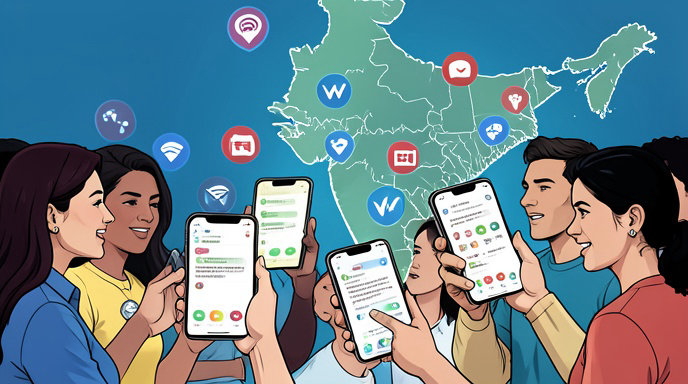
India’s temporary block on Telegram is rapidly reshaping user behavior, driving a rush toward VPN tools and alternative messaging apps as people look for ways to stay connected. The move, imposed ahead of the NEET-UG re-exam, has also reignited Telegram’s long-running argument that governments should target harmful content and abuse directly rather than shutting down a platform used by millions.
Telegram Block Sends Users Scrambling
The restriction was introduced in India over concerns tied to exam-related fraud and leaked material circulating on Telegram, according to reports on the government action and the platform’s continuing legal and public response. Access has been limited for a week, and users have been able to bypass the block through VPNs, which reroute traffic through unrestricted regions.
The result has been immediate. App intelligence firm Appfigures said the day India announced the restriction was the biggest day for VPN app downloads in the country since at least the start of 2025. According to the same report, downloads of major VPN apps rose 49% from a recent daily average of 139,000 to 208,000.
VPN Apps Climb the Charts
Among the biggest winners were Proton VPN and Turbo VPN. TechCrunch reported that Proton VPN downloads in India jumped 113% on Apple’s App Store and 64% on Google Play, while Turbo VPN rose 85% on the App Store and 35% on Google Play.
Proton also said daily registrations from India rose 120% above baseline on Wednesday, after hourly registrations had already spiked 150% on Tuesday evening, when the Telegram restriction took effect. PCMag reported a similar surge, noting that Telegram’s restriction immediately pushed many users toward VPNs as a workaround.
That surge comes amid a broader regulatory squeeze on VPN availability in India. PCMag reported that Apple and Google removed six VPN apps from their app stores in India to comply with local rules, including Hide.me, PrivadoVPN, and Cloudflare’s 1.1.1.1.
Rival Messaging Apps See a Lift
The Telegram block is also sending users to alternative chat apps. Appfigures said Signal downloads in India rose 72% on Apple’s App Store and 322% on Google Play after the restriction, while Viber’s App Store downloads increased 216%.
One of the most notable jumps came from iMe, a Telegram-linked messaging app. Appfigures said its Google Play downloads surged from a recent daily average of about 827 to 50,900 on June 16. That spike suggests some users are not abandoning Telegram-style workflows entirely, but instead moving to apps that preserve a familiar interface or feature set.
Indian coverage has also highlighted other substitutes, including WhatsApp, Zoho’s Arattai, Signal, Messenger, Apple Messages, and Google Messages as practical alternatives for users looking for immediate replacement options. Times Now similarly pointed to Arattai as a homegrown option in India.
Telegram’s Core Argument: Target Abuse, Not the Whole Platform
Telegram’s public stance remains consistent: the company argues that blanket bans hurt ordinary users more than the people responsible for abuse. In its response to the India action, Telegram CEO Pavel Durov criticized the decision and said the focus should be on the specific bad actors rather than the platform itself.
That position matters because Telegram is not a niche tool in India. Reports describe it as used by millions, and the temporary restriction has already forced many regular users to find technical workarounds or shift to other apps. The tension between platform-scale moderation and targeted enforcement sits at the center of the dispute.
What the Block Means for Users
For many users, VPNs have become the fastest workaround because they restore access without requiring a full migration to another app. For others, the disruption is serving as a catalyst to test rival platforms, especially Signal and WhatsApp, which are already widely known in India.
The episode also shows how quickly app-store rankings can change when a major platform is restricted. In a matter of hours, VPN and messaging apps moved from ordinary utilities to the top of India’s download charts. That pattern suggests that restrictions on one platform often produce a second-order effect: they boost the very circumvention tools and competitors that users would otherwise ignore.
The Bigger Regulatory Question
India’s Telegram block is being framed as a temporary measure tied to exam integrity, but the fallout raises a broader policy question: whether platform-level restrictions are an effective way to stop misconduct that can also spread across other channels. The spike in VPN adoption suggests users are willing to route around access controls rather than wait for the restriction to expire.
For Telegram, the episode reinforces its long-standing claim that moderation should be selective and issue-specific. For India, it shows that platform bans can be technically porous, socially disruptive, and commercially beneficial to rivals and privacy tools almost overnight.

Get All The Latest Updates Delivered Straight To Your Inbox For Free!