
Wing Drone Delivery Expands Nationwide: A New Era of Convenience with Walmart Partnership
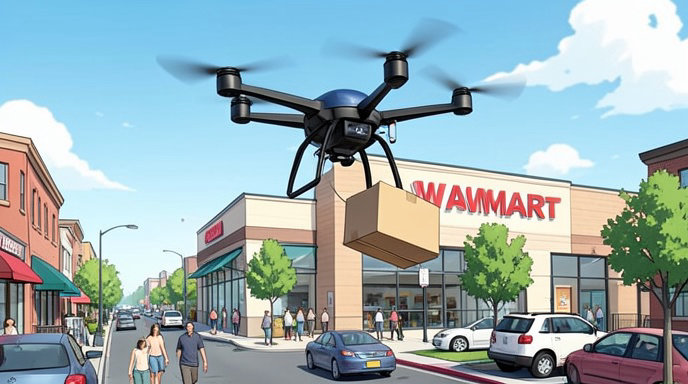
TL;DR
- Wing and Walmart are adding seven new U.S. metro areas to their drone delivery network: Memphis, New Orleans, Philadelphia, Phoenix, San Diego, the San Francisco Bay Area, and Salt Lake City.
- The expansion is part of a larger push toward more than 270 Walmart locations and service to over 40 million Americans by 2027.
- The move signals drone delivery’s shift from pilot program to scalable retail infrastructure, with faster fulfillment now tied to everyday shopping and grocery orders.
Wing and Walmart are accelerating one of the most ambitious drone delivery rollouts in the United States. The companies have confirmed seven additional metro areas for their network, extending service to Memphis, New Orleans, Philadelphia, Phoenix, San Diego, the San Francisco Bay Area, and Salt Lake City.
The expansion adds momentum to a partnership that has quickly become a bellwether for airborne retail logistics. Rather than treating drone delivery as a novelty, Wing and Walmart are building it into a broader fulfillment strategy designed to reach millions of shoppers at scale.
Seven New Cities Join the Network
The newest markets are spread across the country, signaling a deliberate move toward geographic breadth rather than a single-region pilot. According to Wing and Walmart, the next cities to join the network are Memphis, New Orleans, Philadelphia, Phoenix, San Diego, the San Francisco Bay Area, and Salt Lake City.
This latest phase builds on earlier rollouts in markets such as Orlando, Tampa, Charlotte, St. Louis, Cincinnati, Los Angeles, and Miami. In other words, the partnership is no longer confined to a handful of test markets; it is expanding into a multi-region service footprint that increasingly resembles a national logistics layer.
What the Expansion Means for Shoppers
For consumers, the immediate appeal is speed. Walmart’s drone service has been positioned around quick delivery of groceries and other everyday items, with reports describing orders arriving in about 30 minutes from participating stores.
The service is also becoming more accessible through scale. Earlier reporting indicated that Walmart+ members can receive drone delivery at no extra charge, while non-members may pay a per-order fee. As the network grows, drone delivery is moving from a premium experiment into a mainstream convenience option for routine shopping trips.
Why This Matters for Retail
The Wing-Walmart partnership is significant because it shows how drone delivery is shifting from concept to infrastructure. Walmart has been steadily broadening the service from its early operations in Dallas-Fort Worth and Northwest Arkansas into major metro areas across the country.
The scale matters as much as the technology. The companies have said the rollout could reach more than 270 Walmart stores and more than 40 million Americans by 2027. That kind of footprint suggests drone delivery is no longer just about proving technical feasibility; it is about building a repeatable retail model that can support high-frequency consumer demand.
The Technology Behind the Strategy
Wing, Alphabet’s drone delivery company, has focused on short-range airborne fulfillment for lightweight goods such as groceries, over-the-counter medicine, and other small items. By pairing that capability with Walmart’s store network, the companies can use local inventory as a fulfillment advantage instead of relying solely on traditional delivery vans.
That approach has obvious benefits in dense metro areas where speed is a key competitive differentiator. It also helps Walmart test a hybrid delivery system where drones complement, rather than replace, conventional last-mile logistics.
A Growing Test of Consumer Demand
The latest expansion suggests that consumer demand is strong enough to justify continued investment. Walmart and Wing have already moved beyond the stage where drone delivery is a marketing showcase; they are now layering it onto a growing number of stores and markets.
If the rollout proceeds as planned, the next few years could determine whether drone delivery becomes a standard retail feature in urban and suburban America. The companies’ target of reaching over 40 million people by 2027 indicates that they are betting on broad acceptance, not niche adoption.
What Comes Next
Wing says the new markets are expected to come online by 2027 as part of the broader expansion plan. That timeline gives the companies room to scale operations, secure local approvals, and integrate the service into more Walmart stores over time.
For shoppers, the most visible change may simply be faster access to essentials. For retailers, the deeper implication is that drone delivery is beginning to look less like a futuristic add-on and more like a practical part of modern commerce.

Get All The Latest Updates Delivered Straight To Your Inbox For Free!