
California Greenlights Self-Driving Trucks: Aurora and Kodiak Begin Highway Testing
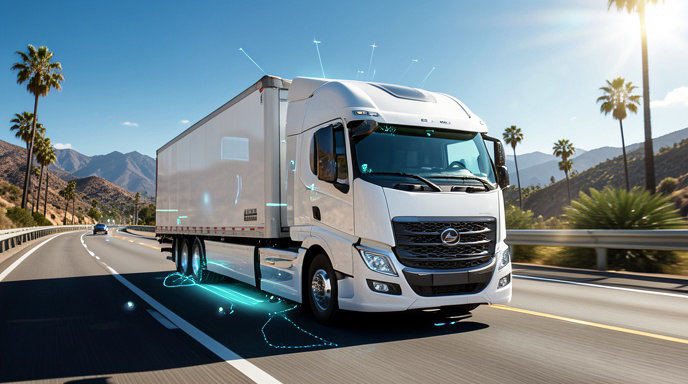
TL;DR
- California's DMV has issued its first permits for heavy-duty driverless truck testing on public highways to Aurora Innovation and Kodiak AI, ending a years-long ban on autonomous vehicles over 10,001 pounds.
- The permits allow testing on designated freight corridors with strict safety requirements, including detailed reporting and initial operations with safety drivers before moving to fully driverless runs.
- The approval marks a major milestone for the autonomous freight industry, positioning California as a key testing ground while reigniting debates over safety, jobs, and regulation.
A Historic Shift for the Golden State
For years, California has been the epicenter of autonomous vehicle development while simultaneously keeping its most lucrative freight routes off-limits to driverless trucks. That changed this week. The California Department of Motor Vehicles has officially approved permits for autonomous trucking companies to test heavy-duty self-driving trucks on public highways, a move that signals a major policy reversal and a new chapter for autonomous logistics in the state.
While autonomous passenger cars from companies like Waymo and Cruise have become a common sight in San Francisco and Los Angeles, vehicles weighing over 10,001 pounds were previously excluded from driverless testing permits. The new approvals granted to Aurora Innovation and Kodiak AI are the first under the state's updated Autonomous Vehicle Tester Program framework for heavy-duty vehicles.
What the New Permits Actually Allow
The permits do not give Aurora and Kodiak a blank check to run fully driverless big rigs anywhere in California. Instead, they authorize a phased testing program under close DMV oversight.
In the initial phase, both companies are permitted to operate their Class 8 autonomous trucks on public highways with a trained safety driver behind the wheel. Testing will be concentrated on major freight corridors, including sections of Interstate 5, State Route 99 in the Central Valley, and Interstate 10 and Interstate 15 corridors connecting Southern California logistics hubs.
Each truck must be equipped with data recorders, redundant safety systems, and the ability for the safety driver to take immediate manual control. The companies are required to submit collision and disengagement reports to the DMV, maintain substantial insurance coverage, and notify local authorities and the California Highway Patrol of testing routes and schedules.
Only after completing a set number of supervised miles and demonstrating a strong safety record can the companies apply to advance to driverless testing, where no human is present in the cab. Even then, operations will be monitored remotely and restricted to approved Operational Design Domains, meaning specific routes, weather conditions, and times of day.
Meet the First Movers: Aurora and Kodiak
The two companies selected are among the most established players in the autonomous trucking space.
Aurora Innovation, headquartered in Pittsburgh, is developing the Aurora Driver, its flagship autonomous system. The company has already been hauling freight autonomously in Texas between Dallas and Houston, with safety drivers and, more recently, fully driverless operations on its Texas corridor. Aurora's trucks use a custom sensor suite built around its FirstLight lidar technology, which is designed to see objects more than 400 meters away at highway speeds.
Kodiak Robotics, based in Mountain View, California, is bringing its Kodiak Driver system to its home state for the first time at this scale. Kodiak has been focused on long-haul trucking and has pioneered a modular, vehicle-agnostic approach with its SensorPods, which allow for quick pre-trip sensor calibration and maintenance. The company has been running autonomous freight operations in the southern U.S. and has partnerships with major carriers and shippers.
Both companies have spent years lobbying for a pathway to test in California, arguing that excluding the state — which is home to the ports of Los Angeles and Long Beach and handles nearly 40% of the nation's container imports — was holding back the industry's potential.
How the Technology Navigates the Highway
Unlike urban robotaxis that navigate complex city streets with pedestrians and traffic lights, autonomous trucks are engineered to master the distinct challenges of high-speed, long-haul highway driving.
The system relies on a fusion of sensors: high-resolution cameras for lane markings and signage, long-range lidar for precise 3D mapping, and radar for reliable detection in rain, fog, or dust. This data is fused in real-time to create a 360-degree view of the vehicle's surroundings, detecting passenger cars, construction zones, and road debris hundreds of meters ahead.
At the core is an AI-driven software stack trained on millions of miles of real and simulated driving. It handles predictive tasks like anticipating when a car in an adjacent lane is about to cut in, managing safe following distances, executing smooth lane changes, and safely pulling over in the event of a system issue. For California testing, the systems have been specifically mapped and validated for the state's highway infrastructure, including complex interchanges and high-traffic merge points.
Why California Is the Ultimate Proving Ground
Approving testing in California is more than just a regulatory win; it is a strategic necessity for the industry. California's freight network is one of the busiest and most economically vital in the world. The corridor from the Central Valley to Southern California is a critical artery for agriculture, e-commerce, and port distribution.
For autonomous trucking companies, proving their technology can handle California's dense traffic, varied terrain, and strict environmental regulations is essential for achieving nationwide commercial viability. Success here could accelerate the path to commercial driverless freight operations between major hubs like Los Angeles, the Bay Area, and eventually across state lines to Arizona and Texas, creating a continuous autonomous freight network in the Sun Belt.
The move also keeps California competitive. With Texas, Arizona, and New Mexico having welcomed autonomous truck testing for years, California risked losing innovation and investment to other states. The new permits aim to bring high-tech testing and development jobs back to the state while maintaining its reputation for strong regulatory oversight.
Safety, Jobs, and What's Next
The DMV's decision has not come without controversy. Labor unions, particularly the Teamsters, and safety advocates have long opposed driverless trucks, citing concerns about job displacement for hundreds of thousands of truck drivers and the risks of testing 80,000-pound vehicles alongside human drivers.
In response, the DMV and the companies emphasize that the phased, data-driven approach is designed to prioritize safety above speed to market. Every mile driven in California will generate valuable safety data that regulators will use to shape permanent rules for the commercial deployment of autonomous trucks. The California Legislature is also continuing to debate companion bills that would require human safety operators on autonomous trucks for the foreseeable future, meaning the regulatory landscape is still evolving.
For now, Californians can expect to see the distinctive sensor-laden Aurora and Kodiak trucks on select highways, always with a human in the driver's seat to start. If the testing program proceeds smoothly, the state could see its first fully driverless truck demonstration on a public California highway within the next year — a quiet but profound moment for the future of how goods move across America.

Get All The Latest Updates Delivered Straight To Your Inbox For Free!