
France Accuses Iran of Cyberattacks on Grocery Freezers and Blood Banks
TL;DR
- France says Iran-linked operators targeted industrial refrigeration and freezer systems in at least two waves of cyberattacks affecting France and other European countries.
- Disruptions to grocery cold chains, blood-bank refrigeration and other temperature-controlled systems could create safety and public-health risks even without a nationwide outage.
- The allegations heighten concerns over state-sponsored attacks on operational technology and are likely to intensify diplomatic and cybersecurity pressure on Tehran.
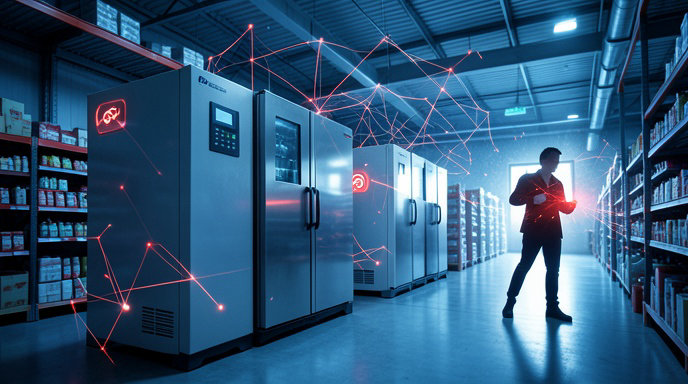
France has accused Iran of orchestrating at least two waves of cyberattacks against industrial refrigeration and freezer systems in France and elsewhere in Europe, raising concerns about the security of the continent’s food supply, medical infrastructure and other temperature-sensitive operations.
The alleged campaign is significant because it reportedly targeted operational technology—the industrial control systems that regulate physical equipment—rather than focusing only on data theft or website disruption. Attacks on refrigeration systems can interfere with temperature monitoring, alarms, compressors and automated controls, potentially causing spoilage or forcing operators to shut down equipment as a precaution.
French officials have linked the activity to Iranian state interests, although public attribution in cyber investigations is rarely immediate or absolute. The accusations are expected to prompt further technical analysis, diplomatic responses and scrutiny of organizations that depend on connected industrial equipment.
A Threat to the Cold Chain
Modern food distribution relies on a continuous “cold chain” extending from farms and processing plants to warehouses, supermarkets and restaurants. Refrigerated and frozen products can become unsafe or unsellable if temperatures rise for too long.
A successful intrusion does not need to disable every freezer in a country to cause disruption. Attackers could target a distribution center, alter temperature thresholds, suppress alarms or create uncertainty about whether stored products remained safe. Even a suspected compromise could lead operators to quarantine or discard large quantities of food.
The immediate effects would likely vary according to the attacker’s access and the victim’s emergency procedures. Many industrial refrigeration systems include manual controls, redundant equipment and local safety mechanisms. Those protections can limit damage, but they may not prevent operational disruption, inventory losses or costly inspections.
The alleged attacks therefore illustrate a broader vulnerability: systems that were once isolated are increasingly connected to corporate networks, remote-management platforms and third-party service providers. That connectivity improves efficiency but can also give attackers a path into physical processes.
Implications for Blood Banks and Medical Services
Blood banks and hospitals present an especially sensitive target because blood products must be stored within tightly controlled temperature ranges. Red blood cells, platelets, plasma and certain medicines have different storage requirements, and a failure in monitoring or refrigeration can force medical providers to determine whether supplies remain usable.
A cyberattack on refrigeration equipment would not automatically make blood products unsafe. Medical and laboratory personnel would need to verify temperatures, equipment performance and chain-of-custody records before deciding whether to release or discard supplies. Still, even a temporary loss of visibility could complicate emergency care and reduce available reserves.
Hospitals and blood services commonly maintain backup power, alarms and contingency storage. However, cyber incidents can affect more than the equipment itself. Attackers may also target monitoring dashboards, authentication systems or communications channels, making it harder for staff to determine whether a temperature excursion has occurred.
For public-health authorities, the challenge is balancing caution with continuity of care. Discarding compromised supplies protects patients but can worsen shortages, particularly during emergencies or periods of high demand.
Why Industrial Control Systems Are Difficult to Secure
Industrial refrigeration environments often combine older controllers, proprietary software, sensors, building-management systems and remote-access tools. Equipment may have long replacement cycles, while security updates can be difficult to apply without interrupting operations.
The systems are also managed by a wide range of organizations, including supermarkets, logistics companies, food manufacturers, hospitals and specialist contractors. Security practices can differ substantially across that ecosystem.
Common weaknesses include exposed remote-access services, shared credentials, outdated software, insufficient network segmentation and limited monitoring of commands sent to industrial devices. An attacker who gains access to a business network may be able to move toward control systems if those environments are not properly separated.
Security specialists have long warned that operational technology requires a different approach from ordinary office networks. Availability and safety are often more important than rapid patching, and defensive changes must be tested carefully to avoid affecting physical processes.
Attribution and the Iranian Connection
France’s allegations place the attacks in the context of a long history of cyber operations attributed by Western governments and security researchers to Iranian-linked groups. Those operations have included espionage, disruptive attacks and campaigns against government agencies, companies and critical infrastructure.
Attribution is based on a combination of technical evidence, infrastructure overlaps, malware characteristics, operational patterns and intelligence that is not always made public. Governments may also consider motive and timing. As a result, public statements frequently describe an operation as linked to a state or aligned with its interests rather than providing a complete evidentiary record.
Iran has previously rejected accusations of malicious cyber activity made by foreign governments. Any official response to the French allegations could become part of a wider diplomatic dispute, particularly if France or other European states impose sanctions, expel personnel or coordinate a formal response through European Union institutions.
The political stakes are high because attacks on food distribution and medical infrastructure are more difficult to characterize as ordinary espionage. If investigators conclude that the goal was to create physical disruption or public alarm, the incidents could be treated as an escalation in the use of cyber tools against civilian systems.
A European Security Problem
The reported incidents come as European governments are trying to improve defenses against cyberattacks on energy networks, transport systems, hospitals, communications providers and manufacturing. The continent’s critical infrastructure is increasingly interconnected, and a compromise in one country can affect suppliers and service providers elsewhere.
A campaign against refrigeration systems also demonstrates how attackers can seek leverage through less conspicuous targets. Rather than striking a national power grid, an adversary might disrupt a collection of regional businesses, creating economic losses and public anxiety without triggering the same immediate response.
The risk is compounded by dependence on third parties. A refrigeration operator may rely on an equipment manufacturer, cloud monitoring provider, managed-service company or maintenance contractor. A weakness in one supplier can expose many customers at once.
European organizations are consequently being urged to map their operational technology, restrict remote access, separate industrial systems from office networks and maintain manual fallback procedures. They are also expected to test incident-response plans that involve engineers, public-health officials, suppliers and law-enforcement agencies.
What Organizations Can Do
Operators of refrigeration and medical-storage systems can reduce risk by identifying every internet-connected device and service involved in temperature control. Remote access should be limited to approved users, protected with multifactor authentication and disabled when it is not required.
Network segmentation can prevent an intruder who compromises an office account from reaching industrial controllers. Organizations should also monitor unusual login activity, unexpected configuration changes and commands that fall outside normal operating patterns.
Backups are important, but they must include more than business data. Operators need documented procedures for restoring control systems, validating sensor readings and switching to manual operation. Regular exercises can reveal gaps that would remain hidden during a real emergency.
For blood banks and food distributors, cybersecurity planning should be integrated with product-safety procedures. Staff need clear rules for documenting temperature excursions, isolating potentially affected inventory and communicating with regulators and suppliers.
The Broader Geopolitical Consequences
The allegations could add to tensions between Iran and European governments already divided over regional security, sanctions and diplomatic policy. Cyber operations provide states with a means of applying pressure below the threshold of conventional military conflict, while often preserving room for deniability.
That ambiguity creates a difficult policy problem. A government may want to deter future attacks without escalating a confrontation based on evidence that cannot be publicly disclosed. Responses can include diplomatic warnings, sanctions, indictments, intelligence-sharing agreements and defensive assistance to affected industries.
The case may also fuel debate over whether international norms should prohibit cyber operations against civilian systems that support food and health services. Existing cyber rules and diplomatic commitments offer guidance, but enforcement remains inconsistent and attribution remains difficult.
What Happens Next
The most important next steps will be technical confirmation, victim notification and a clearer public account of the attacks. Investigators will need to determine whether the incidents caused actual temperature excursions, whether any products were discarded and how attackers gained access.
Authorities will also need to establish whether the events were part of one coordinated campaign or multiple operations using similar tools or infrastructure. That distinction could affect both the attribution assessment and the scale of the response.
Regardless of the final conclusions, the allegations underscore a growing reality: cybersecurity failures can quickly become food-safety, medical-supply and national-security crises. Refrigeration systems may not attract the same attention as power plants or telecommunications networks, but their disruption can have immediate consequences for households, hospitals and the wider economy.

Get All The Latest Updates Delivered Straight To Your Inbox For Free!