
Google DeepMind Revolutionizes Exploration with Genie and Street View Integration
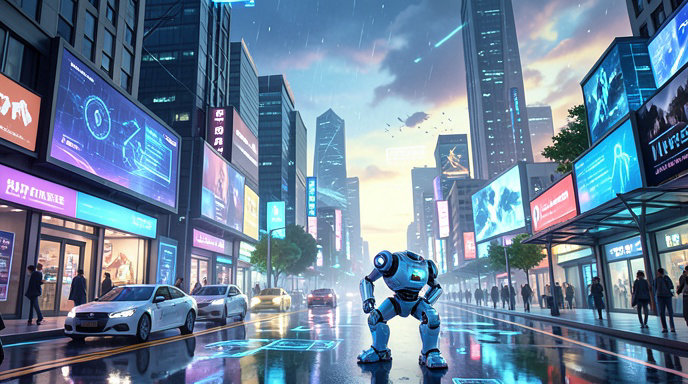
TL;DR
- Google DeepMind’s Project Genie is now being positioned as an interactive world model that can generate explorable environments in real time, with Street View-like familiarity potentially helping ground simulations in real-world places.
- The biggest promise is practical: richer robotics training, more immersive game prototyping, and more flexible travel and location experiences built from text and image prompts.
- Despite the excitement, Genie remains experimental, with limits around realism, control, and sustained consistency as worlds grow more complex.
Why Project Genie Matters Now
Google DeepMind’s Project Genie is emerging as one of the most ambitious attempts yet to turn generative AI into something more than a content machine. Instead of producing only images, clips, or chatbot responses, Genie aims to generate interactive worlds you can actually move through in real time.
That shift is important because it points to a new class of AI systems: not just models that describe the world, but models that simulate it. In Google’s framing, world models are a stepping stone toward more capable agents, and Genie is one of the clearest public demonstrations of that idea so far.
The latest wave of attention around Genie centers on its potential connection to Street View-style real-world data. The concept is straightforward but powerful: if a model can learn from or emulate recognizable places, it could create dynamic simulations of cities, roads, buildings, parks, and interiors that feel grounded in reality rather than purely fictional.
How Genie Works
Genie is built around real-time world generation. A user enters a prompt, and the system produces a navigable environment that responds as you move through it. Rather than rendering an entire universe all at once, the model generates what comes next based on your actions.
That makes the experience feel less like watching a video and more like exploring a living simulation. You can move forward, turn the camera, and interact within the world while the system continuously fills in the path ahead.
Google DeepMind says Genie can maintain consistency for minutes at a time while delivering interactive output at around 20 to 24 frames per second and 720p resolution. The company also says the model handles previously seen details better than earlier systems, which matters a lot in environments where users may backtrack or revisit locations.
Street View as a World-Building Signal
The most intriguing angle is how a Street View-like layer could transform Genie from a creative playground into a tool for realistic simulation. Street View imagery already contains a massive catalog of roads, buildings, landscapes, and everyday human environments. That makes it a compelling reference point for a model trying to generate plausible real-world scenes.
If Genie can use those kinds of spatial cues, it could potentially recreate recognizable places or extend them into dynamic scenarios. Imagine moving through a familiar city block while weather changes, traffic patterns shift, or time of day alters the environment. The result would not just be a static representation of a place, but a simulated version of how that place behaves.
That could make the system especially useful for applications that depend on spatial understanding. A robot trained in a simulated version of a street corner, warehouse, or storefront might benefit from richer and more realistic conditions than traditional synthetic environments can provide.
Potential Applications in Robotics
Robotics may be the most serious long-term use case for Genie-style systems. Training robots in the physical world is expensive, slow, and risky. Training them in simple simulations often fails to capture the complexity of real environments.
A model that can generate diverse, interactive, realistic scenes on demand could close that gap. Robots could practice navigation, object interaction, obstacle avoidance, and decision-making across a nearly limitless range of scenarios. That includes everyday settings like sidewalks, kitchens, and offices, as well as unusual or hazardous environments that are hard to replicate in the real world.
For researchers, the value is not just variety but scale. Instead of hand-building simulation after simulation, they could use a model to produce new training environments rapidly. In theory, that could accelerate progress in perception, planning, and generalization.
Gaming’s Next Creative Sandbox
Gaming is another obvious beneficiary. Genie’s ability to create explorable worlds from text and images opens the door to rapid prototyping for developers and creators. A game designer could sketch a scene, generate a world, and immediately test how it feels to navigate.
That lowers the barrier to early-stage concepting. Instead of building every map, level, or environment by hand, teams could use AI-generated spaces as creative drafts. Those drafts could be used to test atmosphere, scale, traversal, and visual style before committing to full production.
There is also a more ambitious possibility: games that adapt continuously as players explore. If world models become robust enough, they could generate quests, environments, or scenario variations in response to player behavior. That would push games toward a more dynamic, less scripted form of interactivity.
Travel, Exploration, and Learning
Travel is a less obvious but potentially compelling use case. If Genie can simulate real-world locations with enough fidelity, users could explore cities, landmarks, and landscapes before visiting them in person. That could help with trip planning, accessibility, or educational exploration.
For example, a traveler might preview a neighborhood to understand its layout, or a student might explore a historical environment recreated from prompts and reference imagery. Educational institutions could use this kind of technology to build interactive lessons around geography, architecture, or urban history.
In the longer term, these simulations could become useful for orientation and decision-making. A user might “test drive” a route through a city, evaluate what a hotel area feels like, or experience a destination under different weather conditions before booking a trip.
The Weather and Scenario Advantage
One of the more interesting features of systems like Genie is the ability to explore different conditions and scenarios. Rather than being locked to a single version of a location, the model can theoretically re-render the same world under different circumstances.
That means a place could be experienced in sunlight, rain, fog, snow, or nighttime conditions. It could also be altered with unusual scenarios, stylized aesthetics, or imagined events layered on top of familiar spaces.
This is where the technology becomes more than simulation. It becomes a kind of creative and analytical instrument. Users are no longer limited to asking what a place looks like; they can ask how it changes, how it behaves, and how it might feel under different circumstances.
The Technical Challenge
As impressive as Genie is, the technical challenges are substantial. Real-time world generation is hard because the model must respond instantly to user input while preserving continuity and physical plausibility over time.
That is especially difficult in a world that expands as you move through it. The system has to remember what came before, anticipate what comes next, and keep the environment coherent even when users double back or change direction unexpectedly.
Google DeepMind has described Genie 3 as an important step forward in consistency and interactivity, but the current experience is still experimental. Limitations remain in realism, long-term memory, character control, and the complexity of interactions the model can reliably support.
Why This Could Reshape AI’s Future
The larger significance of Project Genie goes beyond one product. It reflects a shift in AI from generating isolated outputs to building environments that users can inhabit.
That matters because environments are where intelligence gets tested. Navigation, planning, memory, and action all become more meaningful when an AI system has to sustain a coherent world over time. In that sense, world models like Genie are not just about entertainment or visual novelty. They are about building the infrastructure for more capable AI agents.
If the integration with real-world spatial data, including Street View-like references, continues to mature, the result could be a new generation of immersive tools for robotics, games, education, and travel. The technology is still early, but the direction is clear: AI is moving from making things to making places.
What to Watch Next
The key questions now are how much realism Genie can sustain, how well it can adapt to real-world environments, and whether it can scale beyond short interactive sessions into longer, more useful simulations.
Watch for improvements in persistence, user control, and geographic fidelity. Also watch for how Google connects Genie with its broader AI stack, since tighter integration with language and image systems could make world creation far more accessible.
If that happens, Project Genie may end up being remembered not just as another generative AI experiment, but as one of the first systems that made simulated worlds feel genuinely navigable, useful, and alive.

Get All The Latest Updates Delivered Straight To Your Inbox For Free!