
Google's AI Spellcheck Fiasco: A New Low for the Tech Giant
TL;DR
- Google’s new Search grammar-check feature is drawing scrutiny because tests found it can miss obvious errors and behaves inconsistently with some proper nouns, including “Google.”
- The issue matters less as a catastrophic product failure and more as a reminder that even AI-branded writing tools can be brittle, selective, and not fully reliable.
- The broader reputational risk for Google is that a small, public-facing error can reinforce skepticism about how capable its AI systems really are, especially when the company markets them as helpful everyday assistants.
A small feature, a big embarrassment
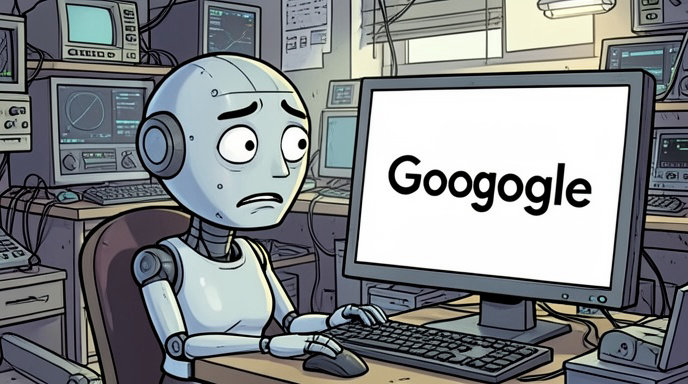
Google’s latest Search grammar-check feature has become a public example of the gap between AI marketing and real-world performance. The feature was introduced as a simple way for users to ask Search to fix sentence-level grammar issues, but early testing found it was inconsistent and, in some cases, refused to correct sentences containing certain proper nouns, including company names such as Google.
That contradiction is what made the incident so embarrassing: a tool designed to improve language quality stumbled on the company’s own name. Google also acknowledged that the system “might not be 100% accurate,” especially with partial sentences.
What the feature is supposed to do
Google’s grammar check in Search is meant to help users quickly correct writing by typing prompts like “grammar check” or “check grammar” into Search. The company says the feature returns a corrected version of the sentence and lets users copy it to the clipboard.
Google’s broader messaging around similar tools has emphasized AI-powered language assistance, including systems in Google Docs that analyze sentence structure and semantics to suggest corrections. In that context, the Search feature was meant to look like another practical step toward making AI useful in everyday writing tasks.
Where the system went wrong
The problem is not that Google introduced a useless feature. The problem is that it exposed how uneven these systems can be in ordinary use. Gizmodo’s testing found that the grammar checker corrected some sentences but skipped others when they included certain proper nouns, including “Google,” while still working on similar prompts with celebrity names.
The report also noted that the feature was not consistently accurate in broader testing and that Google had already flagged limitations around partial sentences and certain content categories. That combination makes the tool look less like a dependable writing assistant and more like a selective filter with unpredictable behavior.
Why this matters for Google’s reputation
For Google, the reputational issue is not the spelling mistake itself. It is the symbolism. A company that has spent years positioning itself as an AI leader now has a visible example of its own software struggling with something basic and easy for users to notice.
That kind of failure can be especially damaging because it is simple to explain and easy to share. Users do not need technical expertise to understand why an AI that can’t reliably spell or correct a company name raises questions about its broader reliability. In consumer tech, perception often matters as much as technical nuance, and this incident feeds the narrative that AI tools are still fragile despite the hype.
The broader AI problem: usefulness versus trust
This incident also fits a larger pattern in AI adoption. Companies often present AI features as smarter, more fluent, and more capable than older rule-based tools, but writing assistance has always been a space where accuracy matters more than novelty.
There is also an important distinction here: not every spelling or grammar tool is the same thing as generative AI. Some checks are still largely based on dictionaries, rules, and pattern matching, while others use machine learning to estimate corrections from context. That means failures like this can reflect design choices as much as “AI intelligence” itself.
Why simple errors still get outsized attention
A public misspelling gets attention because it is easy to spot, but the deeper issue is trust. If a product cannot handle a straightforward correction consistently, users may wonder how it handles more subtle language problems, edge cases, or safety-related filters.
That concern is not unique to Google. Accuracy issues have also plagued other AI-adjacent writing tools and detectors, with researchers and vendors repeatedly warning that automated language systems can produce false positives, false negatives, or inconsistent results. The lesson is that language tools can be helpful, but they are not infallible.
What Google should do next
Google can likely limit the damage by tightening the feature’s behavior, clarifying its boundaries, and being more transparent about when and why the system refuses to make corrections. Better documentation and more predictable output would do more to build trust than vague claims about AI-powered intelligence.
The company also needs to be careful about overpromising. If a tool is still inconsistent around proper nouns and partial sentences, it should be presented as a convenience feature rather than a polished writing authority. In the current AI climate, users are quick to forgive a bug, but not a mismatch between marketing and reality.

Get All The Latest Updates Delivered Straight To Your Inbox For Free!