
Musk vs. Altman: The Battle Over OpenAI's Legacy
TL;DR
- A California federal jury found Elon Musk filed too late in his lawsuit against OpenAI and Sam Altman, ending the case without ruling on the core allegations.
- The decision is a major win for OpenAI and Microsoft, removing a legal overhang from a closely watched fight over the company’s nonprofit origins and commercial transformation.
- Musk says he will appeal, but the ruling underscores how legal timing, not just the merits, can decide high-stakes tech battles.
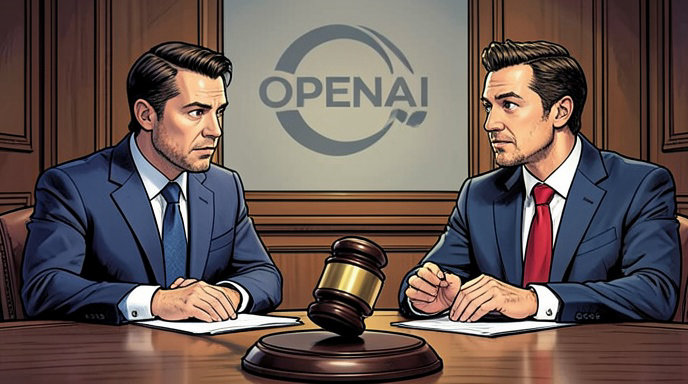
The OpenAI courtroom drama that has hovered over the AI industry for months reached a swift and decisive conclusion this week. A California federal jury rejected Elon Musk’s claims against Sam Altman, Greg Brockman, OpenAI, and Microsoft, finding that Musk waited too long to bring the case. The verdict did not settle the philosophical dispute at the heart of the lawsuit — whether OpenAI betrayed its nonprofit roots — but it did end the trial in OpenAI’s favor.
What makes the ruling especially notable is how quickly it arrived. After a three-week trial packed with testimony about OpenAI’s origins, its explosive rise, and the tensions between mission and monetization, jurors deliberated for only a short time before concluding that the statute of limitations had expired on Musk’s claims. In other words, the court never had to decide whether OpenAI actually breached its founding agreement.
A Fast Verdict in a High-Stakes Trial
Musk’s lawsuit centered on a familiar accusation: that OpenAI, which he helped found in 2015, abandoned a pledge to develop artificial general intelligence for the public good and instead shifted toward a profit-driven model. Musk argued that Altman and Brockman helped turn a nonprofit initiative into something closer to a commercial machine, while Microsoft became a major beneficiary of that transformation.
The jury, however, took a narrower path. Its unanimous decision focused on timing, not substance. Jurors found that Musk knew enough about OpenAI’s direction years ago to act sooner, and that his delay was fatal to the case. Because the claims were filed outside the legal deadlines, the panel did not have to weigh whether the conduct Musk described was actually unlawful.
For OpenAI, that was enough to call the outcome a clean win.
Why the Statute of Limitations Mattered
The central legal issue was whether Musk brought his complaint within the time allowed under California law. According to reporting from the trial, the case involved deadlines of roughly three years for charitable trust-related claims and two years for unjust enrichment. The jury concluded Musk missed those windows.
That matters because statutes of limitations are not technicalities in the casual sense; they are legal guardrails meant to prevent stale claims from surfacing too late, when evidence may be harder to test and memories may have faded. In this case, the jury effectively said Musk had the opportunity to sue earlier and did not.
That finding was enough to dismiss the lawsuit without a deeper examination of OpenAI’s restructuring, its relationship with Microsoft, or the broader question of whether an AI company can remain true to a nonprofit mission while scaling into a commercial giant.
The Core Fight: Mission vs. Money
The case tapped into one of the most consequential debates in AI today: can an organization claim to build technology “for the benefit of humanity” while also raising huge sums from corporate backers and building products that generate significant revenue?
Musk’s complaint argued that OpenAI’s leaders promised one thing at the start and delivered another. In his telling, the company’s early structure and messaging created obligations that were later abandoned as OpenAI became more commercially ambitious and deeply intertwined with Microsoft.
OpenAI has long rejected that framing. The company maintains that its evolution was necessary to compete in an extremely expensive and fast-moving field, where training frontier AI systems requires enormous compute resources and capital. From that perspective, the for-profit structure is not a betrayal of the mission but a way to sustain it.
The jury never had to choose between those narratives. But the fact that the case was filed at all — and drew so much attention — shows how unresolved the tension remains across the AI sector.
What the Decision Means for OpenAI and Microsoft
The verdict removes a meaningful legal distraction for OpenAI, at least for now. The company has been under intense scrutiny not only from regulators and rivals, but also from employees, partners, and the public, all of whom are watching whether the AI boom can coexist with transparency and accountability.
For Microsoft, the result is similarly important. The tech giant had been drawn into the dispute because of its massive investment in OpenAI’s commercial operations. The jury’s finding that Musk’s claims were time-barred also knocked out the allegations against Microsoft, reducing the risk that the case could complicate one of the most important partnerships in the tech industry.
Still, the ruling does not erase the broader questions surrounding OpenAI’s governance, its nonprofit claims, or the future legal and regulatory scrutiny that may come as AI companies become more powerful and more profitable.
Musk’s Next Move
Musk has already said he plans to appeal. He has framed the outcome as a procedural loss, arguing that the court never reached the substance of his concerns. That message is consistent with how he has presented the case publicly: not as a simple business dispute, but as a battle over the soul of one of the most influential AI labs in the world.
Whether an appeal changes anything is another question. Appeals courts generally defer to jury findings on factual issues unless there is a significant legal error. That means Musk’s path forward may be uphill, especially since the key issue was the timing of his claims.
A Broader Warning for Tech Litigants
Beyond the OpenAI story, the case is a reminder that in Silicon Valley, timing can be as important as truth. Founders often speak in grand terms about mission, trust, and transformation. But when those promises become the subject of litigation, the courtroom imposes a stricter logic: file on time, prove your claims, and make sure the law still lets you be heard.
For Musk, the jury’s verdict may feel like a missed opportunity to force a public reckoning with OpenAI’s evolution. For OpenAI, it is a confirmation that the company can survive one of its most visible legal threats.
For the AI industry, the trial leaves behind a larger unresolved question: if the most powerful AI companies begin as public-minded nonprofits and end up as commercial engines, who gets to decide when that shift becomes a betrayal?
That debate is far from over. But for now, in the courtroom, OpenAI came out on top.

Get All The Latest Updates Delivered Straight To Your Inbox For Free!