
Navigating the Future: Why AI Might Be a No-Go for 2026 Commencement Speeches
TL;DR
- AI is increasingly showing up at graduations, but the reaction from students and families has been mixed, especially when it replaces human voices or human warmth.
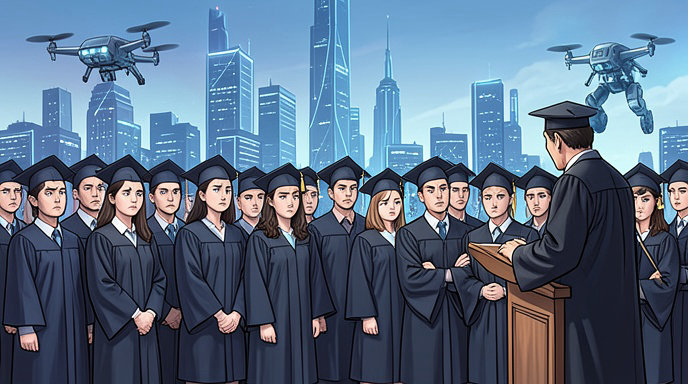
- In 2026 commencement speeches, the bigger concern isn’t just pronunciation or efficiency — it’s whether AI talk can accidentally dampen graduates’ excitement about their future.
- The safest path for speakers may be to frame AI as a tool, not a destiny, and to leave students feeling hopeful, capable, and inspired rather than anxious.
The New Graduation Debate: Should AI Even Be Part of Commencement?
Graduation speeches are supposed to do more than mark the end of school. They are meant to send students into the future with confidence, energy, and a sense that what comes next is something to look forward to.
But in 2026, one topic is making that mission harder: artificial intelligence.
Across recent graduation seasons, schools have been experimenting with AI in ceremonies — from AI-powered name announcements to digital voices reading graduates across the stage. The trend has sparked fascination, but also pushback. Some students appreciate the promise of fewer pronunciation mistakes. Others see it as one more sign that technology is creeping into a moment that should feel personal, emotional, and human.
And for commencement speakers, that tension matters. A speech about AI can easily drift from encouraging to unsettling if it focuses too much on disruption, automation, and job loss. At a moment when graduates are already staring down uncertain economic conditions, that message can land badly.
Why AI Hits Different at Graduation
Graduation is a milestone built on symbolism. It celebrates effort, growth, identity, and possibility. That makes it a tricky stage for discussing technology that is often associated with replacement, disruption, and uncertainty.
That’s especially true for students about to enter the workforce. Many already worry that AI will change the career paths they trained for, reshape entry-level jobs, or make some skills less valuable. If a speaker leans too heavily into warnings about automation, the audience may walk away feeling that the future is something to brace for instead of embrace.
That’s the key problem: commencement is not the place for a pessimistic product demo.
The Backlash to AI in Ceremonial Spaces
The debate has already played out in real ceremonies. Some schools have used AI-generated voices to announce student names, pitching the approach as more accurate and efficient. Others have faced criticism from students who say the tradition feels colder without a human announcer.
That backlash offers an important lesson for speakers: graduation is not just about technical correctness. It is about emotional meaning.
When AI is introduced into such a meaningful moment, people ask deeper questions. Is this really better? Is it more inclusive, or just more automated? Does it save time at the cost of connection?
Those same questions apply to commencement speeches. If a speaker treats AI like an unstoppable force that students must simply accept, the message can sound impersonal or even dismissive of their concerns.
Students Want Hope, Not Hype or Fear
The best commencement speeches have always understood one simple truth: graduates are looking for reassurance.
They want to hear that the world is changing, yes, but also that they are prepared to meet it. They want to know that uncertainty does not equal failure. And they want a vision of the future that feels worth walking into.
That is why some references to AI may work better than others. A speech that says, “AI will eliminate your path” is likely to alarm. A speech that says, “AI will change your path, but you will still shape your own future” is much more useful.
The difference is tone. The goal is not to pretend AI has no impact. The goal is to keep that impact in perspective.
How Speakers Can Talk About AI Without Killing the Mood
There is a smart way to talk about artificial intelligence at graduation, and it starts with balance.
Speakers can acknowledge that graduates are entering a world where AI will be everywhere: in offices, hospitals, classrooms, creative industries, and public services. But they should pair that reality with the strengths AI cannot replace — judgment, empathy, leadership, ethics, creativity, and human connection.
That framing keeps the speech forward-looking instead of fearful.
A strong commencement message might include ideas like:
- Technology will change tools, but not the need for human values.
- AI may automate tasks, but it cannot define purpose.
- The future belongs to people who can adapt, think critically, and work with others.
That is the kind of message that gives graduates something to hold onto.
The Importance of Timing and Tone
There is also a practical reason to be careful: graduation is not a conference panel or a policy forum. It is a celebration.
Speakers who spend too much time on existential technology debates risk losing the audience. A ceremony full of families, faculty, and students usually needs warmth, clarity, and momentum. The tone should lift the room, not weigh it down.
That does not mean avoiding hard truths. It means presenting them in a way that energizes rather than intimidates. A brief nod to AI’s role in the future is fine. A long lecture about job displacement is not.
The best speeches will sound less like warnings and more like encouragement.
What This Moment Says About the Future of Work
The anxiety around AI at graduation is really about something larger: the changing relationship between education and employment.
For years, students have been told that hard work, degrees, and specialized skills lead to stable careers. AI complicates that story. It introduces a new layer of uncertainty about what skills will matter most and how quickly those skills will need to evolve.
That does not mean the outlook is bleak. It means the skill set for success is becoming broader. Adaptability, communication, ethical reasoning, and lifelong learning are more important than ever.
A commencement speech that captures that idea can be powerful. It can tell students that while AI will reshape the workplace, it will also increase the value of what makes people distinctly human.
A Better Message for 2026 Graduates
If 2026 has made anything clear, it is that AI should be discussed carefully at graduation.
Students do not need a speech that pretends the technology is irrelevant. They need a speech that recognizes their concerns without feeding them. They need to leave the ceremony feeling seen, not sidelined.
So if AI comes up at commencement this year, speakers should remember the real assignment: inspire confidence, not dread.
Because the graduates walking across the stage are not asking for certainty. They are asking for courage.

Get All The Latest Updates Delivered Straight To Your Inbox For Free!