
Oracle Layoffs: Workers Fight for Fair Severance Amid Legal Loopholes
TL;DR
- Oracle laid off approximately 30,000 employees globally in March-April 2026, offering severance packages that vary dramatically by location—US workers received up to 26 weeks' pay while Indian employees got significantly less, sparking widespread criticism over fairness and legal compliance.
- Workers across multiple jurisdictions have challenged Oracle's severance offers in court, with Canadian courts already awarding substantially higher settlements (up to 12 months plus punitive damages) after ruling initial packages unenforceable, suggesting similar legal vulnerabilities in other regions.
- The WARN Act and remote work classification have created legal gray areas that Oracle exploited, allowing the company to reduce severance obligations for certain employee categories while delivering layoff notices via impersonal mass emails without adequate warning periods.
THE SEVERANCE DIVIDE: UNDERSTANDING ORACLE'S GLOBAL LAYOFF STRATEGY
Oracle's massive workforce reduction, initiated on March 31, 2026, represents one of the largest tech industry layoffs in recent history. The company eliminated approximately 25,254 positions in the United States alone, with global cuts reaching an estimated 30,000 employees. While the company framed these cuts as necessary for funding its artificial intelligence and data-center expansion, the real controversy lies not in the decision to downsize, but in how Oracle structured severance packages and delivered the news.
The most striking aspect of Oracle's approach was the stark disparity in compensation offered to workers based on their geographic location. This inconsistency has raised serious questions about corporate ethics and legal compliance across multiple jurisdictions.
SEVERANCE PACKAGES: A TALE OF GEOGRAPHIC INEQUALITY
Oracle's US employees received what appeared on the surface to be a reasonable package: four weeks of base salary plus one additional week per year of tenure, capped at a maximum of 26 weeks. Employees also received six months of healthcare coverage, a $5,000 transition stipend, and the option to keep their work devices. For a long-tenured employee, this could translate into substantial financial support during their job search.
However, the same company offered starkly different terms to its Indian workforce. Employees in India received 15 days' base salary for each completed year of service, plus two months of "gardening leave" pay—but only if they agreed to voluntarily sign separation documents and accept the company's framing of the termination. This conditional severance created a coercive situation where workers had to choose between accepting unfavorable terms or risking losing benefits entirely.
The contrast becomes even more apparent when compared to competitors. Block's recent layoffs of 4,000 employees included 20 weeks of base pay, one week per year of tenure, six months of healthcare, a $5,000 stipend, and device retention—essentially matching or exceeding Oracle's US package across the board.
REMOTE WORK CLASSIFICATION: A LEGAL LOOPHOLE
One of the most controversial aspects of Oracle's layoff strategy involved how the company classified remote workers for severance calculation purposes. According to internal communications and employee reports, Oracle used remote work status to justify reduced severance obligations in certain cases, arguing that remote employees fell under different regulatory frameworks than office-based workers.
This classification strategy appears designed to exploit ambiguities in labor law. While the WARN Act (Worker Adjustment and Retraining Notification Act) requires employers to provide 60 days' notice before mass layoffs, Oracle's approach to remote worker classification created situations where some employees received adjusted payouts based on their work location rather than their actual tenure or role.
Employees in states with specific WARN notice requirements saw their severance adjusted accordingly, but the lack of transparency about how these calculations were made has left many workers confused about whether they received their full entitlements.
THE WARN ACT AND NOTIFICATION FAILURES
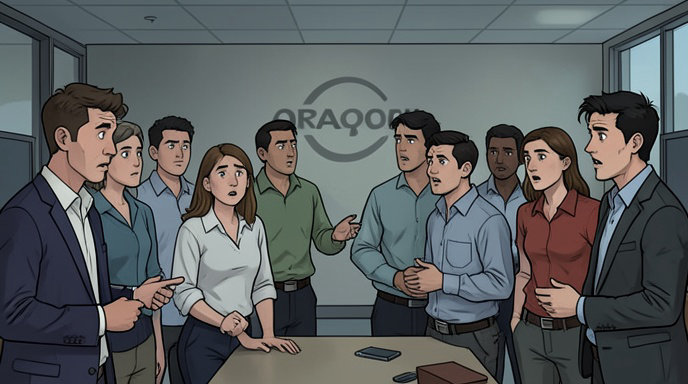
The manner in which Oracle delivered layoff notices has drawn particular scrutiny from HR professionals and legal experts. Affected employees received a brief email signed generically by "Oracle Leadership" at 6 a.m. ET, with no personalization, no prior discussion, and no opportunity for dialogue. Employees were simultaneously locked out of internal systems, effectively preventing them from accessing information or reaching out to colleagues.
This approach violated the spirit, if not the letter, of proper workforce reduction protocol. The WARN Act requires advance notice, but Oracle's implementation—immediate system lockout combined with vague language about "broader organizational change"—left employees scrambling to understand their situation.
The contrast with how other tech leaders handled similar situations is instructive. Block CEO Jack Dorsey personally addressed staff, led communications with clear severance details, and ensured all employees learned simultaneously whether they were staying or leaving. This approach, while still difficult, provided dignity and clarity that Oracle's mass email did not.
CANADIAN COURTS SIGNAL VULNERABILITY
Perhaps most significantly for Oracle's future liability, Canadian courts have already begun ruling against the company's severance packages. In multiple Ontario cases, judges found Oracle's initial severance offers to be unenforceable, awarding substantially higher settlements to affected workers.
One notable case involved a sales employee with just three years of service who initially received a two-week severance offer. After legal challenge, the court awarded five months of severance. In another case, a senior manager received 12 months of severance plus over $57,000 in punitive damages due to improper employer conduct during the termination process.
These rulings suggest that Oracle's severance packages may be vulnerable to legal challenge in other jurisdictions as well. The company's use of vague language, immediate system lockouts, and what courts have characterized as "improper employer conduct" creates a pattern that legal experts believe could be challenged successfully in US courts.
EMPLOYEE RESPONSE AND LEGAL STRATEGY
Workers laid off by Oracle have begun organizing to challenge the company's severance offers. Legal firms specializing in employment law have reported significant inquiries from affected employees, many of whom feel the packages are inadequate given their tenure and contributions.
The Canadian precedent has proven particularly valuable for workers in other regions. Laid-off employees are now armed with concrete examples of how courts view Oracle's termination practices, emboldening them to seek legal counsel rather than accept initial offers.
Employment lawyers are advising affected workers not to sign release documents immediately. In Canada, employees have up to two years to file severance claims, providing a window for legal review and negotiation. Similar protections exist in various US states, though they vary by jurisdiction.
IMPLICATIONS FOR TECH INDUSTRY STANDARDS
Oracle's approach has sparked what HR professionals are calling "a severance reckoning across Big Tech." The company's willingness to offer dramatically different packages based on geography, and its use of remote work classification to reduce obligations, has set a concerning precedent that other tech companies may attempt to follow.
However, the swift legal pushback from Canadian courts suggests that such strategies may not survive judicial scrutiny. The combination of inadequate notice, vague communication, immediate system lockout, and conditional severance packages creates multiple legal vulnerabilities that employees are beginning to exploit.
Industry observers predict that Oracle's approach will ultimately prove more costly than offering competitive severance packages from the outset. Between legal fees, settlement payments, and reputational damage, the company's penny-pinching strategy may end up costing significantly more than simply matching competitor offerings.
THE PATH FORWARD
For Oracle employees still considering their options, legal experts recommend several steps. First, do not sign any severance agreement immediately. Take time to review the offer carefully and consult with an employment lawyer. Second, research whether your state or country has specific severance protections or WARN Act provisions that may apply to your situation. Third, gather documentation of your tenure, compensation history, and any communications related to your termination.
The Oracle layoffs of 2026 represent more than just a corporate downsizing—they highlight fundamental questions about corporate responsibility, legal compliance, and worker protection in the modern tech industry. As more cases wind through the courts, the precedents being set will likely reshape how major tech companies approach future workforce reductions.
For now, Oracle workers who were told their severance packages were non-negotiable are discovering that the courts may have other ideas.

Get All The Latest Updates Delivered Straight To Your Inbox For Free!