
Tesla Model Y Sets New Standard in US Driver Assistance Safety Ratings
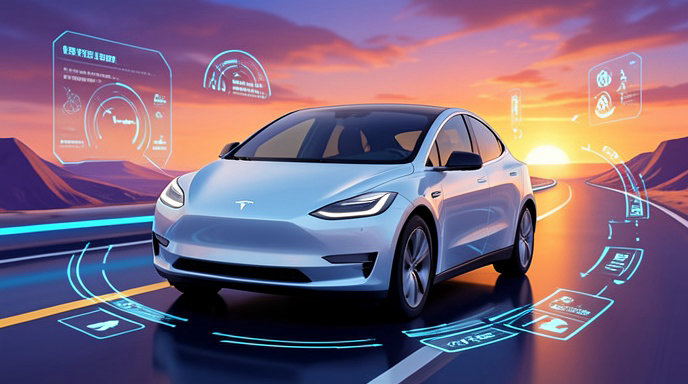
TL;DR
- The 2026 Tesla Model Y (manufactured on or after November 12, 2025) is the first vehicle to pass NHTSA's new advanced driver assistance system (ADAS) safety benchmark, setting a new industry standard.
- The Model Y successfully passed four newly added rigorous pass/fail tests: pedestrian automatic emergency braking, lane keeping assistance, blind spot warning, and blind spot intervention, while also meeting the program's original four ADAS requirements.
- This achievement validates Tesla's vision-based safety technology and signals to the entire automotive industry that elevated federal safety standards are both achievable and expected going forward.
A HISTORIC MILESTONE IN AUTOMOTIVE SAFETY
The automotive industry has reached a pivotal moment. On May 7, 2026, the U.S. Department of Transportation's National Highway Traffic Safety Administration (NHTSA) announced that the 2026 Tesla Model Y has become the first vehicle model to pass the agency's newly implemented advanced driver assistance system (ADAS) safety benchmark. This milestone represents more than just a corporate achievement—it marks a fundamental shift in how the government evaluates and certifies the safety technologies that are rapidly becoming standard across modern vehicles.
The announcement comes at a time when automakers are increasingly equipped with sophisticated driver assistance features, yet consumers often lack reliable, government-backed information about how these technologies actually perform. The new NHTSA standards aim to close that critical gap.
UNDERSTANDING THE NEW SAFETY TESTS
The NHTSA's New Car Assessment Program (NCAP), which administers the familiar 5-Star safety rating system, recently underwent a significant overhaul. In 2024, the agency introduced four new pass/fail tests specifically designed to evaluate advanced driver assistance capabilities. These tests represent a departure from traditional crash testing by focusing on accident prevention rather than accident survivability.
The four newly added criteria that the Model Y successfully passed are:
- Pedestrian automatic emergency braking—the vehicle's ability to detect and respond to pedestrians in the roadway
- Lane keeping assistance—technology that helps maintain proper lane position during highway driving
- Blind spot warning—systems that alert drivers to vehicles in their blind spots
- Blind spot intervention—active systems that can intervene if a vehicle begins to drift into an occupied blind spot
Beyond these four new tests, the Model Y also satisfied NHTSA's original four ADAS requirements: forward collision warning, crash imminent braking, dynamic brake support, and lane departure warning. In total, the vehicle passed eight advanced driver assistance criteria, demonstrating comprehensive performance across the full spectrum of modern safety technologies.
THE TESLA MODEL Y'S ACHIEVEMENT
The specific vehicles earning this distinction are 2026 Tesla Model Y units manufactured on or after November 12, 2025. This date is significant because it marks when Tesla began implementing the refined hardware and software configurations that enabled the vehicle to meet the rigorous new standards.
What makes this achievement particularly noteworthy is that all of these safety features come standard on the Model Y. Tesla has not reserved its most advanced safety capabilities for premium trim levels or optional packages—they are available to every buyer. This approach contrasts with some competitors who offer similar features only on higher-end models or as costly add-ons.
The Model Y's success validates Tesla's long-standing approach to vehicle safety architecture. Rather than relying on a complex array of specialized sensors and radar systems like traditional automakers, Tesla's vehicles use a vision-based system—essentially sophisticated cameras and neural networks—to interpret the driving environment and respond appropriately. The fact that this approach not only meets but exceeds NHTSA's rigorous new standards suggests that the company's technology is both mature and effective.
WHY THESE STANDARDS MATTER
For decades, NHTSA's safety ratings have focused almost exclusively on how vehicles protect occupants during crashes. While crash testing remains essential, the agency recognized that modern vehicles possess capabilities that can prevent crashes from occurring in the first place. The new ADAS tests represent an acknowledgment that accident avoidance is just as important as accident survival.
The timing of these new standards is particularly relevant. As driver assistance features become increasingly common—and as consumers are often confused by the varied branding and marketing claims surrounding these technologies—standardized government testing provides much-needed clarity. Features that one manufacturer calls "Intelligent Collision Avoidance" and another calls "Smart Stop Technology" can now be evaluated using identical criteria, allowing consumers to make informed comparisons.
NHTSA officials have emphasized that these pass/fail tests are designed to keep consumers informed and to promote the adoption of ADAS technologies across the industry. In a statement accompanying the announcement, officials noted that the new standards represent "a significant step forward in our efforts to provide consumers with the most comprehensive safety ratings ever."
IMPLICATIONS FOR THE AUTOMOTIVE INDUSTRY
Tesla's achievement as the first vehicle to pass these new tests carries significant implications for competitors. The announcement essentially sets a benchmark that other manufacturers must now meet or exceed. For legacy automakers that have invested heavily in traditional sensor-based safety systems, this creates both a challenge and an opportunity.
The challenge is clear: if other manufacturers cannot quickly bring vehicles to market that pass these tests, they risk appearing less safe in consumers' minds. The opportunity lies in the fact that meeting these standards is demonstrably achievable. NHTSA officials have explicitly stated that they hope to see many more manufacturers develop vehicles capable of meeting these requirements, signaling that this is not an impossible standard but rather an expectation for the industry going forward.
Some analysts view this development as particularly significant given the current regulatory environment. The announcement that Tesla has set a new safety standard may influence how federal agencies approach future automotive regulations, potentially favoring technology approaches that have proven effective in real-world testing.
THE BROADER CONTEXT
It's worth noting that the Model Y's perfect score on these ADAS benchmarks arrives at a moment when driver assistance technology is becoming increasingly sophisticated. Modern vehicles can now perform complex tasks—maintaining safe distances from other vehicles, detecting and responding to pedestrians, and actively steering to keep vehicles in lanes—with minimal human intervention.
These capabilities carry profound implications for road safety. According to safety experts, human error remains the primary cause of the vast majority of vehicle crashes. When properly engineered and rigorously tested, driver assistance systems have the potential to dramatically reduce this human error component, potentially saving thousands of lives annually.
The Model Y's success demonstrates that current driver-assist systems—when engineered with sufficient rigor and tested against demanding standards—can effectively augment human driving capabilities. This validation is particularly important as the industry moves toward increasingly autonomous vehicles.
WHAT'S NEXT
The announcement of the Model Y's achievement is unlikely to be the end of this story. Other manufacturers are almost certainly working to bring vehicles to market that can pass these same tests. The competitive pressure to match Tesla's achievement will likely accelerate development timelines across the industry.
Additionally, NHTSA may continue to refine and expand its ADAS testing criteria as technology evolves. The agency's approach suggests a commitment to keeping safety standards aligned with the capabilities of modern vehicles, ensuring that government ratings remain meaningful and relevant to consumers.
For consumers shopping for vehicles in 2026 and beyond, the new ADAS pass/fail ratings will provide valuable information alongside the traditional 5-Star crash test ratings. This more comprehensive safety assessment should enable more informed purchasing decisions and potentially drive market demand for vehicles with advanced safety capabilities.
CONCLUSION
The Tesla Model Y's achievement in becoming the first vehicle to pass NHTSA's new advanced driver assistance system tests represents a watershed moment for the automotive industry. It demonstrates that modern driver assistance technologies can be rigorously tested and reliably certified, providing consumers with trustworthy information about real-world safety performance.
For Tesla, the achievement reinforces the company's positioning as a technology leader in automotive safety. For the broader industry, it sets a new standard that competitors will need to meet. And for consumers, it promises a new era of more transparent, comprehensive safety ratings that account for the full spectrum of modern vehicle capabilities.
As the automotive industry continues its rapid technological evolution, this announcement signals that safety standards are evolving in tandem, ensuring that government oversight remains meaningful and that consumers have access to the information they need to make safe choices.

Get All The Latest Updates Delivered Straight To Your Inbox For Free!