
Google's Dreambeans: Transforming Your Life into a Cartoon Experience
TL;DR
- Google Labs has launched Dreambeans, an experimental AI app that turns data from connected Google services into a finite set of personalized daily stories rather than an endless feed.
- The app can draw from Gmail, Calendar, Photos, YouTube, and Search history, and it can generate AI illustrations that may include the user, loved ones, or pets with permission.
- Dreambeans is currently available to eligible Google AI Ultra subscribers in the U.S. on Android and iOS, with a waitlist open to other users.
Google’s Dreambeans is the latest experimental app from Google Labs, and it aims to do something unusual: turn your everyday digital life into a curated, cartoon-like story experience. Rather than feeding you an endless stream of content, the app generates a limited set of personalized stories each day, designed to surface ideas, trips, events, hobbies, and other suggestions that may matter to you.
What Dreambeans does
Dreambeans uses Google’s Personal Intelligence system to synthesize information from connected Google products and create a daily set of AI-generated stories. Google says the goal is not to encourage scrolling forever, but to produce a finite collection of stories that can spark ideas and help users focus on what matters.
The app can connect to Gmail, Google Calendar, Google Photos, YouTube, and Search history, though users choose which services to link during setup. Google also says the app’s settings are separate from Personal Intelligence settings in other products such as Gemini and AI Mode.
Why it feels different from a normal AI app
Dreambeans is not positioned as a generic chatbot or a standard recommendation engine. According to reporting and Google’s own description, it is built to proactively “dream up” personalized stories overnight, then present them as a fresh morning collection. Google says the name reflects that idea: the system works while users sleep, processes context from their connected apps, and “brews” the result into daily “beans” of inspiration.
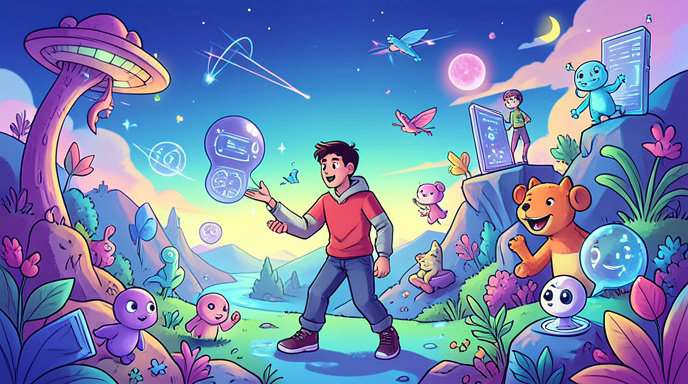
The experience also has a visual layer. Stories can be paired with custom AI-generated illustrations, and in some cases the app can place the user, their family members, or even pets into the scene using Google Photos data and face grouping, if the user opts in. That gives Dreambeans a more whimsical, storybook feel than a typical productivity assistant.
Potential uses
Google and early coverage describe Dreambeans as a tool for discovering things to do and think about, not just a novelty. The stories can include suggestions such as places to visit, topics to explore, things to try, upcoming trips, or events worth knowing about.
That makes the app potentially useful for:
- Daily inspiration and idea generation
- Travel planning and outing suggestions
- Personalized reminders based on calendar context
- Lightweight discovery across a user’s own data instead of a generic feed
Google is also clearly framing Dreambeans as an antidote to doomscrolling and infinite feeds. Instead of serving a bottomless stream, it delivers only a handful of stories each day, typically around 10 to 14 according to reporting.
Privacy and control
Because Dreambeans relies on deeply personal data, privacy is central to the product’s pitch. Google says users decide which services to connect, and they can provide feedback on recommendations or add interests manually. Reporting also states that users can delete their data whenever they want, and that the stories are only visible to the user.
At the same time, the product’s design raises familiar questions about how much context an AI system should access in order to feel truly personalized. Dreambeans depends on combining information across multiple Google services, which may feel convenient to some users and invasive to others. The app’s current opt-in model and limited availability suggest Google is testing how far users are willing to go in exchange for tailored experiences.
Availability and rollout
Dreambeans is currently available in the U.S. to eligible Google AI Ultra subscribers aged 18 and older on Android and iOS. Other users can join a waitlist with a personal Google account.
Google Labs says users need to connect at least one supported app to get started, and Google recommends linking multiple sources for the richest experience. The experimental status also means the product could change quickly as Google gathers feedback from early users.
Why Dreambeans matters
Dreambeans is part of a broader shift in consumer AI: instead of waiting for users to ask a question, the system tries to anticipate what might interest them next. That makes it both compelling and controversial. On one hand, it could reduce information overload and help people rediscover useful parts of their own data. On the other, it highlights how powerful—and sensitive—personal data synthesis becomes when AI starts narrating your life back to you.
For now, Dreambeans is less a finished product than a signal of where Google may want AI to go next: more proactive, more personal, and far more immersive than a conventional assistant.

Get All The Latest Updates Delivered Straight To Your Inbox For Free!