
Pentagon Links Major Chinese Companies to Military Support Amid Controversy
TL;DR
- The Pentagon has updated its Chinese Military Companies list, adding Alibaba, Baidu, BYD, and Unitree and saying the firms support China’s military or defense-industrial base.
- The designation does not immediately ban the companies from operating in the U.S., but it can restrict Pentagon contracting and raise regulatory, investor, and reputational risks.
- The move is controversial because an earlier version of the list was briefly released and then withdrawn, fueling questions about transparency and the handling of sensitive national-security designations.
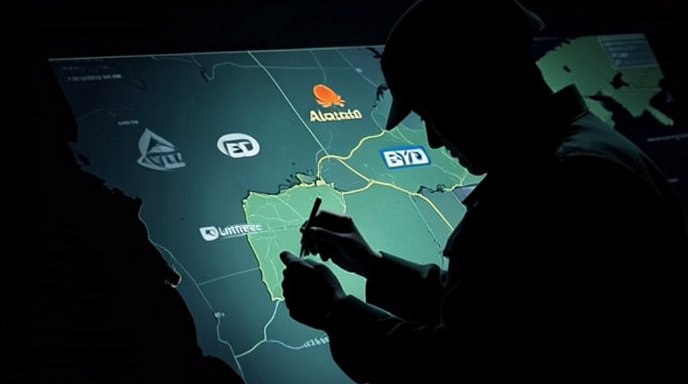
The Pentagon has put some of China’s most recognizable companies — including Alibaba, Baidu, BYD, and Unitree — on a U.S. government list that identifies firms the Defense Department says support China’s military. The update adds fresh pressure to already strained U.S.-China technology ties and revives debate over how Washington should balance national security concerns with transparency and market stability.
What the Pentagon said
The revised list is part of the Pentagon’s annually updated roster of Chinese companies it believes are linked to Beijing’s military ambitions. According to the Defense Department’s framework, the designation covers not only firms directly controlled by military authorities but also those that contribute to China’s broader defense-industrial ecosystem.
The latest update expanded the roster to 188 Chinese entities, up from roughly 130 the year before. It also added several companies outside the traditional defense sector, underscoring Washington’s view that China’s private technology and industrial firms can still play a strategic role in military modernization.
Why Alibaba, Baidu, BYD, and Unitree were included
The new additions stand out because they are not conventional defense contractors. Alibaba is best known for e-commerce and cloud computing, Baidu for search and artificial intelligence, BYD for electric vehicles, and Unitree for robotics.
U.S. national security officials have long argued that China’s military-civil fusion strategy can blur the line between civilian innovation and military use. In that view, firms leading in cloud services, AI, robotics, batteries, sensors, and advanced manufacturing can contribute indirectly to military capabilities even if they are not arms producers in the traditional sense.
What the designation changes
Being placed on the list does not mean the companies are immediately sanctioned or banned from general business in the United States. But it does carry practical consequences, especially for defense-related business.
Companies on the list can face:
- Restrictions on Pentagon contracts
- Greater difficulty accessing certain federal research funding
- Heightened scrutiny from investors, policymakers, and suppliers
- Reputational damage that may affect global partnerships
The list therefore functions less like a full sanctions regime and more like a national-security warning label with real commercial consequences.
The controversy over the withdrawn list
The latest update is drawing attention not only because of who was included, but because of what happened earlier this year. In February, the Pentagon briefly released an updated version of the list and then withdrew it within minutes to about an hour, depending on the account, without giving a clear explanation.
That earlier episode deepened skepticism among China hawks in Washington, especially because the withdrawn version reportedly touched on companies seen as important to China’s chip and technology ambitions. The abrupt reversal raised questions about whether the Defense Department was trying to avoid confusion, legal exposure, or diplomatic fallout.
Why this matters now
The latest move comes at a sensitive moment in U.S.-China relations, where technology controls, export restrictions, and military competition are increasingly overlapping. Adding household-name firms such as Alibaba and BYD signals that Washington is widening its focus beyond traditional defense suppliers and looking more aggressively at civilian technology leaders that may be relevant to military modernization.
For global markets, the designation is another reminder that Chinese tech firms can face sudden policy risk from Washington even when they operate primarily in consumer or commercial sectors. For policymakers, the controversy underscores a broader challenge: how to make national-security decisions that are both credible and transparent without creating unnecessary confusion in the process.
The broader strategic picture
This episode reflects a larger U.S. strategy of mapping China’s industrial base more broadly, rather than limiting attention to explicitly military companies. That approach assumes that advanced AI, robotics, EV supply chains, cloud infrastructure, and semiconductors can all support military power in indirect but meaningful ways.
It also highlights an increasingly common feature of the tech rivalry between Washington and Beijing: companies that once seemed far removed from geopolitics are now being pulled into the center of it.

Get All The Latest Updates Delivered Straight To Your Inbox For Free!