
Robotaxi Rivalry: Uber, Wayve, and Waymo Gear Up for London Showdown
TL;DR
- Uber has opened an interest list in the U.K. as it prepares to match riders with Wayve autonomous vehicles in London, pending regulatory approval.
- Waymo is also targeting London for its European debut, setting up a direct robotaxi contest in one of the world’s toughest urban testing grounds.
- London is emerging as a major autonomous-vehicle battleground, with regulators, safety rules, and passenger pilots likely to shape how fast robotaxis can scale.
Uber opens the door to robotaxi rides
Uber has begun letting U.K. customers sign up to increase their chances of being matched with a Wayve autonomous vehicle in London, a clear signal that the company is moving closer to launching robotaxi service in the city. Uber said the service is expected to arrive in the coming months, but only after regulatory approval is secured.
The company’s current plan is to let riders request trips in the Uber app as usual, with some of those rides potentially fulfilled by a Wayve vehicle at no extra cost compared with a human-driven trip. Riders who want to participate can opt in through account settings, and they will still be able to decline an autonomous vehicle if one is offered.
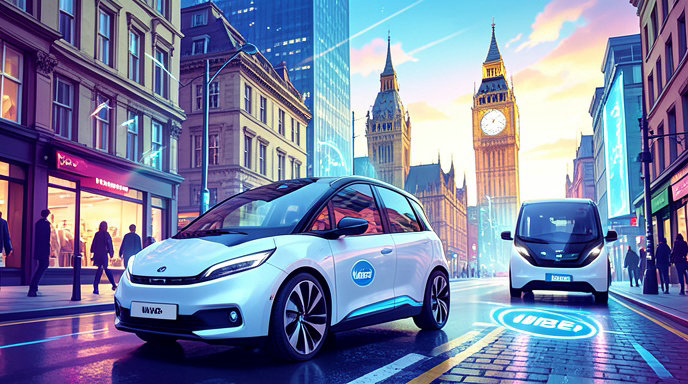
Uber has also shown off a branded black Ford Mustang Mach-E equipped with Wayve’s self-driving system, underscoring that the partnership is moving from concept toward public rollout.
Wayve’s London push gains momentum
Wayve, the U.K.-based self-driving startup backed by major investors including Microsoft and SoftBank, has been building toward a commercial robotaxi pilot in London. Reporting from earlier in 2026 said the company and Uber were aiming to begin trials in spring 2026, with early service expected to use vehicles that still have a human safety operator behind the wheel before progressing to fully driverless operation later on.
That cautious approach reflects both the complexity of London’s roads and the regulatory environment around automated vehicles in the U.K. Wayve has also been working with Uber under a partnership first announced in 2024, and the latest customer interest list suggests the companies are preparing the public-facing side of the launch.
Waymo wants London too
Uber’s move comes as Waymo prepares to enter the same market, creating a direct clash between two of the best-known names in autonomous ride-hailing. Waymo announced plans to bring its ride-hailing service to London in 2026, initially with test drives and safety experts behind the wheel, before a broader launch later if approvals are granted.
Waymo has said its London service will be its first European robotaxi operation and only its second international city after Tokyo. Earlier reporting suggested the company was targeting a launch by late 2026, with regulatory approval and coordination with local authorities still required.
Waymo’s London strategy appears to follow the same staged model it has used elsewhere: first build data and operating familiarity, then move toward fully driverless passenger service once regulators are satisfied.
Why London matters so much
London is more than just another city on an AV map; it is one of the most symbolically important robotaxi markets in the world. The city’s dense traffic, historic street layout, frequent pedestrian crossings, and complicated road hierarchy make it a difficult proving ground for self-driving systems.
The U.K. has also recently created a clearer pathway for self-driving passenger services. The Automated Vehicles Act laid the groundwork in 2024, and new regulations have opened the door for companies to apply to run commercial passenger services on British roads. Government officials have repeatedly framed the rollout as part of a broader push to make the U.K. a leader in autonomous transport.
That regulatory openness is what has turned London into a rare overlap zone where Uber, Wayve, Waymo, and potentially other players can all compete for the same future market.
Safety, regulation, and the road to full autonomy
Even with approvals moving forward, the London launches are not expected to be fully driverless from day one. The early phase for both Uber-Wayve and Waymo is likely to involve safety drivers or safety operators as companies collect local driving data and demonstrate reliability.
That caution reflects the concerns of transport authorities, including questions about how automated vehicles will perform across different road types, traffic conditions, and times of day. Transport for London has also raised uncertainty about whether self-driving vehicles will truly deliver better safety outcomes in a city as complex as London.
Still, proponents argue that automated systems do not suffer from fatigue, distraction, or impairment in the way human drivers do, which is central to the case for their long-term safety advantages.
The business stakes are rising fast
The London race is also happening against a backdrop of major funding and strategic bets. Wayve recently raised $1.5 billion, including support from Microsoft, Nvidia, Uber, and several major automakers, giving it the capital to push toward commercial deployment and broader global expansion.
For Uber, the partnership with Wayve offers a way to stay relevant in a market where autonomous technology could eventually replace a meaningful share of human-driven ride-hailing trips. For Waymo, London offers a chance to prove its technology in a globally visible market outside the U.S. and strengthen its position as the best-known robotaxi operator.
The competitive dynamic is straightforward: whoever can navigate London’s regulations, prove safety, and earn rider trust first will likely set the tone for the next phase of urban autonomous mobility in Europe.

Get All The Latest Updates Delivered Straight To Your Inbox For Free!