
Satellite Breakthrough: Autonomous Earth Observation Revolutionizes Discovery
TL;DR
- An Earth observation satellite has now found targets on its own in orbit, using a vision-language AI system that processed natural-language queries without ground analysts.
- NASA and partners have also demonstrated Dynamic Targeting, an onboard AI approach that can scan, decide, and capture useful images in under 90 seconds, reducing wasted downlink and cloud-obscured imagery.
- The breakthrough points to a future of more autonomous, faster, and more efficient satellite missions for environmental monitoring, disaster response, and fleet coordination.
A satellite that can look for things itself
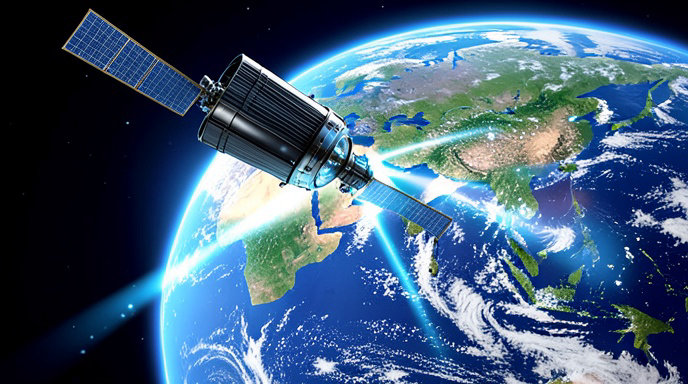
A new milestone in Earth observation has moved satellite imaging closer to true autonomy: for the first time, a spacecraft has reportedly identified what it was looking for without human analysts on the ground. According to TechCrunch, the achievement happened in April aboard YAM-9, a spacecraft built by Loft Orbital, where a software package from NASA’s Jet Propulsion Laboratory used a vision-language model to identify areas of interest from natural-language queries.
That matters because it changes the role of satellites from passive collectors to active decision-makers. Instead of simply recording huge volumes of imagery and waiting for humans to sort through it later, the satellite can now interpret a request, inspect what it sees, and choose what is worth capturing.
How onboard AI changes Earth observation
The central shift is onboard processing. NASA has separately shown a system called Dynamic Targeting, which lets a satellite look ahead along its orbital path, analyze imagery onboard, and decide where to point its sensor, all without human input. In NASA’s tests, the full scan-decide-capture process took less than 90 seconds.
That speed is important because low-Earth-orbit satellites move quickly and can miss short-lived events. NASA said the system on CogniSAT-6 tilts forward to scan for cloud cover, then pitches back to image only clear scenes, cutting down on wasted observations. The result is more efficient science data and less time spent downlinking images that turn out to be unusable.
Why this is a big deal for future missions
Autonomous target selection could reshape how satellites are designed and operated. If a spacecraft can decide in orbit what is worth imaging, mission teams can reduce reliance on constant ground intervention and focus human effort on analysis rather than routine tasking.
This also opens the door to smarter responses for fast-changing events. NASA and reporters covering the test said future upgrades could help satellites track wildfires, storms, and other transient phenomena, while inter-satellite communication could eventually allow fleets to coordinate under NASA’s Federated Autonomous Measurement project. That would turn isolated satellites into collaborative sensing networks.
Better data, less waste
One of the biggest practical benefits is improved data quality. Traditional Earth observation often collects vast amounts of imagery, much of which is discarded because of clouds, poor lighting, or limited relevance. NASA’s Dynamic Targeting approach addresses that by checking conditions first and imaging only when the scene is useful.
The TechCrunch report suggests the new vision-language model approach goes even further by allowing natural-language queries to guide the spacecraft’s onboard search. If that capability matures, analysts could ask for specific features or conditions and get targeted returns without manually scanning entire image sets later.
What this means for environmental monitoring
The implications for environmental monitoring are significant. Satellites that can autonomously recognize clear views, detect changes, and prioritize unusual scenes could improve observations of deforestation, coastal change, floods, wildfire spread, crop stress, and storm development.
Because the satellite is making decisions in orbit, it can react faster than a ground-only workflow. That matters when the target is temporary or rapidly evolving, and it is especially useful when weather or cloud cover makes repeated imaging inefficient.
The bigger AI-in-space trend
This milestone also fits a broader trend in space systems: moving intelligence closer to the sensor. ESA has been testing similar ideas with Φsat-2, a cubesat intended to show how AI can advance Earth observation. Other recent industry efforts are also pushing toward AI-first and more autonomous Earth observation platforms.
Taken together, these efforts suggest a shift from raw data collection toward decision-ready intelligence generated in orbit. That could change the economics of satellite missions by making each observation more valuable and reducing the burden on ground infrastructure.
What to watch next
The next questions are about reliability, scale, and trust. Vision-language models and onboard AI must work consistently in the harsh environment of space, with limited power, memory, and compute resources. They also need to avoid false positives and show that autonomous decisions improve science output rather than simply adding complexity.
If those hurdles are cleared, the result could be a new generation of satellites that do not just observe Earth, but actively decide what Earth is worth observing.

Get All The Latest Updates Delivered Straight To Your Inbox For Free!