
Sundar Pichai Confronted by Protests at Stanford Graduation Over Google’s Controversial Ties
TL;DR
- Around 200 Stanford students walked out of Google CEO Sundar Pichai’s 2026 commencement speech, booing and chanting in protest.
- The demonstration centered on Google’s contracts with the Israeli government through Project Nimbus and broader objections to ties involving the IDF, DHS, and ICE.
- Pichai’s speech largely avoided AI and did not directly address the protest, while students held a separate “People’s Commencement” led by activists.
Protest erupts during Stanford commencement
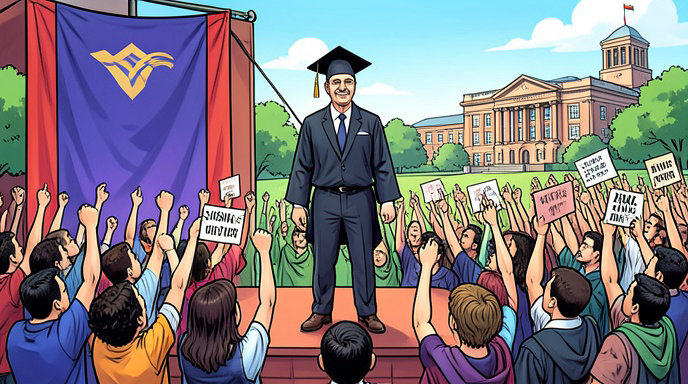
Google CEO Sundar Pichai faced a loud student protest at Stanford University’s 2026 graduation ceremony, where a large group of graduates stood, chanted, and walked out as he began his keynote address. Reports estimate that roughly 200 students left the venue, with some waving Palestinian flags, blowing whistles, and wearing keffiyehs.
Video and eyewitness accounts describe boos, chants of “Free, free Palestine,” and signs criticizing Google’s role in contracts connected to the Israeli government and U.S. agencies. The protest briefly transformed what was meant to be a celebratory campus milestone into a public rebuke of one of Silicon Valley’s most prominent executives.
Why students targeted Google
The walkout was organized by Stanford’s Students for Justice in Palestine chapter and the No Tech for Apartheid campaign. Protesters focused heavily on Project Nimbus, the $1.2 billion cloud-computing deal Google and Amazon signed with the Israeli government in 2021.
Critics of the contract say it supplies technology services to Israeli state agencies during the Gaza war and enables surveillance and other government uses they oppose. Some signs and chants also referenced Google’s reported ties to the IDF, the U.S. Department of Homeland Security, and ICE, reflecting wider student anger at what they see as the political and ethical consequences of big tech contracts.
Pichai’s speech and the campus atmosphere
According to reports, Pichai largely stayed away from AI topics in his remarks, even though many recent commencement speeches by tech leaders have been interrupted over artificial intelligence, employment fears, and labor concerns. One report said he appeared to acknowledge the tension with a light remark, but he did not address the protest directly.
Students who walked out reportedly held their own “People’s Commencement,” with activist Mahmoud Khalil delivering the keynote, underscoring how the protest had become its own parallel event. The split scene highlighted the depth of disagreement on campus over how universities should respond to the contracts and political entanglements of major technology firms.
A broader clash over tech and ethics
The Stanford protest fits into a wider trend of campus unrest directed at technology executives and the social role of their companies. While some recent commencement disruptions have centered on AI, this episode was different: the anger was aimed less at product strategy and more at the moral implications of corporate partnerships with governments and security agencies.
That distinction matters because it shows how tech controversies are increasingly spilling beyond boardrooms and product launches into public academic spaces. For students at Stanford, Pichai’s appearance became a symbol of the broader debate over whether universities should celebrate leaders whose companies are entangled in contested state contracts and wartime politics.

Get All The Latest Updates Delivered Straight To Your Inbox For Free!