
SpaceX's IPO at Risk: India's Regulatory Hurdles for Starlink Expansion
TL;DR
- India’s latest hesitation over Starlink appears tied to security concerns, including reported unauthorized use of Starlink terminals in Iran, raising fresh doubts about the company’s rollout in the country.
- The regulatory path for Starlink in India has been uneven: the company has previously won key approvals, but final operational clearance, spectrum-related steps, and security sign-off have remained vulnerable to delay.
- Any prolonged stall could complicate SpaceX’s growth narrative ahead of a possible IPO by slowing Starlink’s international expansion story and adding uncertainty to its future subscriber and revenue growth.
India’s regulatory caution is once again putting Starlink in the spotlight
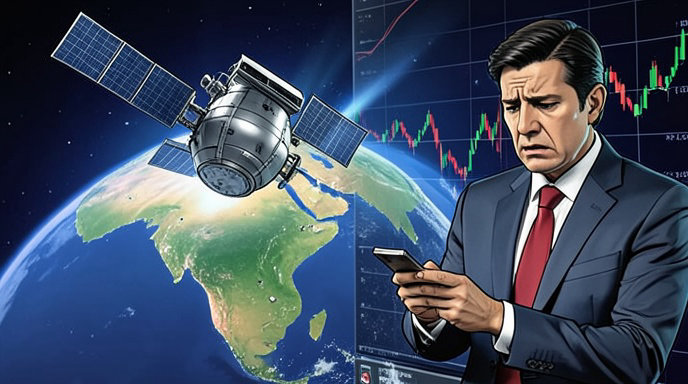
The latest setback comes as reports say Indian authorities have frozen final approvals for Starlink amid concerns about how its terminals were used during the Iran conflict, reviving questions about security, control, and the pace of SpaceX’s global expansion.
The move matters because Starlink is one of SpaceX’s most important growth engines. If India remains shut or only partially open, it could weaken one of the company’s biggest international market opportunities at a moment when SpaceX is widely viewed as preparing for a future public listing.
Regulatory progress has been real, but incomplete
Starlink has spent years trying to enter India, and the company has already crossed several major regulatory hurdles. Reuters reported in July 2025 that India’s space regulator, IN-SPACe, granted Starlink a license to begin commercial activity, removing what had been described as the last major regulatory obstacle. Earlier reporting also said the Department of Telecommunications had issued a Letter of Intent and that the company had complied with revised security conditions.
But licensing was never the end of the story. Even after these approvals, Starlink still needed spectrum allocation, infrastructure rollout, and continued security compliance before it could fully launch commercial service. That sequence has made the company vulnerable to fresh political and security scrutiny at every stage.
Why the government is worried
The newest hesitation appears to stem from national security concerns rather than simple commercial caution. Bloomberg, as reported by India Today and Mint, said Indian security agencies withheld final clearances after concerns arose over reported use of Starlink terminals in the Iran conflict. The issue appears to have sharpened doubts inside government about whether a US-based satellite operator can be effectively controlled during geopolitical tensions.
That concern is consistent with India’s earlier stance. In late 2021, the Department of Telecommunications publicly warned that Starlink was not licensed to offer satellite internet services in India and told the company to stop pre-selling services until it had the required authorization. Since then, Indian officials have repeatedly tied approval to strict compliance around security, data movement, and lawful use of terminals.
FDI and security clearance remain sensitive pressure points
India allows up to 100% foreign direct investment in satellite services, but investments above 74% require government approval, which makes the FDI process a potential bottleneck for Starlink’s business model. According to recent reporting, the company’s FDI application has been placed on hold and could even face rejection if unanswered concerns remain.
That matters because satellite internet is not just a licensing story. To operate at scale, Starlink needs approval across multiple layers: spectrum, ground infrastructure, terminal control, data governance, and foreign investment. Reporting from Business Standard said security clearance was still “in limbo” even after IN-SPACe and DoT approvals, underscoring how regulatory progress in one channel does not guarantee launch readiness.
What this means for Starlink’s India strategy
India is one of the world’s most attractive long-term telecom and broadband markets, especially for remote and underserved areas where satellite internet can fill gaps in terrestrial coverage. Starlink has also been building a local ecosystem, including reported partnerships with major Indian telecom players such as Jio, Airtel, and Vodafone Idea.
Yet those commercial alliances may not be enough to overcome security skepticism. If the government keeps the rollout on hold, Starlink could lose momentum in a market that has already taken years to open. That would also delay the company’s ability to translate Indian demand into subscriber growth, recurring revenue, and a stronger global narrative for investors.
Why this matters for SpaceX’s IPO story
SpaceX’s valuation story depends heavily on the expansion of Starlink, which has been central to investor expectations about future revenue growth. Yahoo Finance reported that the India delay could pose a challenge ahead of a SpaceX IPO, especially as Starlink’s customer acquisition has reportedly slowed in recent financial disclosures.
That combination is important. SpaceX’s IPO case is not only about rockets and launch contracts; it is also about whether Starlink can keep scaling into new markets fast enough to justify a premium growth narrative. A prolonged stall in India would not derail SpaceX by itself, but it would remove a major international growth opportunity and reinforce concerns that geopolitical and regulatory constraints could cap Starlink’s expansion.
The broader pattern: global ambition meets local sovereignty
The India episode reflects a larger trend in the global rollout of strategic technologies. Governments increasingly want not just market access and investment, but also visibility into how data, infrastructure, and communications systems are controlled. The Atlantic Council described Starlink’s India launch as a case study in New Delhi’s approach to “tech sovereignty,” highlighting that the dispute is as much about control as connectivity.
That tension may define Starlink’s path forward in India. Even if final approval eventually comes, the delay signals that access to large markets will likely depend on more than product demand and commercial partnerships. For SpaceX, that means the road to IPO-level growth may be shaped as much by regulators in New Delhi as by engineers in Hawthorne.

Get All The Latest Updates Delivered Straight To Your Inbox For Free!