
Startups Encouraging Real-Life Connections Over Screen Time
TL;DR
- A growing wave of startups is trying to make offline life more engaging by building products that push people into shared, in-person experiences rather than endless scrolling.
- Founders behind companies like Board and Cyberdeck are leaning into physical games, DIY projects, and social rituals as alternatives to screen-first entertainment.
- The broader trend reflects a bigger shift in tech: consumers, parents, and researchers are increasingly focused on digital balance and on creating more real-world connection.
A new countertrend in consumer tech
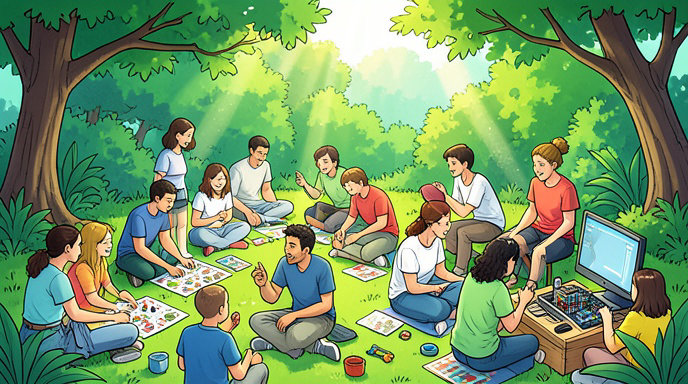
A notable startup movement is emerging around a simple idea: not every product has to keep users glued to a screen. Instead, some founders are designing products that encourage people to gather, build, play, and socialize in the physical world, using technology as a starting point rather than the main event.
That shift aligns with broader concerns about screen-heavy habits. Recent reporting on pediatric guidance says screen-time limits alone are no longer seen as enough, because platform design and algorithmic engagement can shape behavior in ways that simple time caps do not address. Research summarized in a review on screen time also links heavy use with poorer psychological well-being and reduced face-to-face interaction.
What companies like Board are building
Startups such as Board are part of this push toward offline engagement by focusing on products and activities that get people away from solitary screen use and into shared experiences. In this category, the appeal is not just nostalgia or “digital detox” branding; it is the idea that modern consumers still want novelty, but they want it packaged around real-world participation.
These products often work because they create a reason to meet up. Instead of optimizing for passive consumption, they are built around participation, whether that means group play, collaborative challenges, or hands-on activity. That design philosophy mirrors advice from public-health and family-wellness sources that encourage swapping screen time for offline hobbies, group activities, and tech-free spaces.
Cyberdeck and the DIY revival
Cyberdeck fits into a related but distinct lane: makership and DIY culture. Rather than competing with social media for attention, products in this space aim to turn curiosity into tangible creation.
The attraction of DIY-focused startups is that they offer a built-in social layer. People do not just buy a product; they build, tinker, share progress, and compare results in person. That can make a device or kit feel more like a community activity than a consumer gadget. It also taps into a broader appetite for experiences that are physical, skill-based, and collaborative rather than algorithm-driven.
Why this trend is gaining traction now
The timing makes sense. Public discussion around digital well-being has shifted from whether screens are “good” or “bad” to how people can preserve healthy relationships with technology. A behavioral health overview describes digital well-being as keeping the relationship between people and devices in balance, including through tech-free zones, time limits, and offline activities.
At the same time, research and policy discussions continue to emphasize that excessive screen use can crowd out real-life interaction, which matters for social skills, emotional development, and group belonging. Even where online communities provide value, the argument for offline products is that in-person interactions offer a different kind of depth and social reinforcement.
The business case for real-world connection
For startups, this is more than a wellness angle. It is also a product strategy.
Physical experiences can create:
- Stronger loyalty, because people remember shared moments more vividly than passive app use
- Higher social virality, since activities are naturally shared with friends and communities
- Clearer differentiation, in a market crowded with software that competes for attention
- Less dependence on algorithmic engagement, which can make brands feel more trustworthy
That makes the category appealing to founders who want to build around community rather than attention extraction. It also resonates with consumers who are increasingly skeptical of products designed to maximize screen time at all costs.
What makes these startups different from “digital detox” brands
These companies are not necessarily anti-technology. The more interesting versions of the trend use tech as a facilitator, not the destination.
Instead of asking users to abandon digital tools entirely, they often:
- Use software to coordinate offline meetups
- Turn devices into tools for planning, making, or learning
- Design products that lead to shared physical outcomes
- Build communities around real-world play, crafting, or experimentation
That distinction matters. It suggests the category is not just about rejecting screens, but about rebalancing what technology is for.
The bigger cultural signal
The rise of startups centered on physical interaction reflects a broader cultural shift. Families are looking for healthier digital habits, educators are emphasizing offline engagement, and even pediatric guidance is increasingly focused on the environments and systems around screens rather than screen time alone.
In that context, companies like Board and Cyberdeck are not just selling products. They are selling a different vision of modern tech: one where devices and software help

Get All The Latest Updates Delivered Straight To Your Inbox For Free!