
Antares Secures $470M to Power U.S. Military with Small Modular Nuclear Reactors
TL;DR
- Antares has raised $470 million in Series C funding to accelerate its nuclear microreactor program for defense and space uses, including planned deployments on U.S. military installations by 2028.
- The company’s work is tied to the Air Force’s Advanced Nuclear Power for Installations (ANPI) initiative, which is exploring on-base reactors to improve energy resilience and reduce dependence on vulnerable grid supply.
- Antares has already achieved a key technical milestone: its R1 reactor reached self-sustaining fission reaction in June 2026, but the technology has not yet produced commercial power at scale.
Antares Secures $470M to Power U.S. Military with Small Modular Nuclear Reactors
Antares has landed a $470 million Series C round to push its nuclear microreactor technology from the lab toward real-world military deployments, with the first systems targeted for U.S. installations by 2028. The funding underscores growing investor interest in advanced nuclear power as the Pentagon looks for more resilient, on-site energy sources for critical bases.
Why the military wants microreactors
The appeal is straightforward: military bases need power that is steady, secure, and less exposed to outages, extreme weather, or grid disruptions. Antares argues that on-site reactors could reduce reliance on commercial grids that are increasingly strained and, in some cases, vulnerable to adversary targeting.
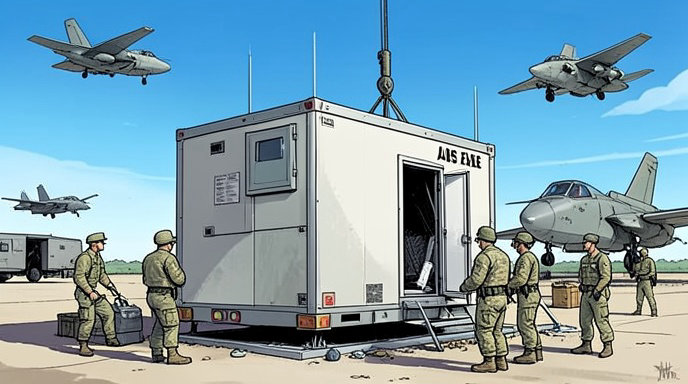
The Department of the Air Force’s ANPI program is designed to field commercially owned and operated microreactors for domestic military installations, with a goal of having at least one advanced nuclear reactor operating on a service site by 2030 and, in some cases, by 2028. Antares was selected for Joint Base San Antonio, alongside other vendors assigned to other bases under the same effort.
What Antares is building
Antares is developing microreactors intended to deliver small-scale, continuous power for years without refueling. Its reactor systems are described as compact enough for military use, with power output in the low-megawatt range.
The company says its R1 reactor reached criticality in June 2026, meaning it sustained a fission reaction for the first time. That is an important scientific milestone, but it is not the same as producing electricity for an operational grid or base. Antares does not expect its first electricity-generating system until next year, according to reporting tied to the funding announcement.
A major but still unproven bet
The new capital marks a significant step for Antares, but the technology remains early-stage and unproven at commercial scale. No microreactor is currently in service in the United States, and the path from criticality to a fielded, licensed, operating system still includes engineering, regulatory, and siting hurdles.
Even so, the size of the raise suggests investors and defense customers see strategic value in moving quickly. Antares’ backers include Paradigm and Caffeinated Capital, with additional participation from Point72 Ventures, Shine Capital, and Industrious Ventures, among others.
The broader energy-security picture
If Antares and similar companies succeed, the military could gain a new class of power systems that are harder to disrupt than fuel convoys or aging grid connections. That has implications not just for base resilience, but also for how the Pentagon thinks about energy independence in an era of climate stress, rising electricity demand, and contested infrastructure.
The stakes are especially high because the government’s interest is not theoretical: the ANPI program is meant to bring microreactors onto operational military sites within this decade. Antares’ latest funding round suggests the company is now better positioned to compete for that future, even if it still has to prove its reactors can move from demonstration to dependable power delivery.
What happens next
Antares says the new funding will accelerate the move from demonstrated reactor physics toward fielded power systems for defense and space customers. The next major tests will be technical and regulatory: turning a critical reactor into a licensed, deployable machine that can operate safely on a military base.
If that happens, the payoff could be significant: cleaner on-site power, reduced dependence on vulnerable fuel logistics, and a possible template for how the U.S. military powers remote or high-value facilities in the future.

Get All The Latest Updates Delivered Straight To Your Inbox For Free!