
Honda's Surprising Shift: Entering the Energy Storage Market with Data Center Batteries
TL;DR
- Honda is repurposing its Ohio EV battery plant to produce batteries for AI data centers, partnering with LG Energy Solution to deliver energy storage systems (ESS).
- The strategic pivot aims to fill the gap left by slower electric vehicle demand adoption while capitalizing on the booming cloud infrastructure market.
- The company acquired LG Energy Solution's stake in the joint venture for $2.85 billion, securing full control to accelerate production of 40 GWh capacity batteries.
From EVs to AI: A Strategic Pivot
In a move that has caught the attention of both the automotive and tech industries, Honda Motor is fundamentally altering the trajectory of its U.S. manufacturing ambitions. The Japanese automaker, long synonymous with reliable vehicles, is now repurposing a massive lithium-ion battery plant in Ohio—originally built to supply electric vehicles—to produce batteries specifically designed for artificial intelligence data centers.
This strategic pivot marks a decisive shift from traditional automotive manufacturing toward the high-growth energy storage sector. As the global demand for electric vehicles faces a temporary cooling due to slower adoption rates, Honda is leveraging its existing infrastructure to meet the insatiable energy needs of the digital world. By targeting AI data centers, Honda is positioning itself at the forefront of the cloud infrastructure boom, ensuring its factories remain productive while the EV market stabilizes.
The Ohio Plant: A New Home for Data Center Power
The heart of this transformation lies in Honda's Ohio facility, located in Jeffersonville (often referred to as Fayette County). This plant was a cornerstone of Honda's electrification strategy, designed to produce batteries for electric cars. However, with the EV market experiencing a slowdown, the company faced the risk of idle production lines.
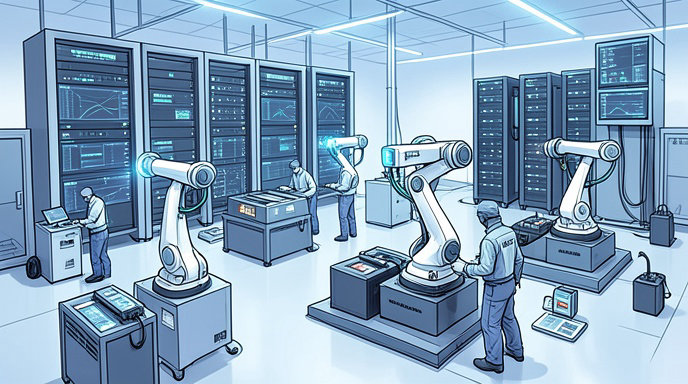
Instead of letting the factory sit dormant, Honda, in partnership with South Korea's LG Energy Solution, has kicked off production of batteries for energy storage systems (ESS). These systems are critical for maintaining the stability and efficiency of AI data centers, which require massive, uninterrupted power supplies to run complex algorithms. The new production line is expected to deliver a capacity of 40 GWh, a significant volume that underscores Honda's commitment to this emerging market.
Securing Control: The $2.85 Billion Acquisition
To fully execute this vision and accelerate production, Honda has taken a bold financial step. The company recently acquired LG Energy Solution's stake in the Ohio joint venture battery facility for $2.85 billion. This regulatory filing, revealed in late December, grants Honda full control over the plant's operations.
By securing 100% ownership, Honda removes potential bottlenecks and gains the autonomy to rapidly scale up battery production for data centers. This acquisition is not just a financial transaction; it is a strategic maneuver to "buy time" until EV demand recovers, ensuring that the company's massive manufacturing assets continue to generate value in a shifting economic landscape.
Capitalizing on the Digital Boom
The timing of Honda's entry into the energy storage market is opportunistic. As AI models become more sophisticated, the computational power required to train and run them has skyrocketed, leading to a surge in data center construction. These facilities are energy-intensive, and the need for efficient, reliable energy storage solutions is paramount.
Honda's new focus allows it to capitalize on this digital boom. By producing batteries specifically designed for data centers, the automaker is addressing a critical component of the modern digital infrastructure. This move demonstrates Honda's agility in adapting to market trends, transforming a potential setback in the EV sector into a significant opportunity in the energy storage arena.
A Future of Hybrid Innovation
Honda's shift to energy storage does not mean it is abandoning its automotive roots. Rather, it represents a hybrid approach to innovation, where the company leverages its battery expertise across multiple sectors. The technology developed for EV batteries is directly applicable to the energy storage needs of data centers, making this pivot a natural evolution of Honda's capabilities.
As the company continues to ramp up production in Ohio, the automotive industry is watching closely. Honda's decision to pivot toward the energy storage market signals a broader trend where traditional manufacturers are diversifying their portfolios to remain resilient in a rapidly changing global economy. With AI data centers driving the next wave of technological advancement, Honda is ready to power the future, proving that innovation can come from unexpected places.

Get All The Latest Updates Delivered Straight To Your Inbox For Free!