
Lyft and Baidu Launch Robotaxi Services in London
TL;DR
- Lyft and Baidu are moving ahead with plans to test Apollo Go robotaxis in London, with initial trials expected in 2026 if regulators approve the project.
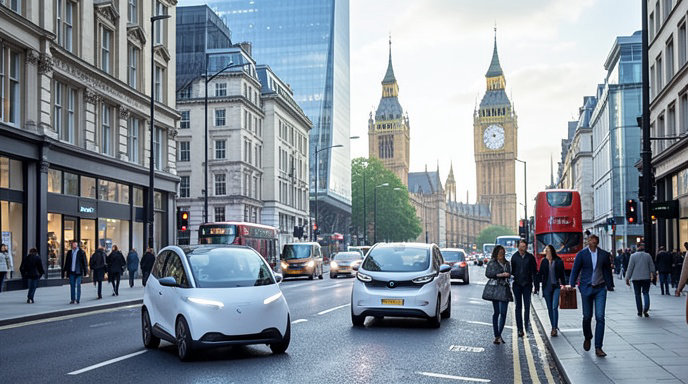
- Baidu’s RT6 is an electric, purpose-built autonomous vehicle designed for ride-hailing, and Lyft plans to integrate it into the Lyft/Freenow ecosystem in the city.
- The rollout could make London a major European proving ground for robotaxis, alongside Waymo and other autonomous vehicle operators already testing there.
Lyft and Baidu Launch Robotaxi Services in London
Lyft and Baidu are preparing to bring autonomous ride-hailing to London, with trials of Baidu’s Apollo Go vehicles expected to begin in 2026, pending regulatory approval. The move follows a broader push to make the UK capital one of Europe’s most important test beds for commercial self-driving taxis.
According to reports, Lyft will be one of the companies integrating Baidu’s autonomous vehicles into its mobility platform in London, with early testing planned before a larger rollout later on if the program proves successful. Reuters reported that the Apollo Go RT6 vehicles are slated to enter ride-hailing networks in London by 2026.
What Baidu is bringing to the market
Baidu’s Apollo Go platform is already one of the world’s most established robotaxi services, operating at scale in China across multiple cities. The service has completed millions of fully driverless trips, which gives the London effort a more mature technical foundation than many early-stage autonomous vehicle pilots.
The vehicle at the center of the partnership is the Apollo Go RT6, an electric robotaxi designed specifically for ride-hailing use. That purpose-built design is important because it is not simply a conventional car retrofitted with sensors; it is engineered around autonomy, passenger transport, and fleet deployment from the start.
How Lyft and Freenow fit into the plan
The London trials are expected to run through the Lyft and Freenow ecosystem, giving Baidu’s vehicles access to a ride-hailing network already positioned for urban mobility. That integration could help reduce one of the biggest challenges for robotaxis: turning a technological demo into a usable consumer service with dispatch, routing, and fleet management built in.
For Lyft, the partnership appears aimed at expanding beyond traditional rides and into next-generation transport services in Europe. Reports indicate that the company hopes to begin with dozens of vehicles and scale to hundreds if regulators approve and the pilot performs well.
Why London matters
London is emerging as a strategic battleground for autonomous vehicles because regulators are beginning to create a framework for small-scale commercial trials. That makes the city unusually attractive to robotaxi developers looking for a high-profile urban environment with dense traffic, complex streets, and strong public visibility.
The Baidu-Lyft effort also places London into direct competition among major autonomous mobility players. Reuters noted that the rollout would create the first direct rivalry in a European capital between American and Chinese autonomous technology leaders, while Waymo has already begun supervised testing in the city.
Regulatory approval remains the critical hurdle
Despite the momentum, none of these services can launch publicly without approval from UK regulators. That means the current phase is best understood as preparation: vehicle shipment, branding, mapping, testing, and safety validation before any commercial service can begin.
That regulatory reality matters because autonomous ride-hailing still depends heavily on local rules governing safety, remote monitoring, insurance, and operational limits. In other words, the technology may be ready for trials, but the public launch timeline still depends on the pace of government sign-off.
What this could mean for urban transportation
If the trials succeed, London could become one of the first major Western cities to see robotaxis integrated into a mainstream ride-hailing app at meaningful scale. That would be a significant milestone for urban transportation, especially because it would show how autonomous fleets can be folded into existing consumer mobility platforms rather than introduced as standalone experiments.
The bigger implication is competitive pressure: more robotaxi programs in more cities could accelerate both technical development and regulatory clarity. For riders, that could eventually mean lower-cost trips, better vehicle utilization, and more consistent service availability, though those benefits remain contingent on safe deployment and policy approval.
The road ahead
For now, the key milestones are straightforward: finish preparing the vehicles, complete mapping and testing, and secure authorization from UK regulators. If those steps go smoothly, London may soon become one of the most closely watched robotaxi markets in the world.

Get All The Latest Updates Delivered Straight To Your Inbox For Free!