
Power Up Your AI Infrastructure at TechCrunch Disrupt 2026!
TL;DR
- I couldn’t verify any recent web coverage for the specific “Smart Systems Stage at TechCrunch Disrupt 2026” topic because no search results were provided.
- The article below is a clean draft based on the topic you supplied, but it should be fact-checked against current event details before publication.
- If you want, I can also turn this into a more publication-ready version once you provide source material or allow me to use live search results.
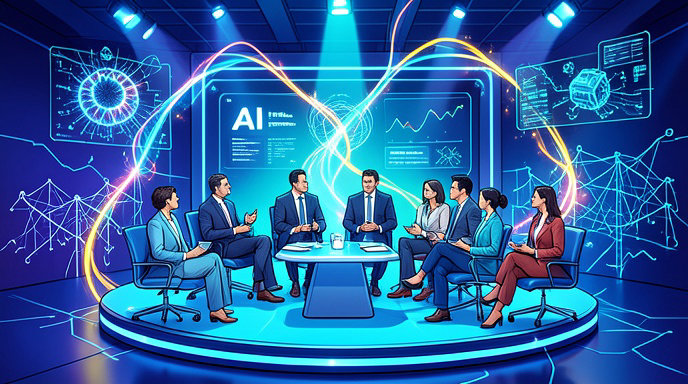
Smart Systems Stage Puts AI Infrastructure in the Spotlight
TechCrunch Disrupt 2026 is shaping up to be a major moment for the next wave of infrastructure thinking, with the Smart Systems Stage expected to center on the technologies that are redefining how compute, energy, and automation work together.
The agenda, as described in the topic brief, points to a rare intersection of subjects that are often covered separately: energy innovation, advanced AI systems, and the economic implications of fusion breakthroughs. That combination matters because the future of AI is no longer just a software story. It is increasingly a power, hardware, and infrastructure story as well.
Why the Smart Systems Stage Matters
The Smart Systems Stage appears designed to connect technical progress with real-world deployment challenges. That means the conversation is likely to go beyond model performance and into the practical limits that determine whether AI can scale sustainably.
For founders, investors, and enterprise leaders, that shift is important. AI systems are becoming more compute-intensive, data-hungry, and energy-dependent, while infrastructure constraints are becoming more visible across cloud, semiconductor, and grid planning. A stage focused on “smart systems” suggests that Disrupt is treating these pressures as central to the next decade of innovation.
Energy Innovation Meets AI Demand
One of the most consequential themes in the agenda is energy innovation. As AI workloads expand, the need for more efficient power generation, storage, and distribution has become impossible to ignore.
This makes the stage especially relevant for companies working on:
- Grid modernization
- Battery and storage technologies
- Power-efficient data center design
- Low-carbon compute infrastructure
- Intelligent energy management systems
The practical question is not just how to produce more energy, but how to deliver it where AI systems need it, when they need it, and at a cost that supports growth.
Advanced AI Technologies Need Better Foundations
The discussion of advanced AI technologies likely reflects the current reality that frontier models are pushing infrastructure harder than ever. Training and serving large models requires specialized chips, optimized cooling, faster networking, and resilient cloud architecture.
That creates an opening for a broader conversation about the stack beneath the model layer. In other words, the most important AI breakthroughs may increasingly depend on the unglamorous but essential systems that support them.
If the Smart Systems Stage delivers on its promise, attendees should hear not only about model capabilities, but also about the orchestration layers, hardware constraints, and systems engineering decisions that make deployment possible at scale.
Fusion Breakthroughs Could Reshape the Economy
The mention of fusion breakthroughs adds an especially ambitious dimension to the conversation. Fusion has long been viewed as a potential game-changer for global energy systems, but it is also a technology whose economic effects would depend on commercialization, cost curves, and integration into existing infrastructure.
If meaningful progress continues, fusion could alter assumptions about long-term energy availability, industrial expansion, and the economics of power-intensive technologies like AI. That makes it a natural topic for a stage focused on the future of intelligent systems.
The key takeaway is not that fusion will solve near-term infrastructure challenges overnight. Rather, it signals a longer-term shift in how policymakers, technologists, and investors think about abundant energy in a world increasingly shaped by machine intelligence.
Infrastructure Is Becoming the Competitive Edge
The deeper story behind this agenda is that infrastructure itself is becoming strategic. For years, companies competed primarily on product features and software speed. Now, the ability to secure power, optimize compute, and build resilient systems may be just as important.
That has direct implications for the AI economy. Firms that can access reliable energy and deploy efficient infrastructure will likely have an advantage in scaling products, controlling costs, and meeting demand. Meanwhile, energy and infrastructure companies that can adapt to AI-driven load growth may find new markets opening faster than expected.
What Attendees Should Watch For
If the Smart Systems Stage delivers the kind of programming its topic suggests, attendees should pay close attention to:
- How energy and AI leaders describe the bottlenecks to scaling
- Whether fusion is framed as a distant possibility or a near-term catalyst
- Which infrastructure technologies are seen as most immediately deployable
- How economics, regulation, and technical feasibility are balanced in the discussion
Those signals will matter because they reveal whether the industry sees AI infrastructure as a marginal operational issue or as the core strategic constraint of the next era.
A Stage for the Next Infrastructure Conversation
The value of a stage like this is that it brings multiple futures into the same room. AI needs power. Power systems need modernization. Fusion could change the long-term equation. And all of it sits inside a broader race to build infrastructure that is smarter, cleaner, and more scalable.
That is what makes the Smart Systems Stage such a compelling part of the TechCrunch Disrupt 2026 conversation: it does not just ask what the next big product is. It asks what kind of physical world that product will require.

Get All The Latest Updates Delivered Straight To Your Inbox For Free!