
Private Space Pilots Take to the Skies for US Space Force Missions
TL;DR
- **Record-Breaking Launch:** Rocket Lab and True Anomaly achieved a historic "tactically responsive" space mission for the U.S. Space Force, launching an orbital satellite just 16 hours and 42 minutes after receiving the launch notice—a new benchmark for rapid military deployment.
- **Top Gun-Inspired Tactics:** The "Victus Haze" mission involves a high-stakes, simulated orbital dogfight where True Anomaly's Jackal spacecraft maneuvers around Rocket Lab's satellite, mimicking the aggressive aerial tactics seen in the film *Top Gun* to test on-orbit threat response.
- **Strategic Partnership:** The U.S. Space Force awarded $32 million to Rocket Lab and $30 million to True Anomaly to develop and operate rendezvous-capable spacecraft, proving that private "space pilots" can now execute critical national security missions with unprecedented speed.
Private Space Pilots Take to the Skies for US Space Force Missions
The U.S. Space Force has officially demonstrated that the future of orbital defense lies not just in government arsenals, but in the agile capabilities of private aerospace innovators. In a groundbreaking exercise known as Victus Haze, Rocket Lab and True Anomaly have proven that private companies can launch and operate critical military satellites with a speed that borders on the impossible.
On June 19, 2026, Rocket Lab’s Electron rocket lifted off from Launch Complex 1 in Mahia, New Zealand, carrying a Pioneer-class spacecraft into low Earth orbit. The mission was a triumph of logistics: the launch occurred just 16 hours and 42 minutes after the Space Force issued the notice to launch. This shattered the previous responsive space record by over 10 hours, establishing a new standard for "launch on demand" capabilities. For the military, this means that in the event of a crisis or an emerging threat, satellites can be deployed to the sky almost overnight, rather than waiting months for traditional scheduling.
The "Top Gun" of the Orbital Dogfight
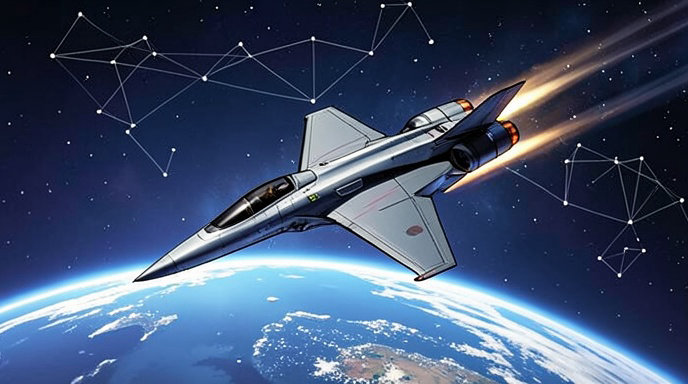
While the speed of the launch was the headline, the tactical maneuvering of the mission is where the real excitement lies. The Victus Haze mission was designed to simulate a high-stakes, on-orbit dogfight, drawing clear inspiration from the cinematic aerial tactics of the film *Top Gun*.
In this simulation, True Anomaly’s Jackal spacecraft serves as the aggressor, initially posing as a hostile satellite from a potential adversary like China or Russia. Once in orbit, the roles switch in a dramatic display of precision. True Anomaly’s Jackal satellite actively maneuvers around Rocket Lab’s satellite, executing a complex rendezvous and proximity operation.
This isn't just a passive observation; it is a dynamic, aggressive maneuver designed to test the military's ability to counteract "on-orbit aggression." The Space Systems Command described the exercise as a "realistic threat response scenario," where private "space pilots" are tasked with the dangerous job of intercepting and inspecting suspicious objects in space. The visual of one spacecraft circling another in the vacuum of space evokes the same high-energy, close-quarters tension found in the film's most famous scenes.
$62 Million in Private Innovation
The success of Victus Haze underscores a massive shift in how the U.S. Department of Defense approaches space technology. The Space Force awarded a $32 million contract to Rocket Lab and a $30 million contract to True Anomaly to lead this demonstration.
Rocket Lab was responsible for designing, building, launching, and operating the rendezvous-capable spacecraft, while True Anomaly provided the command and control center and the Jackal interceptor. This partnership highlights a growing trend where the government acts as the customer, leveraging the speed, innovation, and cost-efficiency of private startups to build critical national security infrastructure.
According to the mission timeline, both companies are expected to deliver their spacecraft no later than the fall of 2025 for future iterations of the program, ensuring that the U.S. maintains a robust and rapidly deployable presence in low Earth orbit.
From Simulation to Real-World Defense
The Victus Haze mission is more than just a military exercise; it is a proof of concept for a future where space domain awareness is dynamic and reactive. By successfully launching an imaging satellite to inspect an object in orbit and then maneuvering it with precision, Rocket Lab and True Anomaly have validated the concept of "tactically responsive space."
This capability is vital for national security. As the number of satellites in orbit grows, the risk of collision and conflict increases. The ability to rapidly deploy a satellite to inspect a suspicious object, or to maneuver a spacecraft to intercept a potential threat, is no longer a theoretical possibility—it is now a proven reality.
As the U.S. Space Force continues to refine these tactics, the "private pilots" of Rocket Lab and True Anomaly are poised to become the backbone of future orbital defense operations. With their record-breaking launch and Top Gun-inspired maneuvers, they have shown that the skies of space are open for business, and the future of space warfare is faster, sharper, and more innovative than ever before.

Get All The Latest Updates Delivered Straight To Your Inbox For Free!