
SpaceX Launch Setback: Starship V3 Ignition Aborted, Stock Droops
TL;DR
- SpaceX's second Starship V3 launch attempt was aborted after ignition due to a combination of technical faults, including a hydraulic pin failure on the launch tower and a water diverter error on the pad.
- The FAA has grounded the Starship V3 fleet pending a "mishap investigation" into a previous booster splashdown that impacted a hazard area in the Gulf of Mexico, causing flight delays.
- While the user query mentions a drop in stock performance, no public stock data exists for SpaceX as it remains a private company; the market reaction likely refers to broader aerospace sector sentiment or investor speculation rather than a public ticker drop.
The Abort: Seconds After Ignition
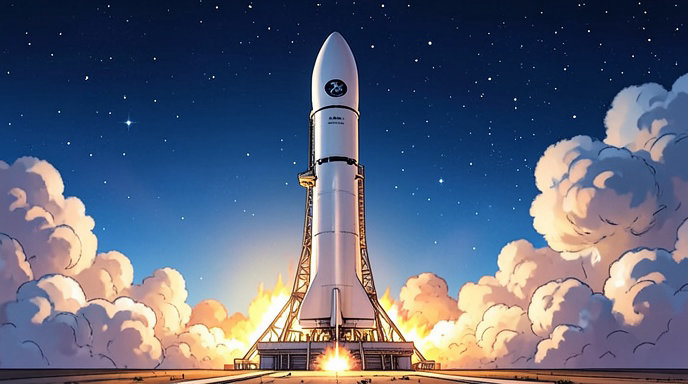
SpaceX faced a significant setback during its ambitious Starship V3 program when the second launch attempt of the upgraded rocket was aborted just after ignition. The towering 407-foot vehicle, the largest and most powerful of its kind, was placed on hold due to a cascade of technical issues that emerged in the final moments of the countdown. While the rocket itself remained undamaged, the ground support equipment at the Starbase, Texas facility proved to be the source of the failure.
The launch, which had been targeted for a 90-minute window beginning at 6:30 p.m. Eastern time on May 21, 2026, was officially called off at 7:40 p.m. EST. SpaceX representatives quickly reclassified the event as a "wet dress rehearsal" rather than a full flight test, indicating that the vehicle was fueled but not intended to leave the pad under these conditions.
Technical Root Causes: A Triple Failure
Engineers identified three separate technical faults that forced the scrub, marking a complex failure scenario for the ground systems. According to reporting from MEXC and other outlets, the primary issues included:
- A hydraulic pin on one of the massive mechanical arms of the launch tower that failed to retract as intended.
- An error with the water diverter on the launch pad, which is critical for managing the acoustic and thermal energy of the engines.
- A fault with the quick-disconnect system that links the rocket to ground equipment, preventing the necessary separation for liftoff.
Notably, the rocket's 33 Raptor engines and the upper stage were in good condition, confirming that the abort was not due to a propulsion failure but rather a ground system malfunction. Elon Musk confirmed the hydraulic pin issue on social media, stating that if the malfunction could be remedied overnight, a new attempt would be made the following day.
The FAA Grounding: A New Hurdle
Compounding the launch delay, the Federal Aviation Administration (FAA) has initiated a formal investigation that has effectively grounded the Starship V3 fleet. The agency is investigating a "mishap" from a previous flight where the Super Heavy booster failed to ignite all designated engines during its boostback burn. Instead of a controlled landing, the booster executed a partial boostback and splashed down with significant force in the Gulf of Mexico, impacting a designated "hazard area".
This incident caused five airborne delay situations, forcing aircraft into holding patterns until the situation stabilized. The FAA has mandated that SpaceX complete a full mishap investigation and receive approval on its final report and corrective measures before any future Starship V3 launches can proceed. This regulatory hurdle adds a layer of uncertainty beyond the immediate technical fix required for the launch tower.
Market Reaction and Stock Reality
The user's query references a drop in stock performance following the abort. However, it is critical to clarify that SpaceX is a private company and does not have a publicly traded stock ticker. Therefore, there is no official "SpaceX stock" that can drop on the public market.
The "market reaction" described in the prompt likely refers to investor sentiment within the broader aerospace sector or speculation regarding SpaceX's valuation among private investors. While the company's public valuation has fluctuated in private markets, the immediate news of the launch scrub and the FAA investigation has not resulted in a public stock price decline. The narrative of a "stock drop" may be a misinterpretation of sector-wide volatility or a conflation with publicly traded competitors like Boeing or Lockheed Martin, which often see movement when major space events occur.
What's Next for Starship V3?
Despite the setbacks, SpaceX remains on track to resume testing. The rocket is intact and parked on the pad while engineers analyze data from the aborted attempt. The company has already targeted a fresh launch opportunity, with reports indicating a potential attempt as early as Friday, May 22, pending the resolution of the hydraulic pin and water diverter issues.
The path forward involves not only fixing the ground systems but also navigating the FAA's investigation timeline. Until the agency approves SpaceX's corrective measures for the previous booster splashdown, the Starship V3 program will remain in a holding pattern, delaying the company's ambitious goals for rapid space exploration and satellite deployment.

Get All The Latest Updates Delivered Straight To Your Inbox For Free!