
Amazon's Texas Mega Data Center Could Become America's Largest Climate Polluter
TL;DR
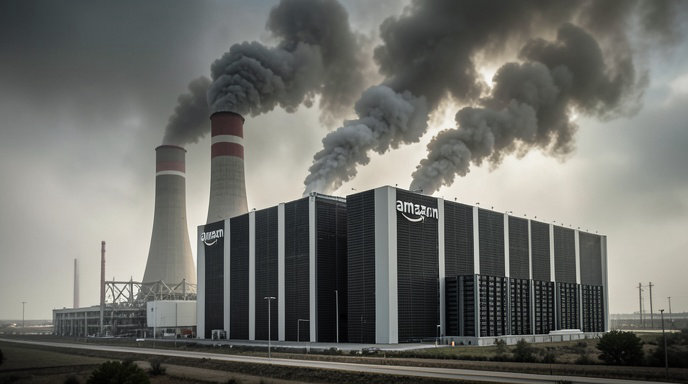
- Amazon's proposed data center campus in Texas includes a massive dedicated natural gas power plant that is projected to emit over 5 million metric tons of CO2 annually, potentially making it the largest single climate polluter in the U.S.
- The fossil-fuel-powered project directly conflicts with Amazon's Climate Pledge to reach net-zero carbon by 2040 and highlights a growing trend of tech giants abandoning renewable energy goals to power AI infrastructure.
- The development underscores the escalating environmental cost of the AI and cloud computing boom, as hyperscalers increasingly turn to on-site gas generation to bypass strained power grids and meet surging energy demand.
A Gigawatt-Scale Bet on Gas
Amazon Web Services is planning one of the largest data center campuses in its history in Texas, and it won't be plugging into the grid to power it. According to recent filings and environmental analyses, the company intends to build a massive, dedicated natural gas power plant directly alongside the facility to provide round-the-clock power.
While Amazon has not publicly disclosed the full specifications, reports indicate the on-site plant could generate well over 1 gigawatt of electricity — enough to power hundreds of thousands of homes. That scale is being driven by the insatiable energy demands of next-generation AI training and cloud computing workloads, which require far more consistent and intensive power than traditional data centers. Instead of waiting years for new grid connections and renewable energy procurement, Amazon is opting to build its own fossil fuel infrastructure.
Poised to Become America's Biggest Polluter
The climate implications are staggering. Environmental groups and analysts who have reviewed air permit applications estimate the Texas gas plant would emit between 5 and 7 million metric tons of greenhouse gases per year when operating at full capacity.
If those projections hold true, the single campus would surpass the current largest stationary sources of climate pollution in the United States, which include some of the nation's biggest coal-fired power plants and industrial complexes. It would effectively create a new, top-ranked polluter solely to serve cloud and AI operations. Beyond CO2, the plant would also be a major source of nitrogen oxides, methane leakage, and other pollutants, raising concerns for local air quality and public health in the surrounding Texas community.
A Direct Collision With The Climate Pledge
The project puts Amazon's highly publicized climate commitments under intense scrutiny. The company co-founded The Climate Pledge in 2019, committing to reach net-zero carbon emissions across its operations by 2040 and to power its operations with 100% renewable energy.
Amazon has made progress on renewable procurement, becoming one of the world's largest corporate buyers of solar and wind. However, critics argue that building new, long-lived natural gas infrastructure locks in decades of fossil fuel dependence that cannot be offset by renewable energy credits purchased elsewhere. The Texas plant, with an expected operational lifespan of 30 years or more, would continue to emit massive amounts of carbon well past Amazon's 2040 net-zero deadline, calling into question how the company plans to account for and mitigate these emissions.
The AI Power Crunch Is Reshaping Big Tech's Energy Strategy
Amazon is not alone. The Texas proposal reflects a broader and accelerating shift across the tech industry. As the AI arms race intensifies, Microsoft, Google, Meta, and Amazon are all confronting the same problem: the U.S. power grid cannot expand fast enough to meet their data center growth.
In response, hyperscalers are increasingly turning to behind-the-meter power solutions — building their own gas plants, extending the life of coal plants, and investing in nuclear. While these moves guarantee the reliable, 24/7 power that AI infrastructure demands, they are rapidly eroding the climate progress the industry claimed in the last decade. Google and Microsoft have already acknowledged that their emissions are rising due to AI expansion, and Amazon's Texas project suggests the trend is set to accelerate.
What Happens Next
The Texas campus is still moving through the permitting process, and it is expected to face significant legal and regulatory challenges from environmental organizations and local residents. State air quality permits for the gas turbines will be a key battleground, with opponents likely to demand a full environmental impact review and stricter emissions controls.
For Amazon, the decision will be a defining test of its priorities. Whether the company moves forward with the gas-powered plan, pivots to a cleaner alternative like geothermal, nuclear, or long-duration storage, or attempts to justify the emissions through carbon offsets will signal how seriously Big Tech takes its climate promises when they conflict with the competitive pressure to dominate AI.

Get All The Latest Updates Delivered Straight To Your Inbox For Free!