
Ford Needs a New Taurus, Not a $30K Fathom EV Pickup
TL;DR
- Ford CEO Jim Farley’s claim that the upcoming “Fathom” EV pickup is a “Model T moment” is a major overstatement; the truck’s projected $30K price and compact size put it in a niche that won’t dent the full-size truck market.
- Historical comparison shows the 1986 Taurus saved Ford by redefining the midsize sedan segment and appealing to mainstream families—a volume play the Fathom cannot replicate.
- Ford’s actual path to stability is simpler: a profitable, reliable EV that sells steadily to existing truck and van loyalists, not a cultural reset that resets the company’s fortunes.
The “Model T” Claim: A Century of Hype vs. a Compact Truck
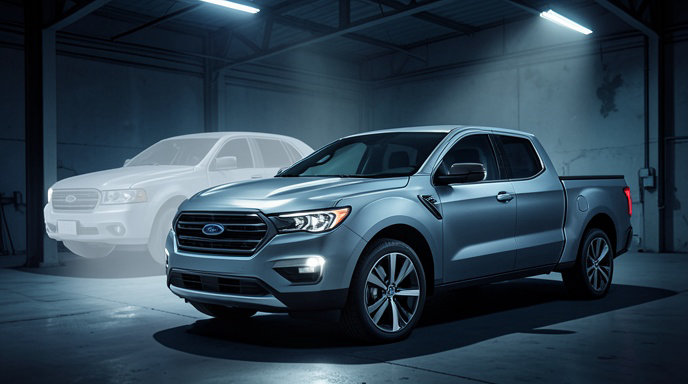
When Jim Farley stood in front of investors and called the Fathom EV pickup Ford’s “Model T moment,” the room likely buzzed. It’s the kind of rhetoric that makes headlines—a century-old echo of a vehicle that put the world on wheels. But the reality of the Fathom, a compact, sub-$30,000 electric truck aimed at urban and suburban buyers, is far less revolutionary. The Model T didn’t just lower prices; it created an entirely new category of personal mobility. The Fathom, by contrast, enters a crowded field of electric pickups and compact crossovers, with a price point that, while attractive, doesn’t undercut the market enough to spark a paradigm shift.
Farley’s comparison is also a misread of Ford’s own history. The real “savior” wasn’t a cheap utility vehicle—it was a sleek, aerodynamic sedan that redefined what a family car could be. The 1986 Taurus didn’t just sell well; it changed the company’s design language, manufacturing efficiency, and public perception. The Fathom, for all its promise, is a tactical product, not a strategic one.
The Taurus Analogy: Why a Sedan Saved Ford and a Truck Won’t
Go back to the early 1980s. Ford was bleeding cash, producing boxy, uninspired cars that lost to Honda and Toyota on quality and fuel economy. The Taurus was a gamble—a wind-tunnel-tested, round-edged sedan with a dashboard that wrapped around the driver, a 3.0L V6 that prioritized smoothness over power, and a price that undercut the imports. It wasn’t the cheapest car on the lot, but it was the most modern. It hit the market in 1986 and immediately became a phenomenon, selling over 200,000 units in its first full year and eventually becoming the best-selling car in America.
The Taurus succeeded because it addressed the mainstream—the suburban family, the sales rep, the small-business owner. It was a volume product that captured the middle of the market. The Fathom is the opposite: a niche vehicle aimed at urban dwellers, first-time EV buyers, and fleets looking for low-cost last-mile delivery. That’s a real market, but it’s not the heart of Ford’s profitability. Ford makes its billions on F-150s, Super Duties, and commercial vans. The Fathom won’t cannibalize those sales; it will merely add a small, incremental stream.
The Taurus also fixed a perception problem—that Ford couldn’t build a world-class car. The Fathom, by contrast, reinforces a perception that Ford is late to the EV party and is now scrambling with a budget option. That’s not a turnaround narrative; it’s a survival tactic.
The Price Trap: $30K Sounds Great Until You Read the Fine Print
The Fathom’s rumored $29,995 base price is the headline grabber. But dig deeper, and the story gets murkier. That price likely gets you a standard-range battery (maybe 200 miles), rear-wheel drive, and a bare-bones interior. The moment you add all-wheel drive, a larger battery, or any of Ford’s driver-assist tech, the price balloons toward $40,000. That’s the same territory as a base Tesla Cybertruck, a well-optioned Chevrolet Silverado EV, or a fully loaded gas-powered Ranger.
More importantly, the $30K price point is not a “Model T” disruption—it’s a competitive entry. The Model T was 60% cheaper than a horse-drawn carriage. The Fathom, after federal tax credits, might land around $22,500, but that’s still within spitting distance of a base Toyota Tacoma or a used F-150. The value proposition isn’t “I can’t afford a car otherwise”; it’s “I want a small electric truck for city errands.” That’s a lifestyle choice, not a market revolution.
Ford’s own history shows the danger of chasing low price without a category shift. The Pinto was cheap, but it was also a fire hazard and a PR disaster. The Focus was affordable, but it never matched the Taurus’s cultural impact. The Fathom risks being another “cheap Ford” that gets lost in a sea of compelling alternatives.
Why Ford Doesn’t Actually Need a Blockbuster
Here’s the contrarian twist: Ford may not need a Taurus-like home run to survive. The company’s current lineup—the F-150 Lightning, the Mustang Mach-E, and the E-Transit van—has already established a profitable EV foundation. The Lightning, despite production hiccups, is the best-selling electric truck in America. The Mach-E is a solid crossover that competes with the Model Y. The E-Transit owns the commercial van segment.
What Ford needs is consistency, not spectacle. The Fathom, if it launches on time, with decent range, and at a price that doesn’t spiral upward, can be a steady contributor—think of it as the EV equivalent of the 1990s Escort: not exciting, but reliable and profitable. Ford doesn’t need to reinvent the wheel; it needs to keep the wheels turning while the company transitions to a broader EV portfolio.
The real risk isn’t that the Fathom fails to become a Taurus. The risk is that Ford over-invests in marketing hype, under-delivers on production quality, and then blames the market for not embracing a vehicle that was never designed to be a mass-market leader. The Model T analogy sets an impossible bar. A better goal: make the Fathom the best-selling compact EV truck in its segment, achieve a 10% profit margin, and move on.
The Fathom’s Real Role: A Bridge, Not a Destination
Look at the broader context. Ford is investing heavily in a next-generation electric platform, code-named “TE1,” which will underpin larger trucks and SUVs in the late 2020s. The Fathom, built on a modified version of the current unibody EV architecture, is a bridge product. Its purpose is to generate cash flow, build battery supply chains, and test consumer appetite for smaller electric pickups—not to save the company.
If it sells 50,000 to 80,000 units a year, that’s a win. It keeps Ford’s factories busy, gives dealers a low-cost EV to lure in first-time buyers, and provides a data stream for future product development. It doesn’t need to sell 500,000 units. The Taurus’s success was a product of a different era, when a single model could carry a company. Today’s auto market is fragmented, and Ford’s future depends on a portfolio of vehicles across segments, not one hero car.
Farley’s “Model T” language is a classic CEO overpromise, designed to generate excitement for a stock price that has lagged. But investors should look past the rhetoric. The Fathom is a solid, sensible product. It’s just not a savior.
What Ford Should Actually Do: A New Taurus Is a Sedan, Not a Truck
If Farley wants a real “Taurus moment,” he should look at the gap in the market for a mainstream, affordable, midsize electric sedan. Tesla has the Model 3, but it’s aging. Hyundai and Kia have compelling options, but they lack Ford’s brand loyalty. A $35,000 Ford electric sedan with a 300-mile range, a comfortable interior, and Ford’s BlueCruise hands-free highway driving would be a genuine blockbuster. It would appeal to the same suburban families that bought the original Taurus, and it would fill a void left by Ford’s decision to kill the Fusion and Focus.
The Fathom is a niche product for a niche audience. An electric Taurus—call it the “Model E” or “Thunderbolt”—would be a volume play that could actually move the needle. It would also send a signal that Ford is serious about EVs for the masses, not just for truck buyers and urban hipsters.
Alas, Ford’s current roadmap doesn’t include such a sedan. The company’s leadership seems convinced that Americans only want trucks and SUVs, which is true—until it isn’t. Gas prices spike, and suddenly everyone wants a sedan. The original Taurus proved that Ford could pivot quickly. The Fathom, with its small bed and high seating position, is a cautious bet that doesn’t challenge any assumptions.
The Bottom Line: Steady Wins the Race
Ford doesn’t need a miracle. It needs execution. The Fathom, if it delivers on its price and range promises, will be a fine addition to the lineup. It won’t be a Model T, and it won’t be a Taurus. It will be a decent small truck that sells to a specific group of buyers. That’s okay.
The company’s real challenge is not product hype but operational discipline: controlling battery costs, ramping up production, and avoiding quality recalls. The Mach-E had a rough launch with software glitches. The Lightning had a battery fire that shut down production for weeks. If the Fathom launches clean and stays reliable, it will build trust. If it stumbles, the “Model T” quote will come back to haunt Farley.
In the end, the Fathom is a bridge to Ford’s future, not the future itself. The company’s salvation won’t come from a single vehicle but from a decade of consistent, profitable EV manufacturing. Farley would be wise to stop chasing headlines and start focusing on the boring, hard work of making good cars at scale. That’s what the Taurus did, and that’s what the Fathom can do—if only Ford lets it be a workhorse instead of a legend.

Get All The Latest Updates Delivered Straight To Your Inbox For Free!