
Google's Earth AI Feature Pulled After Just One Day Due to Misinformation Concerns
TL;DR
- Google withdrew its new AI image-generation feature for Google Earth about a day after launch, after users began sharing examples that raised misinformation concerns.
- The tool let people use text prompts to generate altered imagery on top of real satellite, aerial, and 3D map data, prompting fears it could be mistaken for authentic geospatial evidence.
- Google says the feature was experimental, included SynthID watermarking and other safeguards, and will return only after the company adds stronger guardrails.
Google’s rapid reversal
Google has pulled a newly launched AI image-generation feature from Google Earth after less than a day online, reversing course amid concerns that users could create misleading map imagery and share it as if it were real. The company confirmed it was “rolling back” the feature while it works on stronger protections.
The decision came shortly after Google introduced the tool on July 30 as a way to generate custom images using Google Earth’s satellite, aerial, and 3D imagery alongside its Nano Banana image model. Google said the feature was available globally on the web and was meant to let users “bring your ideas to life” directly on top of real-world map data.
What the feature did
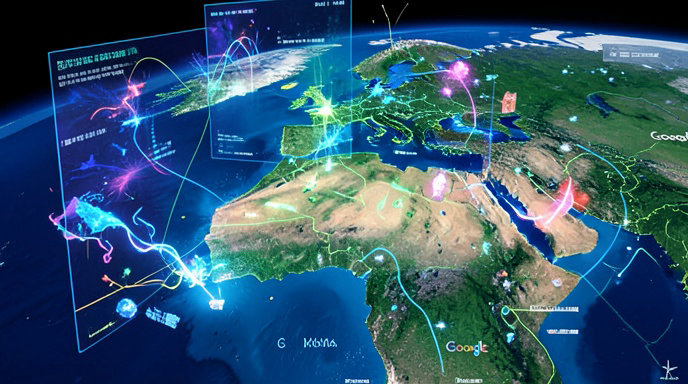
The new capability let users zoom into a place in Google Earth, tap “create image,” and enter a text prompt describing what they wanted to see. According to Google’s own announcement, the system was designed to generate “concepts grounded in the real world,” blending AI-created visuals with Earth’s geospatial layers.
That blend is exactly what made the feature controversial. Critics warned that AI-generated scenes over real satellite imagery could blur the line between authentic location data and fabricated content, especially if screenshots were stripped of context and reposted elsewhere.
Why the backlash grew so quickly
Reporting by BBC Verify highlighted concerns from experts about the potential for misuse, including the creation of false scenarios on top of real-world imagery that could then be downloaded and shared on other platforms. Other outlets reported that screenshots of generated images quickly circulated and appeared to violate Google’s own policies.
Google acknowledged that tension in its rollback statement, saying that while geospatial professionals had found useful applications for the tool, the company had also seen “people sharing screenshots of generated imagery that appear to violate our policies.” That combination of legitimate use cases and obvious abuse risk appears to have accelerated the shutdown.
Google’s defense: watermarking and guardrails
In response to the criticism, Google emphasized that every image made with Nano Banana in Google Earth included a SynthID digital watermark, which is intended to help identify AI-generated content. The company also said people can verify suspicious images using the Gemini app or Google Lens in Search.
Google further said it blocks image creation on harmful topics and continuously updates its protections. Even so, the company now says it will not restore the feature until it has implemented “stronger guardrails.”
Why this matters for AI and mapping
The episode underscores a growing challenge for tech companies: the same generative AI tools that make products more creative and useful can also make them easier to misuse. In this case, the risk was especially sensitive because Google Earth is widely trusted as a reliable visual record of the world.
That trust is central to the controversy. If users can generate fake imagery inside a product associated with authoritative mapping, even clearly labeled or watermarked outputs may still be misunderstood when shared out of context.
What happens next
For now, the feature is off Google Earth while the company revises its safeguards. Google has not said when, or whether, the tool will return, only that it intends to revisit the rollout after strengthening its protections.
The speed of the launch-and-retraction cycle also shows how quickly public scrutiny can reshape AI product decisions. In this case, Google moved from promotion to rollback in roughly a day, suggesting it judged the misinformation risk to outweigh the immediate value of the feature.

Get All The Latest Updates Delivered Straight To Your Inbox For Free!