
OpenAI’s $300–$400 Smart Speaker: What We Know About the Mysterious AI Device
TL;DR
- OpenAI is reportedly developing a premium AI-powered smart speaker priced between $300 and $400, positioning it as a high-end home assistant rather than a budget device.
- Leaked details suggest the device will feature advanced voice AI, multimodal sensors (camera and depth sensing), and deep integration with ChatGPT for conversational and visual tasks.
- Compared to Amazon Echo and Apple HomePod, the OpenAI speaker aims to differentiate via proactive assistance and context-aware interactions, but faces challenges in ecosystem maturity and privacy acceptance.
The Price Leak: A Premium Bet, Not a Gadget
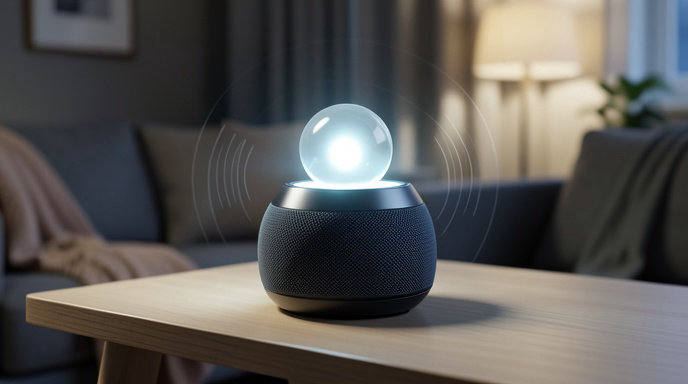
The rumor mill has been churning for months, but fresh reports now pin down a concrete figure: OpenAI is preparing to launch a smart speaker that will retail between $300 and $400. That price point immediately sets it apart from the budget-friendly Amazon Echo Dot ($49.99) and even the mid-tier Echo Show. It also undercuts Apple's HomePod ($299) slightly at the top end, but the intent is clear—this is not a device for casual voice commands. OpenAI is betting that consumers will pay a premium for a truly intelligent home assistant, one that feels less like a speaker and more like a physical manifestation of ChatGPT.
The $300–$400 range is strategic. It places the device in "premium gadget" territory, competing with the HomePod and high-end Sonos speakers, but it also signals that OpenAI is targeting early adopters and tech enthusiasts who already pay for ChatGPT Plus or Pro subscriptions. The hardware is likely a loss leader or a break-even proposition; the real revenue comes from locking users into OpenAI's ecosystem.
Likely Features: Beyond "Hey Siri"
While OpenAI hasn't confirmed specs, industry insiders and supply chain leaks paint a compelling picture. The core differentiation will be the voice AI. Unlike Alexa or Siri, which rely on rigid intent recognition, OpenAI's speaker will use a fine-tuned version of GPT-4o (or a successor) to maintain natural, multi-turn conversations. You won't need to say "Alexa, ask…"—you'll just talk to it like a human, and it will remember context across hours or days.
More intriguingly, the device is expected to include a camera and depth sensors. This is the "multimodal" angle. The speaker could visually identify objects on your kitchen counter, recognize who is in the room (for personalized responses), and even assist with tasks like "what's the expiration date on this milk?" by reading the label. This moves far beyond audio-only assistants and directly challenges the concept of a "smart display" like the Echo Show, but without the clunky screen.
Another likely feature is proactive assistance. Instead of waiting for commands, the OpenAI speaker might use ambient audio and sensor data to offer suggestions: "I noticed you usually leave for work at 8:30 AM, but traffic is heavy today—you should leave 15 minutes early." This is a fundamental shift from reactive to proactive AI, and it's only possible with the deep contextual understanding that large language models provide.
Integration with ChatGPT: The Killer App
The speaker's biggest selling point will be its seamless integration with ChatGPT. Subscribers to ChatGPT Plus (or a new, higher-tier plan) could get enhanced features, such as unlimited voice conversations, real-time web browsing, and memory that persists across sessions. The device could also act as a hub for other OpenAI tools—imagine asking it to draft an email, summarize a meeting, or generate a recipe based on what's in your fridge.
This integration creates a moat. Amazon and Apple have their own AI efforts, but neither has a model as capable as GPT-4o for conversational nuance. The OpenAI speaker won't just answer questions; it will reason through problems, ask clarifying questions, and even express personality. That's the experience that could justify the $400 price tag for power users.
Comparing to Amazon Echo and Apple HomePod
Let's stack it up against the incumbents:
Amazon Echo (with Alexa): Alexa is ubiquitous and cheap, with thousands of skills and smart home integrations. But its conversational AI is shallow. It can set timers and control lights, but it struggles with complex, open-ended queries. The OpenAI speaker will likely offer far superior language understanding, but it will lack Alexa's massive third-party ecosystem out of the gate. Amazon also has the advantage of being in millions of homes already.
Apple HomePod: The HomePod is known for excellent audio quality and tight integration with Apple's ecosystem (HomeKit, Apple Music, Siri). However, Siri is widely considered the weakest major voice assistant for AI tasks. The HomePod is also locked to Apple devices. The OpenAI speaker will appeal to users who care more about intelligence than audio fidelity—although OpenAI is reportedly working with an audio partner to ensure decent sound quality.
The Value Proposition: For $300–$400, you're paying for a device that can act as a personal assistant, a visual scanner, and a conversational partner. The Echo and HomePod are smart speakers; the OpenAI device aims to be a smart companion. That's a meaningful difference. But the value only holds if OpenAI delivers on reliability and privacy—two areas where consumers are increasingly skeptical.
Privacy Concerns: The Elephant in the Room
A camera and always-on microphone in a $400 device raises immediate red flags. OpenAI has faced scrutiny over data usage and privacy policies. Will the speaker record everything? Will it process audio locally or in the cloud? Leaks suggest that basic wake-word detection will be on-device, but full conversations will be sent to OpenAI's servers for processing. That's a tough sell for privacy-conscious consumers, especially in Europe where GDPR is strict.
OpenAI will need to offer transparent data controls, local processing for sensitive tasks, and clear opt-in mechanisms for visual data. If they fumble this, even the most impressive AI won't overcome the trust barrier. Apple has made privacy a core selling point; OpenAI will have to counter that narrative with tangible safeguards, not just promises.
Release Date and What to Expect
No official launch date has been announced, but industry analysts predict a reveal in late 2026 or early 2027, possibly alongside a major ChatGPT model update. The device is reportedly in late-stage prototyping, with OpenAI working on manufacturing partnerships to hit the $300–$400 price point without sacrificing build quality.
If the leaks are accurate, this could be the first true "post-smartphone" device that makes the smart speaker category exciting again. But it's also a gamble. OpenAI is entering a hardware market where margins are thin, competition is fierce, and consumers are skeptical of yet another connected gadget. The success will hinge not on the hardware itself, but on whether the AI experience is genuinely transformative—and whether people are willing to trust it in their living rooms.
For now, the mystery remains. But one thing is clear: OpenAI is not trying to compete on price. It's trying to redefine what a smart speaker is supposed to do. And at $300–$400, it's betting that intelligence is worth the premium.

Get All The Latest Updates Delivered Straight To Your Inbox For Free!