
SpaceX and Tesla: A Billion-Dollar Bond in Elon Musk's Empire
TL;DR
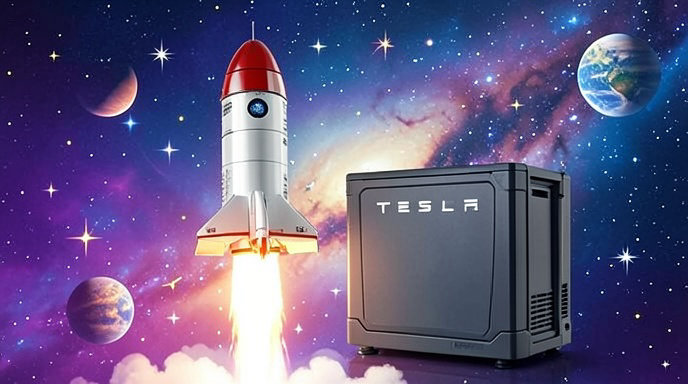
- SpaceX’s latest filing shows $329 million in Tesla Megapack purchases so far in 2026, including $295 million in Q2 alone.
- The purchases deepen the financial and operational ties between Elon Musk’s companies, with Tesla’s battery storage systems supporting large-scale energy needs across Musk’s ecosystem.
- The disclosure also highlights how related-party transactions remain a major feature of Musk’s empire, extending beyond batteries to vehicles, services, and infrastructure deals.
SpaceX and Tesla: A Billion-Dollar Bond in Elon Musk's Empire
SpaceX has emerged as one of Tesla’s biggest industrial customers, with a new filing showing $329 million in Megapack purchases so far this year and $295 million of that total booked in the second quarter. The disclosure adds fresh evidence that Elon Musk’s companies are not just connected by ownership, but by a dense web of commercial relationships that now spans energy storage, AI infrastructure, vehicles, and finance.
A massive Megapack order
Tesla’s Megapack is a grid-scale battery system designed for large energy loads, and SpaceX’s spending suggests it is relying on that technology at a significant scale. The filing reported that the company’s Megapack purchases reached $329 million year to date, underscoring a rapid acceleration in demand for Tesla’s storage hardware inside Musk’s own corporate network.
Earlier reporting around SpaceX’s IPO-related disclosures also pointed to substantial Tesla purchases by Musk-linked entities, including roughly $697 million in Megapack products across 2024 and 2025 and additional spending on Cybertrucks. Reuters similarly reported that SpaceX and its subsidiary xAI collectively bought about $650 million in Tesla products and services in the previous year, including $506 million in Megapack systems by xAI alone.
Why Megapacks matter for SpaceX
Megapacks are built for high-capacity energy storage, which makes them useful for sites that need reliable backup power or smooth, continuous electricity delivery. For a company like SpaceX, which operates launch facilities and other energy-intensive infrastructure, that kind of storage can help stabilize operations and reduce dependence on less predictable power sources.
The disclosures do not specify exactly where the units are installed or how they are used, but the scale of the purchases strongly suggests operational rather than symbolic use. That scale also fits broader trends in the AI and industrial energy market, where power-hungry data centers and large facilities are turning to battery storage to support growth.
The Musk-to-Musk business loop
The newest filing reinforces a long-running reality: Musk’s companies often do business with one another. Reuters reported that SpaceX’s IPO application revealed transactions ranging from Cybertruck purchases to aircraft and stock investments, showing how intertwined the group has become.
That same pattern appears in Tesla’s energy business, where xAI has been a major customer for Megapacks. Electrek reported that xAI’s Tesla Megapack purchases reached about $1 billion since 2024, with $269 million alone in April 2026. Even if the corporate structures evolve over time, the commercial logic remains the same: one Musk company becomes a large-scale buyer of another’s hardware and services.
What this means for Tesla
For Tesla, SpaceX’s purchases are a meaningful validation of the Megapack business line. Large, repeat orders from an affiliated company can help showcase the product’s real-world utility while contributing to revenue in a segment that is increasingly important as Tesla looks beyond passenger vehicles.
The business relationship also helps illustrate Tesla’s broader shift toward energy infrastructure, where utility-scale storage may become as strategically important as cars. SpaceX’s buying pattern suggests that Tesla’s battery systems are not just a standalone product, but part of a larger ecosystem built to support ambitious industrial and AI projects.
The bigger picture for Musk’s empire
The latest disclosure is less about a single battery order than about the structure of Musk’s corporate world. SpaceX, Tesla, and xAI appear increasingly linked by shared needs for power, compute, mobility, and capital, making internal transactions a recurring feature rather than an exception.
That interconnectedness can create efficiency, speed, and scale, but it also invites scrutiny because related-party deals can blur the line between independent business judgment and ecosystem-building. For now, the numbers show one clear fact: Musk’s companies are still buying heavily from each other, and Tesla’s Megapack has become a central piece of that internal industrial machine.

Get All The Latest Updates Delivered Straight To Your Inbox For Free!