
Uber and Pony.ai to Deploy 2,000 Robotaxis Across Five European Cities
TL;DR
- Uber and Pony.ai are expanding their autonomous vehicle partnership from a single pilot in Zagreb, Croatia to five European cities, with plans to deploy up to 2,000 robotaxis.
- The expansion will roll out in phases through 2026 and 2027, pending regulatory approvals in each market, starting with Frankfurt, Germany, and then moving to Paris, Munich, and Stuttgart.
- The robotaxi fleet will be fully integrated into Uber’s existing app, allowing riders to request driverless trips alongside traditional human-driven rides, with a dedicated safety and remote-assistance framework.
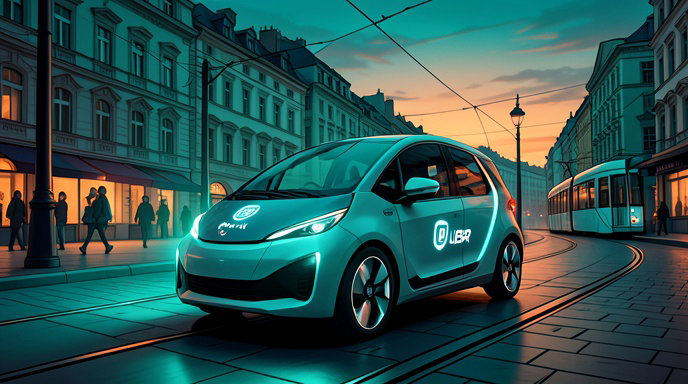
When Uber and Pony.ai launched their first European robotaxi pilot in Zagreb, Croatia, in late 2025, it felt like a cautious toe-dip into a complex regulatory landscape. Six months later, that toe-dip has turned into a cannonball. The two companies have announced a sweeping expansion that will see up to 2,000 autonomous vehicles deployed across five European cities by 2027, transforming Uber’s platform from a ride-hailing app into a driverless mobility network at continental scale.
The announcement, made this week, represents one of the most aggressive commercial rollouts of autonomous ride-hailing outside of the United States and China. It signals that Pony.ai, a Chinese-American autonomous driving firm, is no longer content with testing in California and Guangzhou—it wants a permanent, high-volume foothold in Europe, and it’s using Uber’s massive distribution network as its launchpad.
From Zagreb to Five Cities: The Timeline
The expansion follows a deliberate, phased approach. The initial Zagreb pilot, which launched in late 2025 with a small fleet of Pony.ai’s Toyota-based robotaxis, was designed to prove the technology could handle European traffic patterns, narrow streets, and mixed pedestrian environments. According to company executives, the pilot exceeded safety and reliability benchmarks, clearing the path for a broader rollout.
The first major new market will be Frankfurt, Germany, where service is expected to begin in the third quarter of 2026. Frankfurt was chosen for its dense urban core, strong regulatory cooperation with the German federal transport authority (KBA), and the presence of a tech-savvy rider base. Following Frankfurt, the companies will launch in Paris, France, in late 2026, subject to French regulatory approval. Munich and Stuttgart will follow in the first half of 2027, completing the five-city network.
The deployment will be staggered, with each city starting with a fleet of 100 to 200 vehicles and scaling to 400 to 500 per city as operational confidence grows. The total fleet cap of 2,000 vehicles across all five cities makes this the largest autonomous ride-hailing commitment in Europe to date.
Regulatory Hurdles: The Real Story Behind the Headlines
While the technology is ready, the regulatory path has been anything but smooth. Each European country operates under its own autonomous vehicle framework, and there is no single EU-wide approval for robotaxis. This means Uber and Pony.ai must navigate a patchwork of national laws, municipal permits, and safety certifications.
Germany is the most advanced, having passed a dedicated autonomous driving law in 2021 that allows driverless vehicles on public roads under specific conditions. The KBA has been working closely with Pony.ai to certify the vehicles for Level 4 operation—meaning the car can handle all driving tasks within a defined operational design domain, with no human fallback driver required.
France, however, is a different story. The country has been slower to adopt comprehensive autonomous vehicle legislation, with a legal framework still being finalized. Sources close to the project indicate that French regulators have requested additional data on Pony.ai’s safety record in Zagreb and Frankfurt before granting a full commercial license. Paris is expected to launch with a smaller pilot first, likely with a human safety operator in the vehicle, before transitioning to fully driverless operation.
The companies are also working with local municipalities on geofencing, designated pick-up zones, and weather-related operational limits. For instance, Munich’s harsh winter conditions have prompted the team to develop enhanced sensor-cleaning systems and low-visibility driving algorithms, which will be tested extensively before the full launch.
How the Robotaxis Will Integrate with Uber’s App
The user experience is designed to be frictionless. Riders will open the Uber app, enter their destination, and see a new option: "Driverless" or "Pony.ai" as a service type, clearly labeled with a robot icon. The fare will be comparable to UberX, though the companies have hinted at potential promotional pricing during the initial rollout to attract early adopters.
Behind the scenes, the integration is more complex. Uber’s dispatch algorithms have been modified to handle autonomous vehicles differently from human drivers. For example, the system must account for no-driver pick-up instructions, geofenced drop-off points, and the inability to call or text the driver. Instead, riders will have a dedicated in-app chat with a remote operations center, staffed by Pony.ai safety specialists who can monitor the vehicle in real-time and intervene remotely if needed.
The vehicles themselves are equipped with a comprehensive sensor suite—lidar, cameras, and radar—plus redundant steering, braking, and computing systems. If a vehicle encounters an edge case it cannot handle, such as an unusual road closure or a police officer directing traffic, it will pull over safely and contact the remote operations center, which can manually route the vehicle or dispatch a human-driven Uber to complete the trip.
Crucially, the robotaxi fleet will not operate in isolation. Uber’s platform will dynamically match riders with either an autonomous vehicle or a human driver based on availability, pricing, and operational domain. This hybrid model is a key differentiator from competitors like Waymo, which operates a standalone app in the U.S. By embedding robotaxis directly into its existing ride-hailing network, Uber can offer driverless rides at scale without requiring users to download a separate app or learn a new service.
The Competitive Landscape: Why Europe Matters
This expansion is a direct challenge to both legacy automakers and tech rivals. Waymo has been focused almost exclusively on the U.S. market, with no announced European plans. Tesla’s robotaxi ambitions remain largely theoretical. Meanwhile, local players like Germany’s Vay and France’s Easymile are operating smaller, niche autonomous services. None have the scale or the partnership structure that Uber and Pony.ai are bringing to bear.
Europe is particularly attractive because of its high population density, strong public transit infrastructure (which can complement rather than compete with robotaxis), and a growing appetite for mobility-as-a-service. Additionally, European regulators have signaled a desire to become a global leader in autonomous vehicle deployment, viewing it as a strategic economic opportunity.
For Pony.ai, the European expansion is a crucial hedge against geopolitical risks. The company has faced scrutiny in the U.S. over its Chinese origins, and its operations in California have been subject to additional oversight. By establishing a strong presence in Europe, Pony.ai diversifies its regulatory and political exposure while validating its technology in diverse international environments.
What’s Next: The Road to 2027
The next 18 months will be critical. The Frankfurt launch will serve as the true test of whether the technology can handle a major European metropolis with complex traffic laws, dense bicycle lanes, and high-speed ring roads. If Frankfurt succeeds, the Paris and Munich rollouts will likely accelerate. If it stumbles, the entire timeline could slip.
The companies have also hinted at future expansions beyond the initial five cities, with London, Amsterdam, and Barcelona named as potential candidates for a second wave. However, UK regulations are still evolving, and the Netherlands has its own stringent safety certification process.
For now, the focus is on execution. The partnership has already secured the backing of key automotive suppliers and local infrastructure partners, including parking operators and charging network providers. The goal is simple: by 2027, a rider in Frankfurt should be able to hail a driverless Pony.ai robotaxi through Uber as easily as they would hail a traditional car today. If they pull it off, the European ride-hailing market will never look the same.

Get All The Latest Updates Delivered Straight To Your Inbox For Free!