
Vogue World San Francisco: When Tech Meets High Fashion
TL;DR
- Vogue World is officially heading to San Francisco in September 2026, marking the first time the event will be held on the West Coast and directly courting the tech industry as a primary audience and collaborator.
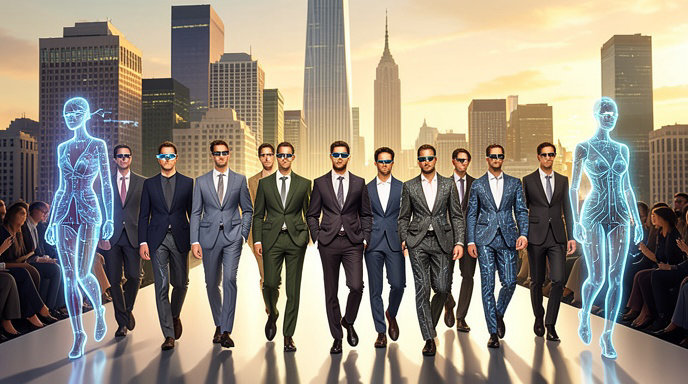
- The event will integrate runway shows with interactive tech showcases, including AI-generated couture, wearable robotics, and live data-driven fabric displays, signaling a formal merger of Silicon Valley innovation with high fashion.
- The move has sparked a fierce cultural debate: while some see it as a necessary evolution for a stagnant luxury industry, critics deride it as the final legitimization of "tech bro" minimalism and a surrender to algorithmic aesthetics.
The Bay Area Takeover: Why Vogue Is Leaving New York's Shadow
For over a century, Vogue has been the arbiter of taste, its gaze fixed firmly on Paris, Milan, and New York. So when Anna Wintour announced that Vogue World would set up its massive tent in San Francisco this September, the fashion world collectively choked on its espresso. This isn't just a change of venue; it's a strategic capitulation to a new power base. San Francisco, long dismissed as a city of hoodies and startup bros, is being officially anointed as a co-capital of global culture.
The decision comes at a time when luxury conglomerates like LVMH and Kering are reporting stagnant growth in traditional markets. Their solution? Court the trillion-dollar tech sector directly. Vogue World SF is designed to be a bridge, not just a party. Organizers have confirmed that the event will feature a "co-creation" model where established fashion houses are paired with Bay Area engineering teams for six months prior to the show. The result, according to early leaks, will be a runway where garments respond to the wearer's biometrics in real-time, and where the traditional catwalk is replaced by a kinetic, augmented reality floor.
This is not a one-off stunt. Vogue has reportedly signed a three-year partnership with the City of San Francisco and the California Governor's Office of Business and Economic Development. The goal is to establish a permanent "Fashion x Tech" residency in the city, with pop-up ateliers in the Mission District and a dedicated innovation lab at Pier 70. The message is clear: if you want to define the future of luxury, you no longer go to Seventh Avenue; you go to Market Street.
The Runway Rebooted: AI Couture and Reactive Fabrics
The most anticipated aspect of Vogue World SF is the actual content of the show. Early details suggest a radical departure from the traditional 20-minute runway sprint. The main spectacle will be divided into three acts, each co-designed by a legacy fashion house and a Silicon Valley R&D firm.
Act One, titled "The Algorithmic Silhouette," will feature garments generated entirely by generative AI models trained on archival Vogue photography from 1920 to 2020. These aren't just digital renders; the designs have been physically produced using 3D-printing technology from startups like Carbon and Formlabs, resulting in lattice-structured gowns that are impossibly lightweight yet structurally complex. The twist? No two garments are identical. Each piece is printed on-site, with the AI altering the pattern based on the specific body scan and movement patterns of the individual model walking the show.
Act Two shifts to "Bio-Logic," focusing on living materials. Expect to see dresses embedded with mycelium-based sensors that change color based on the wearer's stress levels, and jackets made from lab-grown spider silk that are stronger than steel yet breathable. This segment is heavily sponsored by biotech firms from South San Francisco, who see fashion as the perfect Trojan horse to normalize bio-manufacturing in consumer goods.
Finally, Act Three, "The Digital Skin," is the crowd-pleaser. This segment will feature smart fabrics that can display text, images, and even live stock tickers. Imagine a ball gown that streams your heartbeat to the audience, or a tailored suit that flashes a QR code linking to the designer's NFT collection. This is where the "tech showcase" aspect becomes literal, with a dedicated "hackers' runway" where open-source developers can present their own wearable prototypes to a jury of Vogue editors and venture capitalists.
The "Tech Bro" Aesthetic: From Hoodie to Haute Couture
The cultural friction point of this entire endeavor is the aesthetic itself. For years, Silicon Valley's uniform—the Patagonia vest, the Allbirds sneakers, the unbranded gray hoodie—was the antithesis of Vogue's glamour. Critics have long mocked this look as a power play disguised as humility: a way to signal that you're too busy disrupting the world to care about tailoring.
However, the luxury market has quietly been absorbing this aesthetic for a decade. Brands like The Row and Loro Piana have built empires on "stealth wealth" and minimalist, technical fabrics. Vogue World SF is simply making this explicit. The event's official dress code, leaked via an internal memo, reportedly encourages "elevated utility" and "engineered comfort," a direct nod to the tech uniform.
This has infuriated traditionalists. Fashion critics argue that the "tech bro" look is fundamentally anti-fashion—it prioritizes function and optimization over expression and fantasy. They fear that Vogue's embrace of Silicon Valley will lead to a homogenization of style, where everything is beige, breathable, and optimized for a 14-hour workday. The backlash has been fierce on social media, with hashtags like #SaveVogue and #TechWash trending during the announcement week.
Yet, proponents argue that this is the only way for fashion to remain relevant. They point out that Gen Z and Gen Alpha spend more time in digital worlds than physical ones, and that the next generation of luxury will be defined by digital identity, AR filters, and virtual wardrobes. Vogue World SF isn't selling out; it's adapting to the fact that the most powerful people on Earth now live in a world where code is more aspirational than couture.
The Startup Gold Rush: What's In It for Silicon Valley?
For startups, Vogue World is a massive, high-stakes pitch competition. Securing a partnership with a major fashion house for this event is akin to getting a prime slot at Apple's WWDC, but with better lighting and champagne. The event has already spawned a mini-ecosystem of "fashion-tech" accelerators in the Bay Area, all vying for a slice of the $2 trillion global luxury market.
The practical benefits are enormous. Startups in haptics, smart textiles, and AR glasses see this as the ultimate validation to pivot from niche B2B applications to consumer luxury goods. For example, a startup developing micro-LED displays for car windshields is now repurposing its tech for evening wear, hoping to land a contract with a house like Balenciaga. The event also serves as a recruitment ground: Vogue has confirmed that several "innovation fellowships" will be awarded to engineers whose work is featured, with the promise of a direct pipeline to major fashion conglomerates.
But there's a darker side to this gold rush. The pressure to produce "Instagrammable" tech is leading to a wave of vaporware. Several startups have already been accused of faking their prototypes for the event, using clever lighting and CGI to make non-functional garments look advanced. Vogue has responded by hiring a team of technical auditors to verify the authenticity of every piece presented, a task that has proven more difficult than verifying a diamond's provenance.
The Hype, The Backlash, and The Rebranding of San Francisco
The most immediate impact of Vogue World SF is on San Francisco's global image. The city has spent the last four years fighting headlines about empty office towers, retail theft, and a stalled tech economy. Hosting Vogue World is a blatant attempt to rebrand the city as a hub of creativity and optimism, not just a cautionary tale of boom-and-bust.
The local reaction is split. Restaurant owners and hoteliers are ecstatic, anticipating a windfall of high-spending tourists and celebrities. However, grassroots organizations and local artists have protested, arguing that Vogue's arrival will accelerate gentrification and price out the very creative communities that made the city unique. They see the event as a corporate takeover of the city's soul, a sentiment echoed by some fashion insiders who feel the event is more about real estate than runway.
Despite the backlash, ticket demand has been astronomical. A single general admission seat to the main show is reportedly reselling for over $5,000, with VIP packages including private dinners with venture capitalists and AI researchers fetching upwards of $50,000. The hype is real, and it confirms a simple truth: the world is watching to see if this experiment works. If Vogue World SF succeeds, it will not just be a successful event; it will be the definitive proof that the center of cultural gravity has permanently shifted from the Atlantic to the Pacific, and that in the digital age, the most luxurious thing you can wear is a piece of the future.

Get All The Latest Updates Delivered Straight To Your Inbox For Free!