
Al Gore Isn't Worried About AI Data Center Emissions — He's Worried About AI Itself
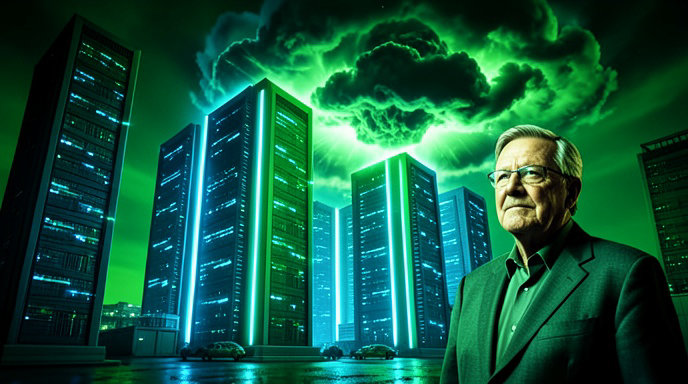
TL;DR
- In a new TechCrunch interview, former VP Al Gore downplayed fears that AI data centers will derail climate progress, arguing clean energy growth and efficiency gains will outpace rising demand.
- Gore said he is far more concerned by warnings from AI pioneers themselves about misinformation, autonomous weapons, and loss of human control than by the sector's carbon footprint.
- He called for urgent guardrails on AI development, comparing the moment to the early fight against climate change when warnings were ignored until the crisis was entrenched.
A Calm Take in the Middle of a Power Fight
Former Vice President Al Gore is no stranger to warnings about the future. For decades, he was the loudest voice in the room on climate change. Now, in a new interview with TechCrunch, he is turning that urgency toward artificial intelligence — but not for the reason you might expect.
As Silicon Valley races to build massive AI data centers and utilities scramble to meet surging electricity demand, environmentalists and local communities have pushed back hard over water use, grid strain, and emissions. Gore, however, says he is surprisingly unbothered.
Asked about the AI data center backlash, Gore told TechCrunch he understands the concern but sees it as manageable — and temporary. His view: the tech industry's hunger for power will ultimately accelerate the clean energy transition, not kill it.
Why Data Center Emissions Don't Scare Him
Gore's argument rests on two trends he has tracked closely as a climate investor and founder of Generation Investment Management and the emissions-tracking coalition Climate TRACE.
First, efficiency. He pointed to the history of computing, where each generation of chips and cooling systems has delivered far more work per watt. While training frontier models like OpenAI's GPT series and Google's Gemini is enormously energy-intensive today, he expects inference efficiency, custom silicon, and better data center design to bend the curve.
Second, clean supply. Gore noted that tech giants including Amazon, Microsoft, Google, and Meta are now among the largest buyers of solar, wind, and battery storage in the world, and are bankrolling efforts to bring nuclear, geothermal, and long-duration storage online to power 24/7 operations. In his telling, AI demand is giving utilities and developers the guaranteed revenue they need to build clean capacity faster.
"The electricity demand is real, but so is the ability to meet it with clean power if we make the right choices," Gore said in the interview. "I don't think this is going to blow up the climate targets by itself."
That puts him at odds with some researchers who warn U.S. data center electricity use could double or triple by 2030, prolonging the life of gas and coal plants. Gore acknowledged the risk of a near-term fossil bump, especially as utilities delay coal retirements to meet load growth, but insisted it does not change the long-term trajectory toward decarbonization.
Listen to the Builders When They Warn You
What does keep Gore up at night is AI itself.
In the TechCrunch interview, Gore said the public should pay far closer attention to what top AI leaders and researchers are saying about their own creations. He cited repeated warnings from figures like Geoffrey Hinton, Yoshua Bengio, and even CEOs like Demis Hassabis and Sam Altman about deepfakes supercharging disinformation, AI-enabled cyberattacks, autonomous weapons, and the longer-term risk of losing control over superintelligent systems.
"When the people who built the technology are telling you to be worried, we should listen," Gore said. "I lived through this with climate, where scientists were ringing the alarm bell for decades. With AI, the alarm is coming from inside the lab."
Gore drew a direct parallel to his climate work. Just as fossil fuel companies understood climate risks early while publicly downplaying them, he worries tech companies understand AI's democratic and existential risks while racing ahead anyway for competitive advantage.
A Call for Guardrails Before It's Too Late
Gore stopped short of calling for a pause on AI development, but he was blunt that voluntary commitments are not enough. He called for binding rules on transparency for frontier models, watermarking and authentication for synthetic media ahead of elections, strict limits on autonomous weapons systems, and independent oversight with real enforcement power.
He also warned about concentration of power, arguing that a handful of companies now control the chips, models, cloud infrastructure, and energy contracts underpinning the AI boom. Without intervention, he said, AI risks deepening inequality and undermining democratic decision-making — threats he views as faster-moving and harder to reverse than incremental emissions from data centers.
The timing of his comments matters. With the 2026 U.S. midterms approaching, Washington and Brussels are debating new AI safety legislation, while states battle over data center moratoriums and electricity rate hikes. Gore, who has long straddled politics, tech investing, and activism, is positioning himself as a bridge between climate pragmatists and AI safety advocates.
His message to both camps was simple: don't lose sight of the bigger threat.
"We can solve the energy problem for AI," Gore told TechCrunch. "The question is whether we can manage AI itself for the good of humanity. That is the challenge that will define this century."

Get All The Latest Updates Delivered Straight To Your Inbox For Free!