
AstroForge Autonomy-1: AI Takes Command of Next Space Probe
TL;DR
- AstroForge's Autonomy-1 mission will put a compact transformer-based AI model directly in charge of flying its next deep-space probe, handling navigation, fault recovery, and target selection without waiting for Earth commands.
- The onboard autonomy stack is designed to slash light-delay bottlenecks and operating costs, a critical step toward making asteroid prospecting and mining economically viable.
- The big hurdle is trust: operating an AI pilot millions of miles away raises questions about testing, radiation-hardened computing, and how much control to hand over.
A Compact Brain for Deep Space
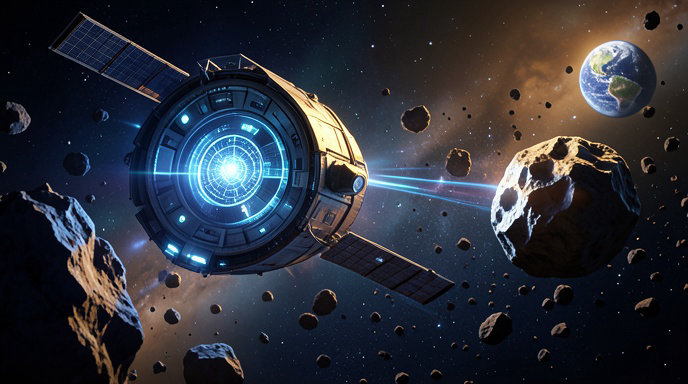
AstroForge, the California startup chasing asteroid mining, is preparing a sharp pivot from remote-controlled spacecraft to self-flying spacecraft. Its next probe, dubbed Autonomy-1, is set to fly with a compact transformer-based AI model running onboard as the primary decision-maker.
Unlike the large language models dominating data centers, this is a small, mission-hardened model built for efficiency. The goal is to run vision, navigation, and systems reasoning directly on space-rated compute with tight power and thermal budgets, rather than beaming raw data back to Earth for analysis.
For a company that has faced very public setbacks with its earlier Brokkr-1 and Odin missions, the shift is both technical and strategic: prove it can operate reliably far from Earth before it tries to mine.
How the Onboard Autonomy System Makes Decisions
Traditional deep-space probes follow pre-scripted sequences and wait for ground teams to intervene, a process slowed by light-time delay that can stretch to tens of minutes. Autonomy-1 is designed to close that loop onboard.
According to the mission concept outlined by the company, the system fuses camera images, star trackers, sun sensors, and health telemetry into a live world model. The transformer architecture helps the spacecraft weigh context over time — distinguishing, for example, between a transient sensor glitch, a drifting dust particle, and a genuine thruster anomaly.
In practice, that means three core jobs: autonomous navigation and retargeting during approach, real-time fault detection and recovery, and science prioritization. If the probe spots a promising surface feature on a flyby target, it can reorient to capture follow-up imagery on its own. If a reaction wheel degrades or power drops, it can enter safe mode, reroute power, and resume operations without phoning home first.
Why This Could Transform Asteroid Mining
Asteroid mining lives or dies on economics. Sending engineers to joystick every maneuver from Earth is slow and expensive, especially when prospecting requires visiting many small, poorly characterized rocks with uncertain gravity, spin states, and shapes.
An AI pilot changes the math. A single ground team could oversee a fleet of low-cost prospectors that navigate, inspect, and rank targets themselves. Instead of returning gigabytes of raw images, Autonomy-1 would return answers: spin rate, shape model, spectral hints, and a confidence score on whether the object is worth a return visit.
That same autonomy is essential for deep space operations more broadly. Future refueling depots, in-space manufacturing, and long-duration survey missions all need spacecraft that can operate through communication blackouts and keep working when Earth is hours away by radio.
The Hardware Challenge No One Can Ignore
Running AI in deep space is brutally hard. Radiation can flip bits and degrade chips, power is limited to what small solar panels can generate, and there is no cloud to offload to. AstroForge is betting that model compression, quantization, and redundant voting logic can squeeze transformer-level reasoning onto ruggedized processors.
Thermal control and testing add another layer. A model trained on simulated asteroid imagery must still perform when confronted with real, overexposed, fast-spinning rubble piles it has never seen before. Expect extensive hardware-in-the-loop simulation and shadow-mode testing, where the AI makes suggestions but does not act, before full control is handed over.
Trusting AI Millions of Miles From Earth
The biggest question is not can the AI fly, but should we let it. Space agencies have historically demanded deterministic, fully verifiable flight software. Neural networks and transformers are probabilistic by nature, harder to certify, and prone to confident mistakes in edge cases.
AstroForge will need to show how Autonomy-1 stays within hard safety constraints, how ground teams can audit its decisions after the fact, and what guardrails prevent a bad autonomous call from dooming the mission. Industry watchers will be looking for explainable logs, rollback to classic flight rules, and a clear escalation ladder for high-risk actions like propulsion burns.
If it works, it sets a precedent for regulators and insurers who will ultimately decide whether AI-flown commercial missions can scale.
What Comes Next
AstroForge has not yet disclosed a firm launch date, target asteroid, or rideshare provider for Autonomy-1, and technical specs for the model remain closely held. What is clear is the direction: smaller spacecraft, smarter software, and far less hand-holding from Earth.
If Autonomy-1 demonstrates stable autonomous cruise, approach, and recovery in deep space, the company plans to use the same autonomy core as the baseline for future commercial prospecting missions. For now, all eyes are on whether an AI pilot can succeed where traditional operations have struggled — staying alive and making smart calls, millions of miles from anyone who can help.

Get All The Latest Updates Delivered Straight To Your Inbox For Free!