
Google CC AI Agent Wants to Run Your Entire Household
TL;DR
- Google has refocused its CC AI agent into a household coordinator that can be shared across family members to manage emails, calendars, tasks, and routines.
- Key capabilities include unified calendar management, automatic form filling, shared shopping lists, and personalized meal planning tied to Gmail, Calendar, Docs, and Nest.
- The shift promises major productivity gains for busy families but raises fresh questions about privacy, data sharing, and how much control to hand over at home.
A Family Assistant, Not Just Another Chatbot
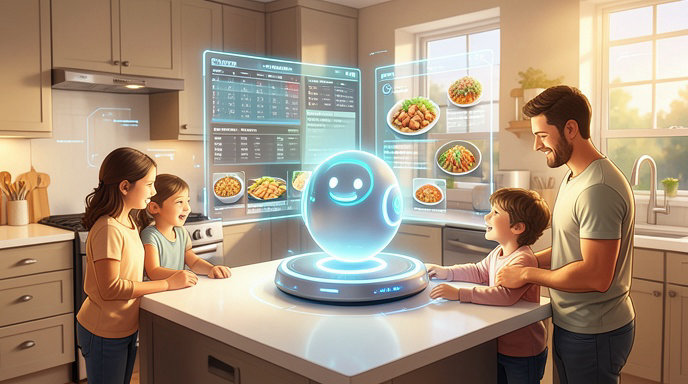
Google is pitching its next big AI bet not as a work copilot or a search replacement, but as the person who actually runs your house. The refocused CC AI agent is designed for household coordination from the ground up, built to be shared by an entire family rather than locked to a single account.
Instead of each parent, kid, or roommate asking their own separate assistant, CC creates one shared intelligence layer for the home. Connect family Gmail inboxes, Google Calendars, Keep lists, Tasks, and even Nest devices, and CC can see the full picture: who has soccer practice when, what bills are due, what's in the fridge, and who forgot to reply to the teacher.
Google's message is simple: families don't need another chatbot to answer trivia. They need an agent that does the invisible logistics work that eats up evenings and weekends.
One Brain for Emails, Schedules and Tasks
At the core of CC is permission-based sharing. Each family member chooses what to share — a work calendar, a school email, a personal to-do list — and CC blends it into a single household view while keeping private items private.
Ask "What's happening this weekend?" and CC doesn't just read one calendar. It cross-references everyone's schedules, flags conflicts like overlapping pickups and birthday parties, and suggests fixes. Ask "What did I miss from school?" and it can scan shared family emails from teachers, summarize permission slips, deadlines, and action items, and add them directly to tasks.
For parents juggling multiple inboxes, Google says this ends the screenshot-and-forward chaos. CC can draft replies in your tone, nudge you about unanswered messages from family members, and automatically create reminders from email content without you having to copy-paste anything.
Calendar Management That Actually Manages
Calendar is where CC feels most agentic. Rather than just adding events when told, it actively coordinates.
It can find a dinner slot that works for two working parents and three kids, book it, send invites, and reschedule around conflicts. It understands natural requests like "move piano lessons to after soccer on Tuesdays" or "block quiet time every morning before school." It can also coordinate with outsiders, proposing times to grandparents, babysitters, or coaches via email.
Paired with Maps and Nest, CC goes a step further: factoring in commute times, school traffic, and bedtime routines to warn you when to leave or when a packed day is unrealistic.
Forms, Shopping Lists and Meal Planning on Autopilot
Two of the most talked-about features are also the most mundane — and that's the point.
Automatic form filling lets CC complete repetitive family paperwork: school enrollment forms, camp registrations, doctor intake packets, permission slips, and travel authorizations. Pulling verified details from your Google profile and past forms, it pre-fills names, birthdates, allergies, emergency contacts, and insurance info for your review, then tracks submission deadlines.
Shopping lists and meal planning work as a loop. Tell CC your dietary goals, budget, allergies, and what you already have, and it will build a weekly meal plan, generate a consolidated shopping list shared to everyone's phones, and reorder staples via linked retailers. Snap a photo of your fridge or receipt, and it updates inventory. When someone adds "oat milk" to Keep on their way home, everyone sees it instantly.
What This Means for Productivity at Home
Early testers describe the shift as going from personal productivity to household productivity. It's not about one power user getting more done — it's about reducing the mental load that typically falls on one parent or planner.
Google claims families in its pilot saved several hours per week on scheduling, inbox triage, grocery planning, and form admin. More importantly, CC makes invisible work visible: a shared dashboard shows who is doing what, upcoming deadlines, and pending approvals, so coordination doesn't live in one person's head.
For dual-income households, caregivers looking after aging parents, and roommates splitting chores, that shared accountability could be transformative.
The Privacy Trade-Off Families Can't Ignore
The big question: are you comfortable letting one AI read the family's emails, calendars, kids' school notices, shopping habits, and home routines?
Google insists CC is built on explicit opt-in sharing, household-level controls, and on-device processing where possible. Parents can set age-gated boundaries for kids, keep work inboxes separate, review everything before CC sends or shares, and delete household memory at any time. The company says CC data is not used to target ads and is encrypted with family link controls.
But privacy experts warn that a single point of access creates a single point of failure. A misconfigured permission could expose sensitive emails to the whole household. Shared summaries could surface information a teen or partner intended to keep private. And even with safeguards, training an AI on intimate family life normalizes a level of surveillance that was unthinkable five years ago.
Families will need to have the same conversation about AI boundaries that they once had about screen time and location sharing.
The Future of the AI-Powered Home
Google's refocus signals where Big Tech thinks the AI race is headed: away from isolated personal assistants and toward shared, proactive agents embedded in the home.
CC is expected to deepen integration with Android, Chromebooks, Google Home, Nest cameras and thermostats, and Gemini, eventually acting on voice commands like "get the house ready for the weekend guests" — adjusting schedules, shopping, cleaning tasks, temperature, and lighting in one go.
Amazon, Apple, and OpenAI are pursuing similar visions for family orchestration, but Google's advantage is that so much family life already lives in Gmail and Calendar.
If CC succeeds, the household itself becomes the operating system — with AI as the always-on coordinator. If it stumbles on trust, it could become a cautionary tale about inviting AI too far inside the front door.

Get All The Latest Updates Delivered Straight To Your Inbox For Free!