
How Fortell Raised $163M to Disrupt the Hearing Aid Monopoly with AI
TL;DR
- Founder Matthew de Jonge spent six years in stealth building Fortell to make getting hearing aids as simple and stigma-free as buying glasses.
- Fortell has raised $163 million from Founders Fund, Thrive Capital, and Valor Equity to scale its AI-driven, self-fitting hearing platform.
- The startup is taking direct aim at the hearing aid monopoly dominated by five legacy players, using OTC deregulation, AI personalization, and consumer-first design.
Six Years in the Making
Matthew de Jonge didn't set out to build just another hearing aid company. For the past six years, he has been quietly building Fortell with a single obsession: why is buying glasses effortless, while getting hearing aids is expensive, clinical, and stigmatized?
De Jonge, who previously worked at the intersection of hardware and applied AI, started Fortell after watching family members struggle with traditional hearing care. Multiple audiologist visits, $4,000 to $7,000 price tags for a pair of devices, bulky beige designs, and weeks of fine-tuning turned a simple need — to hear better — into a medical ordeal. Less than a third of Americans who could benefit from hearing aids actually use them.
His answer was to rebuild the entire stack from scratch. Instead of iterating on legacy clinic models, Fortell spent years in R&D on custom acoustic hardware, on-device AI processing, and a self-fitting software platform that lets users test, tune, and personalize their hearing in minutes from home.
Hearing Aids as Effortless as Glasses
Fortell's pitch is deliberately simple: hearing aids should be as effortless as glasses.
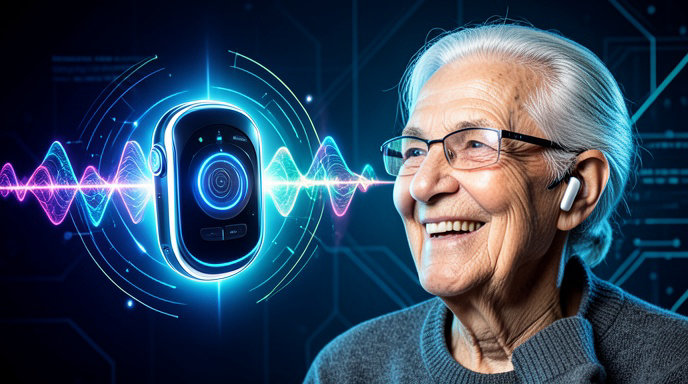
Users start with a 10-minute hearing assessment on their phone, powered by Fortell's clinical-grade audiometric test. AI models then map the user's hearing profile and instantly program the earbuds-style devices. No sound booths, no referrals, no repeat clinic visits.
The hardware itself looks nothing like traditional hearing aids. Slim, discreet, rechargeable, and Bluetooth-enabled, Fortell's devices double as high-end earbuds for calls and music. The company leaned heavily into consumer design language borrowed from Apple and Warby Parker — a direct attempt to kill the stigma that has kept adoption so low.
Where it gets differentiated is continuous learning. Fortell's on-device AI adapts in real time to noisy restaurants, wind, crowds, and echoey rooms, learning user preferences with simple tap or app-based feedback like "clearer voices" or "less background." Over time, the system builds a personalized hearing model rather than relying on a one-time audiologist preset.
The $163M Bet From Silicon Valley's Heavyweights
Investors are buying into that vision in a big way. Fortell has now raised $163 million in combined funding, with backing from Founders Fund, Thrive Capital, and Valor Equity Partners.
Sources close to the company say the latest round was heavily oversubscribed, valuing the company well into unicorn territory. Founders Fund led with a thesis around deregulated healthcare and vertically integrated hardware, while Thrive Capital focused on the consumer platform play and Valor Equity is backing manufacturing scale-up.
The capital will go toward three priorities: scaling U.S. manufacturing, expanding its AI and audiology engineering teams, and launching a national direct-to-consumer rollout with retail and telehealth partnerships. The company is also pursuing FDA clearance for expanded over-the-counter indications and next-generation features like fall detection and cognitive health tracking.
Cracking the Hearing Aid Monopoly
Fortell is entering one of the most consolidated markets in medtech. Five companies — Sonova, Demant, WS Audiology, GN Store Nord, and Starkey — control more than 90% of the global hearing aid market, a dominance built on clinic networks, locked-in audiologist distribution, and premium pricing.
That monopoly cracked open in 2022 when the FDA authorized over-the-counter hearing aids for mild-to-moderate hearing loss. Apple, Bose, Jabra, and a wave of startups rushed in, but most offered either repurposed earbuds or low-powered amplifiers without true clinical performance.
Fortell argues no one has yet nailed both medical efficacy and consumer experience. By owning the chip design, acoustic engineering, AI fitting, and direct sales channel, it believes it can undercut incumbents on price while outperforming them on convenience. Its devices are expected to retail for well under $2,000 a pair — less than half the traditional average.
Incumbents aren't standing still, with Sonova and Demant investing heavily in their own AI features. But Fortell is betting that, like Warby Parker did to Luxottica and Tesla did to dealerships, cutting out the middleman changes everything.
What Comes Next
The next 12 months will be decisive. Fortell plans to open flagship fitting studios in New York, Los Angeles, and Austin, expand its tele-audiology service nationwide, and ship its second-generation device with longer battery life and real-time translation.
The bigger ambition, according to de Jonge, is to shift hearing care from reactive treatment to proactive health. With 1.5 billion people globally living with hearing loss and strong links emerging between untreated hearing loss and cognitive decline, dementia, and social isolation, the stakes go far beyond better gadgets.
If Fortell succeeds, hearing aids won't be a dreaded medical device hidden in a drawer. They'll be something you pick up, personalize with AI, and wear proudly — just like glasses.

Get All The Latest Updates Delivered Straight To Your Inbox For Free!