
Neuralink Co-Founder Max Hodak Says Screen Era Is Ending at TechCrunch Disrupt 2026
TL;DR
- Neuralink co-founder and Science Corp CEO Max Hodak will speak at TechCrunch Disrupt 2026 in San Francisco on his vision for screen-free, brain-computer-powered interfaces.
- Hodak will outline how moving beyond phones and screens could redefine computing while first delivering major medical breakthroughs in vision, paralysis, and neurological disease.
- TechCrunch Disrupt 2026 runs October 13-15 at Moscone West, with attendees able to save up to $200 on passes if they register before September 25.
The smartphone has ruled our lives for nearly two decades. If Max Hodak is right, its days are numbered.
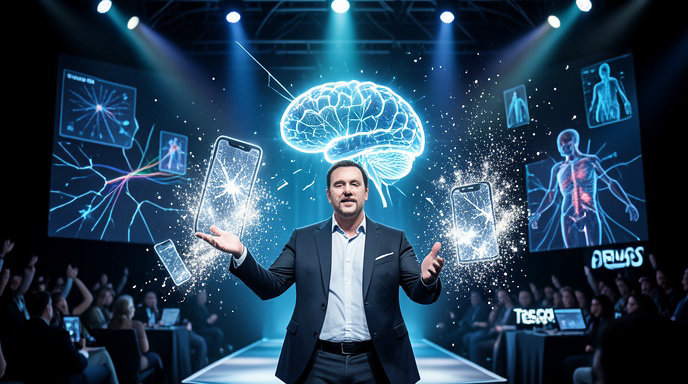
Hodak, the Neuralink co-founder now leading biotech company Science Corp, is set to take the stage at TechCrunch Disrupt 2026 to make the case that the screen era is ending — and that direct interfaces between the brain and machines are what comes next.
His session is shaping up to be one of the most talked-about talks at this year's Disrupt, TechCrunch's flagship startup and tech conference bringing together founders, investors, and technologists from around the world.
Why Hodak's Appearance Matters
Hodak is not a futurist speaking in hypotheticals. He co-founded Neuralink with Elon Musk in 2016 and helped pioneer ultra-high-bandwidth brain implants before leaving in 2021 to found Science Corp.
Since then, Science Corp has emerged as one of the most serious players in the brain-computer interface race, focused less on hype and more on near-term clinical impact. His perspective carries weight because he has built in both the Silicon Valley moonshot world and the rigorous medical-device world.
At Disrupt 2026, he is expected to connect those two worlds: how today's medical implants lay the groundwork for tomorrow's consumer computing paradigm.
From Neuralink to Science Corp
After departing Neuralink, Hodak launched Science Corp with a mission to treat serious diseases with advanced bioengineering, including brain-computer interfaces, optogenetics, and engineered cell therapies.
The company's flagship program is the Science Eye, a visual prosthesis aimed at restoring vision for patients with retinitis pigmentosa and dry age-related macular degeneration. The system combines a gene therapy in the eye with an implanted micro-LED display that stimulates the retina — essentially bypassing damaged photoreceptors.
Science Corp has already moved into human clinical trials, positioning it alongside Neuralink, Synchron, and Precision Neuroscience in the race to prove that implantable BCIs are safe, scalable, and commercially viable.
That track record is why TechCrunch is putting Hodak center stage: he can speak to what actually works in humans right now, not just lab demos.
How Screen-Free Computing Could Work
Hodak's core argument is simple but radical: screens are a bottleneck.
Every digital interaction today — tapping, typing, scrolling, staring — is a low-bandwidth workaround for what our brains actually intend. Brain-computer interfaces promise to collapse that gap by reading neural intent directly and writing information back into the nervous system.
On stage, Hodak is expected to outline a phased path:
- First, restore lost function like sight, movement, and speech.
- Then, augment normal function with silent, hands-free, eyes-free control of devices.
- Ultimately, replace the phone entirely with a persistent, contextual layer that responds to thought and perception rather than touch.
It is a vision that aligns with broader moves in tech toward smart glasses, AI pins, and ambient AI assistants — but Hodak argues only neural interfaces can fully free us from displays.
Medical Breakthroughs First, Consumer Second
Unlike some BCI proponents who jump straight to telepathy and memory uploads, Hodak has consistently emphasized medicine first.
Expect his Disrupt talk to focus heavily on patients: people with paralysis regaining digital independence, blind patients seeing light and shapes again, and future applications for epilepsy, depression, and chronic pain.
That medical-first strategy is not just ethical, it is practical. It provides a regulatory pathway, real-world safety data, and a reimbursement model that pure consumer wearables lack. Once implants prove they can safely restore function for millions, Hodak argues, expansion into broader computing becomes inevitable.
Industry watchers will be listening closely for updates on Science Corp's clinical progress, manufacturing scale-up, and timeline for next-generation implants.
What to Expect at Disrupt 2026
TechCrunch Disrupt 2026 will take place October 13-15 at Moscone West in San Francisco. The event is expected to draw thousands of startup founders, VCs, and operators for three days of stage interviews, startup pitches in Startup Battlefield, hands-on demos, and networking.
Hodak's session will be part of the main stage lineup focused on the future of computing, AI, and frontier tech. Attendees can expect a candid conversation rather than a scripted keynote, including challenges around safety, ethics, privacy, and who gets access to brain technology.
With Neuralink now implanting patients, Synchron advancing its stent-based system, and Big Tech investing in non-invasive neural wristbands and AI wearables, the timing could not be better for a reality check on where screen-free interfaces truly stand.
How to Attend and Save
For founders, investors, and anyone tracking the next platform shift after mobile, Hodak's talk is being billed as must-see.
TechCrunch says passes are currently discounted, with attendees able to save up to $200 if they register before September 25. After that deadline, prices increase ahead of the October event.
With the screen era potentially coming to a close, Disrupt 2026 may be where its replacement gets its clearest roadmap yet.

Get All The Latest Updates Delivered Straight To Your Inbox For Free!