
India Forces Truecaller to Share Spam Data With Telcos in One-Way Data Showdown
TL;DR
- India’s telecom regulator now wants caller-ID apps like Truecaller to feed their crowdsourced spam reports directly to telecom operators through a mandated sharing framework.
- Truecaller is pushing back hard, calling the move one-sided, commercially unfair, and a threat to its core data advantage since telcos don’t have to share anything in return.
- Telcos Jio, Airtel and Vi back the plan as vital fuel for their AI spam filters, setting up a major fight over privacy, competition, and who controls spam intelligence in India.
What India Just Ordered
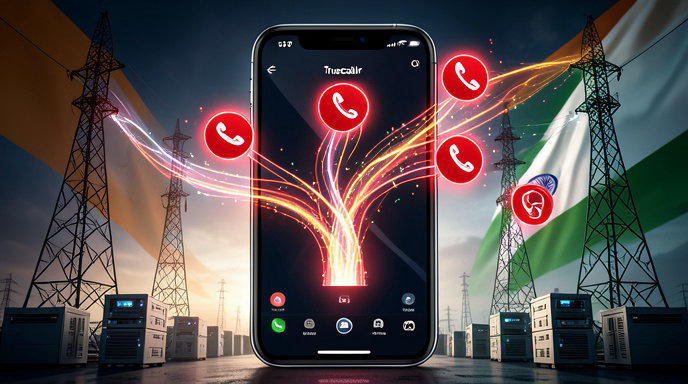
New Delhi is going after spam calls like never before, and this time it’s dragging Big Tech caller-ID apps into the system. Under a fresh directive pushed by the Telecom Regulatory Authority of India and backed by the Department of Telecommunications, over-the-top caller identification platforms operating in India — led by Sweden-based Truecaller — are expected to share user-generated spam markings, fraud reports, and scam call intelligence with licensed telecom operators.
In practice, that means when millions of Indians hit “Report Spam” or “Report Fraud” inside Truecaller, that signal wouldn’t stay inside Truecaller anymore. It would be passed on, likely via standardized APIs, to Jio, Bharti Airtel, Vodafone Idea and BSNL, so carriers can plug it into their own network-level blocking systems.
The order is part of India’s broader anti-spam overhaul, which already includes mandatory whitelisting of commercial message headers, blockchain-based scrubbing under the Telecom Commercial Communications Customer Preference Regulation, AI-based filters at the network layer, and the long-pending Calling Name Presentation service that would show verified caller names natively on phones.
Officials argue the current setup is fragmented. Telcos see network traffic but don’t see what users flag in apps. Apps see user flags but don’t control the network. Forcing a data bridge, regulators say, will close the gap and help kill spoofed, promotional, and fraud calls faster.
Why Truecaller Is Furious
Truecaller, which counts more than 300 million users in India — its largest market by far — is not on board. The company has told regulators and media that the mandate amounts to one-way data extraction.
Its core argument is fairness. Spam and scam intelligence built from years of crowdsourced reports, user verification, AI classification, and premium business verification is Truecaller’s crown jewel. It powers its caller reputation scores, fraud warnings, business caller IDs, and its fast-growing Truecaller for Business and Ads products.
If it is forced to hand that feed to telecom operators for free while getting nothing comparable in return, Truecaller says it loses both competitive edge and commercial value. Telcos, after all, are not being asked to hand over their network-level call traffic data, KYC insights, or AI filter outputs to Truecaller.
The company has also raised process concerns, arguing that caller-ID apps were not adequately consulted, that the technical format, frequency, liability, and cost of sharing remain unclear, and that a blanket sharing rule treats a global OTT app the same as a licensed carrier with very different obligations under Indian telecom law.
Why Telcos Want The Data Badly
For Jio, Airtel and Vi, Truecaller’s spam button is gold. All three have spent the last two years marketing their own AI spam shields — Airtel’s AI-powered spam detection network, Jio’s advanced call filters, and Vi’s spam-tagging upgrades — which claim to have flagged billions of suspected spam calls.
But those systems still rely heavily on call patterns, volume anomalies, and user complaints filed through the 1909 system or TRAI’s Do Not Disturb app, which suffer from low reporting rates. Truecaller’s data is far richer, faster, and more granular because reporting takes one tap in an app people already use daily.
Access to that firehose would let telcos train better models, auto-block emerging scam campaigns within hours instead of days, and reduce dependence on a third-party app that many executives privately view as a competitor for enterprise messaging and verification revenue.
Industry body Cellular Operators Association of India has broadly supported greater data collaboration, arguing that spam is a national menace and no single player should hoard intelligence that could protect consumers.
A One-Way Street Problem
At the heart of the showdown is reciprocity — or the lack of it.
Truecaller wants any sharing regime to be bilateral. If it shares app-level spam votes, telcos should share network-level confirmed fraud data, telemarketer registries, and headers of verified enterprises. Regulators, so far, have framed telcos as the executors of blocking action, meaning they receive data but don’t have to send equivalent intelligence back to private apps.
Competition lawyers say this creates a tricky precedent. Can the state compel a private OTT platform to transfer commercially valuable, user-generated data to licensed carriers without compensation, IP safeguards, or a level playing field? Truecaller has hinted that forced, free transfer could disincentivize innovation in spam detection and push global tech firms to reconsider how much they invest in India-specific safety tools.
Smaller caller-ID and anti-fraud startups are watching nervously. If Truecaller must comply, they will too, but without its legal and engineering resources.
What It Means For Spam Fighting
If implemented well, consumers could win big. A unified spam graph combining Truecaller’s crowdsourced reports with telco network analytics could mean fewer fake loan offers, fake customs scams, and phishing calls slipping through, plus more accurate labels whether you use Truecaller, a native dialer, or no app at all.
It could also accelerate TRAI’s vision of network-native caller ID, where spam scores travel with the call itself rather than living inside a separate app.
But experts warn execution is everything. Without strict deduplication, verification, and safeguards against false reporting, dumping raw user flags into carrier blocklists could increase false positives — legitimate banks, delivery agents, or small businesses getting mislabeled as spam by angry users. Who is liable if a telco blocks a legitimate enterprise based on app data? That question remains unanswered.
Privacy And Data Protection Questions
Privacy advocates have flagged a second risk. Spam reports may seem harmless, but at scale they include phone numbers, call timestamps, user location patterns, and behavioral signals. Under India’s Digital Personal Data Protection Act, 2023, large-scale transfer of such data between private companies needs clear user consent, purpose limitation, and security safeguards.
Truecaller insists its reports are aggregated and anonymized, but critics ask whether users who tapped “spam” to warn other Truecaller users explicitly consented to having that action shared with Jio or Airtel for AI training and network blocking. Regulators will likely need to mandate opt-in disclosures, anonymization standards, and audit trails to stay DPDP-compliant.
There is also the surveillance angle. Once a pipeline for call-related data sharing is built for spam, what stops its expansion into broader call monitoring? Civil society groups want TRAI and DoT to publish exactly what fields will be shared, how long telcos can retain them, and whether they can be used for commercial purposes beyond spam prevention.
What Happens Next
Neither side expects a quick resolution. Truecaller is lobbying for a consultative, two-way data exchange pilot with IP protections and cost-sharing, rather than an immediate mandate. Telcos are pressing the government to move fast ahead of the festive season spike in fraud calls.
Possible outcomes include a phased API-based sharing model overseen by TRAI, a reciprocal exchange where telcos also feed confirmed fraud signatures back to apps, or a legal challenge if Truecaller views the final direction as disproportionate or discriminatory against OTT players.
For now, the battle lines are clear. India wants every spam signal in one national fight against scam calls. Truecaller wants credit, compensation, and reciprocity for the signals it spent a decade collecting. How that standoff is resolved will reshape not just who blocks your next spam call, but who owns the data behind India’s caller identity economy.

Get All The Latest Updates Delivered Straight To Your Inbox For Free!