
Lachy Groom Backs 20-Year-Old Founder's Alteon Autonomous Aircraft That Harvests Wind Energy to Fly for a Year
TL;DR
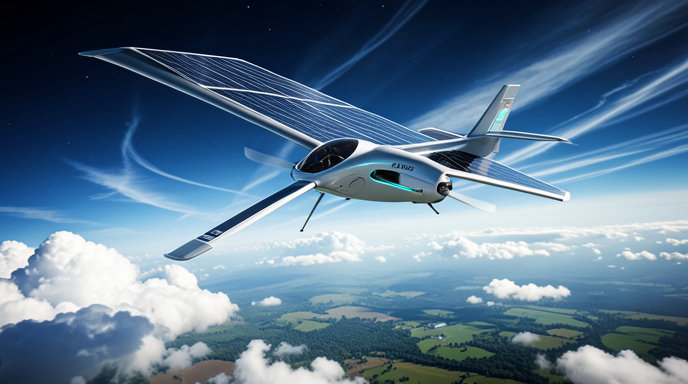
- Indian startup Alteon, founded by 20-year-old entrepreneur Aryan Singh, is developing an autonomous, wind-energy-harvesting aircraft designed to stay airborne for up to a year without landing or refueling.
- Backed by prominent investor Lachy Groom, the company's technology mimics the dynamic soaring of albatrosses to extract energy from wind shear and jet streams for perpetual flight.
- The platform aims to disrupt satellites and drones with low-cost, persistent applications ranging from telecom coverage and earth observation to climate monitoring and defense.
The 20-Year-Old Behind India's Perpetual Flight Moonshot
At an age when most founders are still pitching class projects, 20-year-old Aryan Singh is trying to solve one of aviation's oldest dreams: an aircraft that never has to land. His Bangalore-based startup, Alteon, is building a fully autonomous aircraft designed to harvest its own energy from the wind and remain aloft for months at a time, with a stated goal of year-long endurance.
The company has largely operated in stealth until now, but it has already attracted major backing from Lachy Groom, the former Stripe executive turned prolific solo capitalist known for early bets on breakout companies like Figma, Notion, and Ramp. Groom's investment is a strong signal of confidence in both Singh and the audacious physics behind Alteon's vision.
For Groom, who has increasingly focused on frontier technology and deep-tech hardware, Alteon represents a bet that the next great infrastructure layer won't be in orbit, but in the stratosphere.
How It Works: Harvesting Energy From Thin Air
Alteon's aircraft is not a traditional drone and it is not solar-powered in the conventional sense. While solar pseudo-satellites like Airbus' Zephyr have attempted months-long flight using large solar panels and batteries, they remain vulnerable to night-time power loss and seasonal light constraints.
Alteon is taking a fundamentally different approach: dynamic soaring.
Inspired by the wandering albatross, which can fly thousands of kilometers without flapping its wings, the aircraft is designed to autonomously extract energy from wind gradients - differences in wind speed at different altitudes. By continuously executing precise, looping maneuvers between layers of wind shear, particularly at the edge of jet streams and high-altitude wind currents, the aircraft can gain more energy than it expends to stay airborne.
The system combines ultra-lightweight airframe design, high-efficiency aerodynamics, and an AI-driven autopilot that constantly maps and predicts wind fields in real time. Onboard sensors and machine learning models analyze atmospheric data to find and ride invisible highways of energy, while regenerative techniques allow the aircraft to convert excess airspeed into stored electrical power for avionics, payloads, and propulsion when needed.
In essence, the wind itself becomes the fuel, and the atmosphere becomes an endless runway.
A Challenge to Satellites and Conventional Drones
If Alteon can deliver on its promise of perpetual flight, the implications are enormous. The company is positioning its aircraft as a compelling alternative to both low-Earth orbit satellites and conventional endurance drones.
Satellites offer global coverage but are expensive to launch, impossible to retrieve or upgrade, and limited by orbital mechanics. Drones offer flexibility but are constrained by battery life and fuel, typically measured in hours or days. A wind-harvesting aircraft that can loiter for months or a full year in the stratosphere would occupy a powerful middle ground.
Potential applications include:
- Telecommunications and Connectivity: Acting as a high-altitude pseudo-satellite to provide 4G/5G coverage to remote or disaster-struck areas at a fraction of the cost of satellite constellations.
- Earth Observation and Climate Science: Providing persistent, real-time monitoring for weather forecasting, greenhouse gas tracking, wildfire detection, and agricultural mapping without the revisit gaps of satellites.
- Defense and Border Security: Offering continuous intelligence, surveillance, and reconnaissance over vast areas without the logistical footprint of manned aircraft.
- Navigation and GPS Backup: Serving as a resilient, repositionable layer for communications and positioning if satellite systems are disrupted.
Why Lachy Groom Is Betting on Year-Long Flight
For investors, the appeal is not just technological novelty but economics. A single Alteon aircraft capable of year-long flight could replace the work of multiple satellites or dozens of drone sorties, dramatically lowering costs for persistence.
Lachy Groom's backing follows his thesis of supporting outlier young founders tackling technically difficult problems before they become consensus. Singh, who reportedly left his engineering program at IIT Bombay to pursue Alteon full-time, fits the archetype Groom has backed before: a deeply technical, product-obsessed founder willing to work on a problem for a decade.
The investment is also part of a broader surge in interest in atmospheric infrastructure. As launch costs fall but orbital congestion rises, venture capital has increasingly flowed to startups building high-altitude platforms, autonomous flight systems, and climate-tech hardware that can operate closer to Earth.
Alteon has not disclosed the size of its funding round, but sources indicate Groom led a pre-seed and seed financing that will allow the company to expand its engineering team and accelerate flight testing.
From Prototype to Perpetual Flight: What Comes Next
Alteon has already conducted sub-scale prototype flights to validate its core autonomy and energy-harvesting algorithms, with full-scale demonstrators expected to begin high-altitude endurance tests within the next 12 months. The key milestone will be demonstrating fully autonomous, closed-loop dynamic soaring for multiple days without human intervention - the gateway to weeks and then months aloft.
Significant hurdles remain. Sustained autonomous soaring in turbulent, unpredictable stratospheric winds requires flawless control systems, extreme reliability of airframes and electronics, and regulatory approval to operate for long durations in shared airspace. The company will also need to prove its systems can survive icing, extreme temperatures, and months of UV exposure.
Yet the core physics is proven - nature has been doing it for millions of years. The question is whether Alteon can engineer an aircraft smart enough to do it better, and for longer, than any machine before it.
If Singh and his team succeed, the sky may no longer be a place aircraft visit. It will be a place they live.

Get All The Latest Updates Delivered Straight To Your Inbox For Free!