
Meta Launches Camera-Free Smart Glasses to Escape Perv Glasses Backlash
TL;DR
- Meta is reportedly developing a camera-free version of its Ray-Ban smart glasses to counter growing privacy backlash and bans linked to discreet video recording.
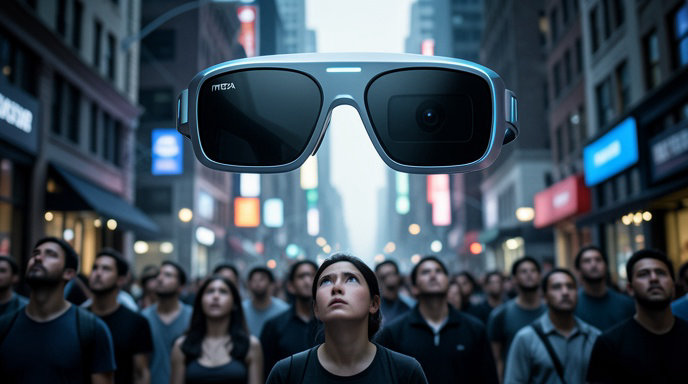
- The new device will focus on AI voice assistant, music, calls, and a heads-up display instead of photos and video, removing the feature that earned the nickname perv glasses.
- The move signals a split future for wearables, with camera-powered glasses for creators and discreet, display-only glasses aimed at mainstream and workplace adoption.
A Privacy Rebrand Years in the Making
Meta didn't get into smart glasses to start a culture war, but that's where it ended up. After two breakout hits with the Ray-Ban Meta second generation and the Oakley Meta HSTN fitness line, the company's glasses became both a consumer electronics success story and a lightning rod.
Viral TikToks showing people recording strangers without their knowledge, bars and gyms posting no smart glasses signs, and lawmakers in the U.S. and EU questioning Meta's tiny recording LED have all fueled the same label: perv glasses.
Now, according to recent reports from Bloomberg and The Verge ahead of Meta Connect 2026, Meta's answer is radical simplification. Strip out the camera entirely.
The new model, internally discussed as a display-focused companion to the Ray-Ban line, would be Meta's first mainstream smart glasses with no lens for the world, only lenses for the wearer.
Why Ditch the Camera
The camera is the entire business model for today's Ray-Ban Meta glasses. Hands-free Instagram Stories, POV cooking videos, live-streaming to followers, and Meta AI's signature what am I looking at feature all depend on it.
So why kill it? Three reasons keep coming up in reporting and insider comments.
First, friction. Meta wants to sell hundreds of millions of glasses, not just tens of millions to early adopters. Internal research reportedly shows a large group of interested buyers won't wear camera glasses themselves and don't want to be around them either.
Second, regulation. The EU's AI and data protection scrutiny, plus proposed U.S. state laws requiring clearer recording signals and consent, make a camera in every pair a legal headache. A camera-free SKU sidesteps almost all of that overnight.
Third, places. Schools, hospitals, locker rooms, live theaters, casinos, corporate boardrooms, and government offices have been the fastest to push back. A version with physically no camera to cover with tape instantly becomes allowed where Ray-Ban Metas are banned.
In short, Meta realized the camera was both its killer feature and its ceiling.
What the Camera-Free Glasses Will Actually Do
Removing the camera doesn't mean making dumb glasses. According to leaks, the camera-free version will keep almost everything else that makes Meta's glasses useful.
Expect open-ear speakers for music and calls, beamforming microphones for Meta AI voice queries, and crucially, a monocular heads-up display similar to the $799 Meta Ray-Ban Display launched last year. That means turn-by-turn navigation, live captions and translations, text messages, music controls, and Meta AI responses floating in your field of view, controlled by voice and the neural wristband.
Without a camera, features like live AI video analysis, QR scanning via camera, and hands-free recording go away. Instead Meta is reportedly leaning harder into audio-first AI: remember a conversation, translate someone in real time, whisper directions, identify a song, or draft a message, all without ever taking a photo.
Battery life, a constant complaint on camera models, could also jump significantly. No camera sensor, no image processing, and no LED means more room for display and audio power. Sources suggest all-day use is the target.
The move also lowers cost and weight. Industry analysts expect a camera-free display model to slot in well below the current display glasses price, potentially in the $299 to $499 range, making it Meta's mass-market Trojan horse.
Will It Actually Ease Public Fears
This is the billion-dollar question. Privacy advocates are split.
On one side, groups like the EFF and European consumer watchdogs say a physically camera-less option is exactly what they asked for. You can't secretly record if there's no lens. No LED to miss, no shutter sound to spoof, no accidental uploads. For nervous bystanders, visual proof matters: no camera bump equals no panic.
On the other, critics argue Meta is missing the point. The nickname perv glasses was never just about hardware, it was about trust. Meta's business is data collection, and an always-on microphone plus location-aware AI still feels creepy to many people, especially if conversations can be transcribed or translated in the cloud.
Early social sentiment reflects that divide. Some Reddit and Threads users say they'd finally try smart glasses if the creep factor is gone. Others say they'll still assume every pair of Ray-Bans has a camera, regardless of what Meta claims.
Meta will likely need to make the difference obvious by design: no camera hole, a different frame color or clear no cam badge, and in-store verification. Without that, experts warn, the public won't believe the promise.
What This Means for the Future of Wearable Tech
Meta's pivot tells you where the entire industry is headed: bifurcation.
Until now, every smart glasses maker assumed more sensors equals better. Snap Spectacles, Xreal, Viture, and even Apple's rumored glasses have all chased cameras plus displays. Meta is now betting the market will split in two.
Category one: creator glasses with cameras for influencers, travelers, and POV video fans. These will keep pushing higher resolution, longer recording, and live AI vision.
Category two: everyday glasses with no camera, focused on audio, AI assistant, health, and subtle displays. These are for work, commuting, and social settings where a camera is a dealbreaker.
If Meta succeeds, expect rivals to copy it fast. Google with its Android XR partners, Samsung, and even Apple are all rumored to be exploring display-only, camera-optional designs for the exact same reason: social acceptance scales faster than specs.
Long term, this could normalize face computers the way AirPods normalized talking to yourself in public. First remove the fear, then reintroduce the camera once people are comfortable. Meta isn't abandoning camera glasses, it's just giving the world a pair it can't object to.
For Meta, haunted by a decade of privacy scandals from Cambridge Analytica to location tracking lawsuits, the camera-free glasses are more than a product. They're an apology in hardware form, and a test of whether people ever hated the camera, or just the company behind it.

Get All The Latest Updates Delivered Straight To Your Inbox For Free!