
Norway Considers Banning Camera-Enabled Smart Glasses Over Privacy Risks
TL;DR
- Norway's data protection authority, Datatilsynet, is weighing a potential ban or severe restriction on camera-enabled smart glasses in public spaces, arguing covert recording poses an unacceptable privacy risk.
- The proposal, which has popularly been dubbed the "pervert glasses" ban, could force major players like Meta, Ray-Ban, and others to disable camera functions or pull products from the Norwegian market.
- If passed, the move could set a precedent for stricter wearable privacy regulation across the EU and EEA under the GDPR framework.
A Growing Backlash Against Invisible Recording
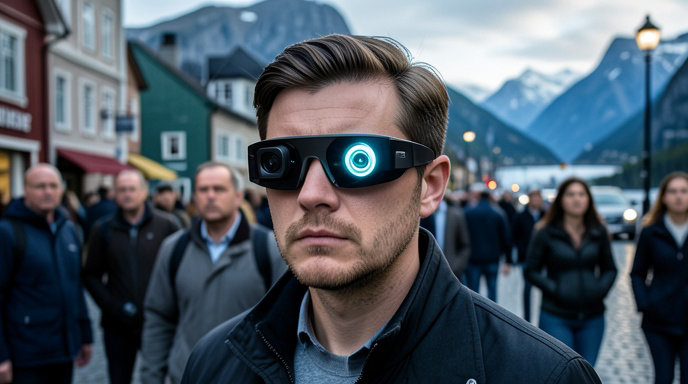
Norway is emerging as the first European country to seriously consider an outright ban on wearable camera headsets. Regulators are sounding the alarm over a new generation of smart glasses that look like ordinary eyewear but can silently record video, take photos, and even live-stream without any obvious indication to bystanders.
The Norwegian Data Protection Authority, Datatilsynet, has confirmed it is evaluating regulatory options that range from strict usage restrictions to a full prohibition on the sale and public use of glasses with integrated, discreet cameras. The core concern is consent. Unlike a smartphone, where holding up a device signals that recording may be happening, smart glasses erase that social cue entirely.
Why They Are Being Called "Pervert Glasses"
In Norwegian media and political debate, the devices have controversially been nicknamed "pervert glasses" - a translation of the term "pervobriller" that has gained traction in the press. The name reflects the specific fear driving the regulatory push: the potential for non-consensual filming in sensitive public spaces such as gyms, swimming pools, schools, changing rooms, public transport, and nightlife venues.
Privacy advocates argue the technology makes voyeurism and harassment far easier and harder to detect. While existing Norwegian law already prohibits covert photography in private or intimate settings, regulators say smart glasses create a legal grey area in public spaces where people still have a reasonable expectation not to be filmed up close without knowledge. The tiny LED indicator lights that some manufacturers include to signal recording are, according to Datatilsynet, too small, too easy to miss, and too easy to cover or disable to be an effective safeguard.
How Regulators Want to Restrict the Technology
No final ban has been enacted yet, but several models are under discussion. The most aggressive option would be to prohibit the import and sale of camera-enabled wearables that do not have a clear, unavoidable recording signal. A more moderate approach would be to ban their use in defined public and semi-public spaces, similar to existing bans on mobile phones in schools and gyms, but with much stricter enforcement and penalties.
Another proposal would require manufacturers to implement privacy-by-design features to be compliant in Norway, such as a loud audible shutter sound, a bright and continuous recording light, or a requirement that the glasses must be paired with a visible gesture to start recording. Datatilsynet has also suggested that retailers could be required to provide explicit privacy warnings at the point of sale.
What This Means for Meta, Apple, and the Wearable Industry
A Norwegian ban would have immediate consequences for the biggest players in the smart eyewear market. Meta's Ray-Ban Meta smart glasses, which have become the most commercially successful camera glasses to date, are at the center of the debate. Other companies developing or selling similar products, including upcoming offerings from Apple, Google, and smaller firms like Xreal and Brilliant Labs, would also be affected.
For these companies, Norway is a relatively small market, but the regulatory risk is significant. As a member of the European Economic Area, Norway closely aligns its privacy laws with the EU's General Data Protection Regulation. A strong stance from Datatilsynet is likely to be closely watched by the European Data Protection Board and regulators in Sweden, Germany, and France, where similar privacy concerns have been raised.
Industry groups have pushed back, arguing that a ban would stifle innovation and punish responsible users for the actions of a few. Meta has previously stated that its glasses include an LED indicator and that it provides user education on responsible use, including asking users to respect local laws and ask for permission before recording people.
A Potential Turning Point for Privacy Laws Across Europe
Whether Norway moves forward with a full ban or a more nuanced restriction, the debate signals a broader shift in how Europe intends to handle ambient and wearable AI hardware. As smart glasses become more powerful, adding features like facial recognition, AI-powered live translation, and automatic memory capture, regulators fear that existing GDPR and ePrivacy rules are not sufficient to protect bystanders who never agreed to be recorded.
Legal experts say the Norwegian case could become a test for the principle of privacy by default in public spaces. If the country decides that discreet wearable cameras are inherently incompatible with GDPR's requirements for transparent and consensual data collection, other EU regulators could adopt similar interpretations, forcing a fundamental redesign of the next generation of wearable technology.
For now, Datatilsynet is in a consultation phase, gathering input from technology companies, civil liberties groups, and the public before issuing a formal recommendation to the government. A decision is expected in the coming months and could determine whether smart glasses remain a niche gadget or face their first major legal roadblock in Europe.

Get All The Latest Updates Delivered Straight To Your Inbox For Free!