
Nvidia’s Les Karpas Reveals Why Robotics Is Waiting for Its ChatGPT Moment at TechCrunch Disrupt 2026
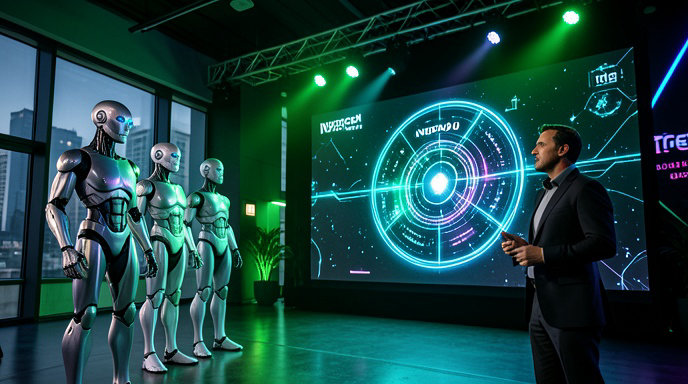
TL;DR
- Despite breakthroughs in generative AI, robotics still hasn't cracked everyday life due to gaps in dexterity, safety, cost, and real-world data.
- At TechCrunch Disrupt 2026, Nvidia's Les Karpas will break down what's holding robots back and what a true ChatGPT moment for robotics would require.
- Attendees can catch the session live in San Francisco this October, with passes up to $200 off if registered before September 25.
The Everyday Robot Is Still Missing
Artificial intelligence now writes essays, codes software, and generates photorealistic video in seconds. Yet your home still doesn't have a robot that can reliably fold laundry, unload the dishwasher, or tidy up after dinner.
That disconnect is the central puzzle of modern robotics. AI brains have gotten dramatically smarter, but robot bodies remain expensive, fragile, and surprisingly clumsy outside of factories and warehouses. At TechCrunch Disrupt 2026, Nvidia's Les Karpas is set to take the stage to explain why.
Karpas, a key leader in Nvidia's robotics efforts, works at the intersection of simulation, foundation models, and humanoid development — the exact stack many believe will finally push robots from demos to daily life.
What's Really Holding Robots Back
According to the preview of his Disrupt session, Karpas will argue the bottleneck isn't just AI — it's everything around it.
First is the physical world problem. Unlike chatbots trained on trillions of words from the internet, robots need to learn from physical interaction. There is no massive, open dataset for how to grasp a slippery mug or navigate a cluttered living room. Collecting that data is slow, expensive, and dangerous.
Second is dexterity and reliability. A 99% success rate is great for a chatbot, but terrible for a 70-pound humanoid carrying groceries. Robots need near-perfect safety, balance, and manipulation to operate around people, pets, and unpredictable homes.
Third is cost and scale. Lidar, actuators, hands, and onboard compute still push humanoids and mobile manipulators into the tens of thousands of dollars. Without mass manufacturing and killer everyday use cases, the industry is stuck in pilot mode.
What Would a ChatGPT Moment for Robotics Look Like?
The phrase comes up in almost every robotics pitch, but Karpas is expected to give it a concrete definition.
For AI, ChatGPT was the moment when a powerful foundation model met a simple, usable interface that anyone could try. For robotics, experts say it won't be a single viral demo. It will be when a general-purpose robot can be given a new task in plain language — clean the kitchen, restock this shelf, pack that box — and do it reliably without months of custom programming.
That will require three breakthroughs coming together: capable robot foundation models trained in simulation and refined in reality, low-cost but dexterous hardware, and a developer ecosystem that lets startups build skills the way mobile developers built apps.
Nvidia is betting its Isaac platform, Omniverse simulation, and Jetson and Thor computing hardware can provide that common foundation. Karpas is expected to share how Nvidia sees simulation-to-reality training, synthetic data, and humanoid partners accelerating that timeline.
Why Nvidia, and Why Now
Nvidia has quietly become one of the most influential players in robotics. While better known for AI GPUs, its robotics stack now powers thousands of companies working on warehouse automation, last-mile delivery, surgical assistants, and humanoids.
With labor shortages, e-commerce pressure, and renewed investment in U.S. manufacturing, interest in physical AI is surging in 2026. At the same time, competition is intensifying from Tesla's Optimus, Figure, Agility Robotics, 1X, and a wave of Chinese humanoid makers.
Karpas' session at Disrupt lands at a pivotal moment: after years of hype videos, the industry is being forced to prove real-world ROI, safety, and scalability.
What to Expect at TechCrunch Disrupt 2026
TechCrunch Disrupt 2026 returns to Moscone West in San Francisco this October, bringing together founders, investors, and tech leaders for three days of interviews, startup pitches, and hands-on demos, including a major focus on AI, space, fintech, and robotics.
Karpas' talk is positioned as a must-attend for founders building in physical AI, investors trying to separate hype from viable platforms, and anyone curious why helpful home robots still feel five years away.
TechCrunch says attendees who register before September 25 can save up to $200 on passes. With the robotics session expected to draw a packed house, early registration is recommended for those who want front-row access to Nvidia's roadmap for the ChatGPT moment that hasn't happened — yet.

Get All The Latest Updates Delivered Straight To Your Inbox For Free!