
OpenAI Supercharges Codex With Reusable Cloud Environments, Voice CLI and Security Tools
TL;DR
- OpenAI is launching reusable Codex cloud environments that let developers pause, resume, and pick up coding sessions from CLI, web, IDE, or mobile without losing context.
- The revamped Codex CLI adds voice control, background agents, and a new interactive review flow, alongside upgraded automated code reviews for GitHub and Bitbucket.
- A new Codex security-focused tool in preview can scan repositories for vulnerabilities, explain risks, and draft ready-to-merge fixes for human approval.
One Workspace, Every Device
OpenAI is giving Codex its biggest workflow upgrade yet, turning the AI coding assistant from a session-based helper into a persistent development partner that follows you across devices.
At the center of the update, announced Monday, are reusable cloud development environments for Codex. Instead of spinning up a fresh sandbox every time you ask Codex to do something, developers can now create a named environment - complete with dependencies, setup scripts, secrets, and branch state - and return to it again and again.
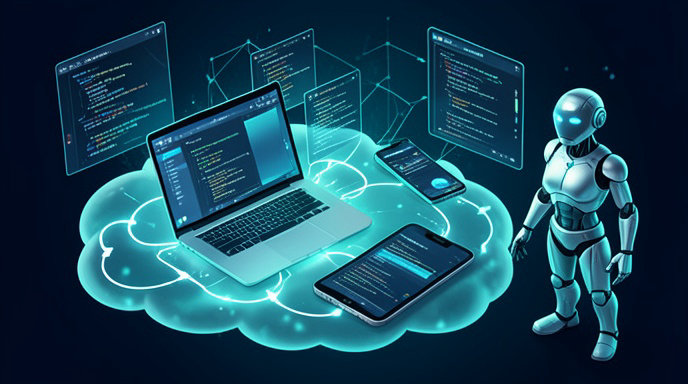
An environment started in the terminal can be resumed later from the Codex web app, the VS Code extension, or even a phone browser, with full terminal history, agent memory, and code changes intact. Teams can also clone and share environments for onboarding, debugging production issues, or standardizing review setups. OpenAI says environments can be snapshotted, forked, and connected directly to GitHub repos, effectively making Codex feel like a cloud dev machine that never sleeps.
For agencies, startups, and large engineering orgs juggling multiple projects, the pitch is simple: stop re-explaining your stack to the AI and start building on top of work it already remembers.
The CLI Gets a Voice - and a Second Brain
The Codex CLI is also getting a major revamp aimed at keeping developers in flow.
The headline feature is voice control. Developers can now wake the CLI with a hotkey, dictate a task like refactoring a function or writing tests, and watch Codex execute while narrating its plan. Voice dictation is paired with a new compact voice-aware UI designed for hands-free iteration during reviews, commutes, or accessibility needs.
Beyond voice, the new CLI supports running multiple agents in parallel in the background, switching between them without losing place. A new interactive mode lets you co-edit with Codex line-by-line, accept or reject diffs inline, and ask for alternatives before anything is committed.
OpenAI has also tightened the loop between local and cloud. You can kick off a long-running task locally, push it to a cloud environment, close your laptop, and get a notification when Codex finishes - then review the result from anywhere.
Code Review Moves From Bot to Teammate
Code review is the other big pillar of the release. OpenAI is expanding Codex code review beyond simple pull request comments into a full review system.
The upgraded reviewer now understands entire repositories, not just diffs, allowing it to catch breaking API changes, missing migrations, and inconsistent patterns across services. It can leave inline suggestions, propose refactors, auto-generate tests for uncovered code, and learn from a team's past approvals to reduce noise.
Integration is widening too, with native support for GitHub, GitLab, and Bitbucket, plus configurable rules for style, security posture, and performance budgets. Managers can set auto-merge thresholds where low-risk Codex-approved changes move forward, while high-risk changes are routed to senior engineers with AI-generated summaries.
OpenAI positions this not as replacing human reviewers, but as clearing the backlog so humans focus on architecture and product judgment.
Codex Goes on Security Duty
Perhaps the most ambitious addition is a new security-focused Codex product, now in limited preview.
Described as a proactive security engineer, the tool continuously scans connected repositories for vulnerabilities like injection flaws, insecure auth, exposed secrets, and outdated dependencies. When it finds something, it doesn't just flag it - it explains exploitability in plain English, ranks severity, and prepares a minimal fix in a separate branch with tests attached.
Early testers can run one-time deep scans or enable always-on monitoring, with dashboards tracking mean-time-to-fix and compliance readiness for frameworks like SOC 2. Crucially, OpenAI stresses human-in-the-loop: no security fix is merged without developer approval, and all scans run in isolated, audited environments to avoid leaking proprietary code.
The move puts OpenAI in direct competition with established application security players and GitHub's own Advanced Security tools, betting that AI that can both find and fix bugs will win over busy security teams.
Why This Matters Now
Together, the updates signal a clear shift in OpenAI's developer strategy. Codex is no longer just a code completion engine or chatbot - it's becoming an operating layer for software development.
Reusable environments solve one of the biggest pain points of AI coding tools: lost context. Voice and cross-device continuity acknowledge that modern development doesn't happen only at a desk. And by pairing faster shipping with stronger review and security guardrails, OpenAI is answering enterprise concerns that AI writes code too fast to trust.
OpenAI said the new environments and CLI features are rolling out to Plus, Pro, Business, and Edu users starting this week, with API access to follow. The security scanner will remain in private preview for select enterprise customers while the company refines accuracy and false-positive rates.
If the rollout lands, the daily routine for many developers could soon look very different: speak a feature into existence on your laptop, review it from your phone, and let Codex handle the tests, reviews, and security patches in between.

Get All The Latest Updates Delivered Straight To Your Inbox For Free!