
Medium’s TK App Brings AI-Assisted Writing Directly to Creators
TL;DR
- Medium’s TK is an AI-assisted writing app designed to help creators develop, revise, and organize stories without removing the human from the process.
- The product reflects Medium’s attempt to respond to changing publishing habits while distinguishing collaborative AI from fully automated content generation.
- TK’s success will depend on transparency, originality safeguards, editorial control, and whether writers view its assistance as useful rather than intrusive.
A New Kind of Writing Tool
Medium is expanding beyond its familiar publishing platform with TK, a writing app that places AI assistance inside the creative process. Rather than treating artificial intelligence as a system that simply produces finished articles, TK is positioned as a tool for helping writers move from an early idea to a more developed and polished story.
The app’s focus is the space where many writers struggle: turning scattered notes into a coherent structure, finding the right framing for an essay, overcoming writer’s block, and revising a draft without losing its individual voice. That approach puts TK in the growing category of AI-native creative tools that aim to support authors throughout the writing process instead of functioning as one-click content generators.
For Medium, the launch is also a strategic statement. The company is attempting to define how AI can fit into a publishing ecosystem built around independent writers, personal perspectives, and human editorial judgment.
AI as a Writing Partner
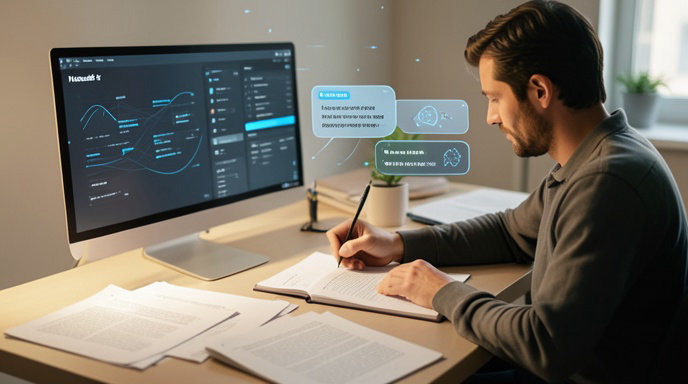
TK’s central idea is that AI should act more like a writing partner than an invisible ghostwriter. A creator can bring an initial concept, prompt the system for possible directions, test different structures, or ask for help clarifying a passage. The writer remains responsible for deciding what belongs in the final piece.
That distinction matters in an industry increasingly divided over the use of generative AI. Many creators are comfortable using AI for brainstorming, outlining, editing, and research organization. Others argue that even limited assistance can blur the line between a writer’s own work and machine-generated language.
A collaborative model gives Medium a way to acknowledge the practical benefits of AI while preserving the idea that authorship depends on human decisions. The quality of a final story is not determined only by the words an AI system can produce, but also by the writer’s experiences, judgments, reporting, interpretation, and willingness to revise.
Designed Around the Creative Process
The appeal of an app such as TK is its potential to support the full lifecycle of a story. Instead of switching among separate tools for notes, outlining, drafting, editing, and publishing, creators can work in a more unified environment.
AI assistance can be especially useful during the earliest stages of writing. A writer may have a theme but no clear thesis, a collection of observations but no narrative arc, or a promising opening without a satisfying conclusion. In those situations, an AI system can suggest approaches that help the writer evaluate possibilities.
Revision is another area where such tools may provide value. AI can identify repetition, unclear transitions, inconsistent tone, or sections that need additional explanation. Used carefully, that feedback can resemble an initial editorial pass. It can help writers see weaknesses in a draft while leaving the final creative decisions to them.
The challenge is ensuring that convenience does not lead to uniformity. If every writer relies on similar prompts and similar recommendations, published work could begin to sound increasingly alike. A writing app built around AI therefore needs to help creators develop stronger individual voices, not merely produce smoother prose.
Medium’s Publishing Challenge
Medium operates in a publishing environment that has changed significantly since the platform’s early years. Writers now have access to newsletters, social platforms, creator subscription services, personal websites, podcasting tools, and a wide range of AI-powered applications.
That competition has made the writing workflow itself an important battleground. A platform that only hosts finished articles may be less central to creators than one that helps them generate ideas, develop drafts, and build a continuing relationship with readers.
TK can be seen as part of Medium’s effort to make its ecosystem more useful before a story is published. If the product successfully helps writers create better work, Medium could strengthen its connection with creators and encourage more of them to publish on the platform.
At the same time, AI features create risks for a company whose identity has been closely associated with thoughtful, human-authored writing. Medium must convince users that TK will not turn the platform into a stream of generic machine-produced articles.
The Originality Debate
The most difficult questions surrounding TK are not technical. They concern originality, disclosure, ownership, and trust.
Readers increasingly want to know how an article was produced. There is a meaningful difference between using AI to correct grammar and asking it to generate most of a story. Both activities may involve the same underlying technology, but they raise different questions about authorship and editorial responsibility.
Medium will need to make its expectations clear. Writers may want guidance on when AI assistance should be disclosed, how generated text should be checked, and what kinds of machine-produced material are acceptable for publication. Clear policies could help protect readers and distinguish responsible use from low-effort content production.
Accuracy is another concern. AI systems can present incorrect claims confidently, invent supporting details, or summarize complex subjects without sufficient nuance. Writers using TK will still need to verify facts, cite sources where appropriate, and take responsibility for what they publish.
Human-Centered Writing in an AI Era
The argument for tools such as TK is not that AI can replace writers. It is that writers can use AI to spend more time on the parts of storytelling that require judgment and imagination.
A useful assistant may reduce the friction involved in outlining or revising, allowing creators to focus on reporting, personal insight, narrative choices, and emotional depth. For experienced writers, it could provide a fast way to challenge assumptions or test alternative structures. For new writers, it might make the process feel less intimidating.
But human-centered writing requires more than a human pressing the publish button. It depends on lived experience, accountability, curiosity, and a reason for telling a story in the first place. If AI tools encourage writers to accept the first plausible answer or outsource difficult thinking, they could weaken the very qualities that make personal publishing valuable.
TK’s long-term role will therefore depend on how it frames assistance. The strongest version of the product would help writers think more clearly and make more deliberate choices. The weakest would reward speed and polish at the expense of originality.
What Creators Will Be Watching
Creators evaluating TK are likely to focus on several practical questions. How much control do writers have over the suggestions they receive? Can they reject or revise AI recommendations easily? Does the system preserve a writer’s tone, or does it push drafts toward a standardized style?
Data handling will also be important. Writers may want to know whether their drafts are used to improve AI models, how private material is stored, and whether unpublished ideas remain confidential. These concerns are particularly significant for journalists, authors, and creators working with sensitive information.
The app’s relationship with Medium’s publishing system will be another factor. If TK makes it easier to move from an idea to a finished Medium story, it could offer a compelling end-to-end workflow. If it becomes primarily a general-purpose AI editor with only a loose connection to publishing, its advantage over existing tools may be less clear.
The Broader Industry Shift
Medium is not alone in exploring AI-assisted creativity. Writing platforms, productivity companies, publishers, and software makers are all experimenting with systems that can generate, edit, summarize, and organize text.
The emerging competition is not simply about which app has the most powerful language model. It is about product philosophy. Some services emphasize automation and volume, while others are attempting to build tools that preserve human control and make the origin of content more visible.
That distinction could become increasingly important as publishers confront an expanding supply of inexpensive machine-generated text. In such an environment, trust, voice, and provenance may become more valuable than raw publishing speed.
A Test of Medium’s AI Philosophy
TK gives Medium an opportunity to show what responsible AI-assisted publishing can look like. The company can help establish a model in which artificial intelligence supports the creative process while writers remain accountable for the work’s meaning, accuracy, and originality.
Whether it succeeds will depend on execution. The product must be useful without becoming overbearing, intelligent without encouraging complacency, and integrated without making every story feel algorithmically shaped.
For creators, the most important question is ultimately simple: does TK help them produce work they could not have developed as effectively on their own, while still leaving the finished story recognizably theirs?
If the answer is yes, Medium’s new app could become a meaningful part of the next generation of writing tools. If not, it may be seen as another attempt to add AI to publishing without resolving the deeper questions about why people write and why readers should trust what they see.

Get All The Latest Updates Delivered Straight To Your Inbox For Free!