
Ron Johnson Slams AI Shopping Hype Says Apple Stores Win With People Not Bots
TL;DR
- Former Apple retail chief Ron Johnson says Silicon Valley is wrong to bet AI agents will replace human shopping, arguing connection still drives purchases.
- Johnson says Apple's true retail secret was never minimalist design or products alone, but its people, from specialists to the Genius Bar.
- His warning: retailers who replace staff with bots risk killing trust, while the future belongs to AI that empowers human associates, not eliminates them.
Silicon Valley Thinks Shopping Is A Search Problem
Every major tech platform is racing to kill the store visit. OpenAI, Google, Amazon, Perplexity and Shopify are all pitching AI shopping agents that can find products, compare prices, negotiate deals and check out for you without ever talking to a human.
The pitch is seductive: why browse aisles or chat with a salesperson when a bot knows your size, your budget, your taste and your purchase history better than you do? In this vision, commerce becomes invisible, frictionless and fully automated.
Ron Johnson isn't buying it.
Johnson Takes Aim At The AI Commerce Hype
Johnson, the former Apple senior vice president of retail who created the Apple Store and Genius Bar before a high-profile stint as CEO of J.C. Penney, said in recent interviews that the industry is fundamentally misreading why people shop.
His argument is blunt: shopping was never just about transactions. It's about trust, discovery and human connection. No chatbot, no matter how personalized, can replicate the reassurance of looking someone in the eye before spending $1,200 on a MacBook or $999 on an iPhone.
Johnson has spent his career arguing that great retail is theater plus service. AI can optimize the theater, he says, but it can't replace the service.
Apple's Real Secret Sauce Was Never Glass Stairs
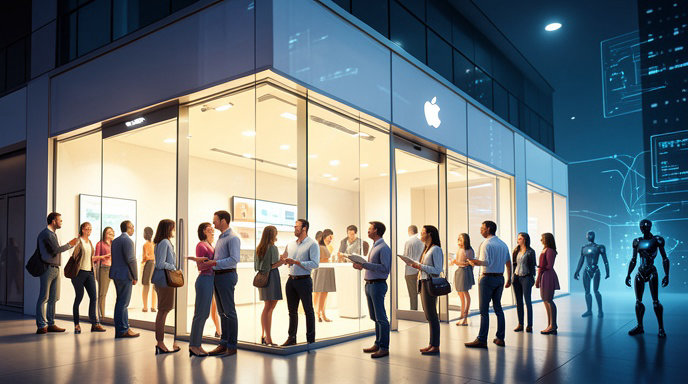
To Silicon Valley, the Apple Store looks like a design triumph: glass staircases, floating tables, perfect lighting. Johnson says that's the myth.
The real breakthrough, he argues, was people. When he and Steve Jobs launched the first Apple Stores in 2001, analysts predicted failure. Instead, Johnson built a people-first model centered on non-commissioned specialists hired for empathy, not sales skills, and the Genius Bar, which turned tech support into hospitality.
That human investment is why Apple Stores became the most productive retail stores in the world by sales per square foot, surviving e-commerce, mobile commerce and now AI commerce. People didn't line up for years around iPhone launches to talk to a kiosk. They came for the energy, the guidance and the community.
In Johnson's telling, Apple won retail by making technology feel human. Replacing those humans with bots would destroy exactly what made it work.
Why Firing People For AI Will Backfire
Johnson's warning to today's CEOs is direct: if you use AI to cut frontline staff, expect loyalty and conversion to collapse.
He points to a pattern already playing out across big-box and specialty retail. Self-checkout overreach, hollowed-out sales floors and scripted chatbots have left shoppers frustrated, not delighted. Shrinkage, returns and abandoned carts rise when there's no knowledgeable person to help.
Luxury and high-consideration categories prove his point, he says. Nobody wants an AI agent to sell them an engagement ring, fit a running shoe, or explain elder-care tech to a nervous parent. Human reassurance reduces purchase anxiety in a way algorithms can't.
Retailers who see labor purely as cost to be automated, Johnson warns, are repeating the J.C. Penney mistake of chasing efficiency over experience.
The Future Is Augmented Associates, Not Agent-Only Checkout
Johnson isn't anti-AI. He is anti-replacement.
What excites him is AI as a superpower for store associates, not a substitute for them. Imagine an Apple specialist instantly pulling up your device history, usage patterns and trade-in value via AI, then using that insight to have a better human conversation. Or a Genius Bar tech diagnosing a problem before you even sit down.
That model, often called augmented or clienteling AI, is already being tested by Apple, Best Buy, Sephora and others. Associates get smarter, service gets faster, but the human stays center stage.
It's the opposite of agentic commerce visions where the bot shops for you in the background. Johnson predicts shoppers will reject fully autonomous buying for anything emotional, expensive or complex, and will flock to brands that blend AI efficiency with human warmth.
What This Means For Retail And AI Commerce
Johnson's pushback lands at a pivotal moment. With AI shopping startups raising billions and Amazon and Google embedding buy-now agents directly into search and chat, the pressure to automate retail has never been higher.
His track record gives the warning weight. He built Apple Retail from zero to $20 billion, founded Enjoy, and now advises retail tech startups. When he says people are the moat, Wall Street and Silicon Valley listen.
The takeaway for retailers: don't race to replace your workforce. Retrain them. Use AI to eliminate busywork, inventory checks and endless product lookups, then reinvest those hours into longer, better human interactions.
For AI companies, the lesson is humbler: the future of shopping isn't people versus bots. It's people empowered by bots. The brands that forget that, Johnson says, will learn what Apple learned two decades ago — technology alone doesn't sell. People do.

Get All The Latest Updates Delivered Straight To Your Inbox For Free!