
Shield AI, Waabi and GM Talk Mission-Critical AI at TechCrunch Disrupt 2026
TL;DR
- Shield AI, Waabi, and General Motors leaders will headline the Real World AI Stage at TechCrunch Disrupt 2026 for a session on building AI when failure is not an option.
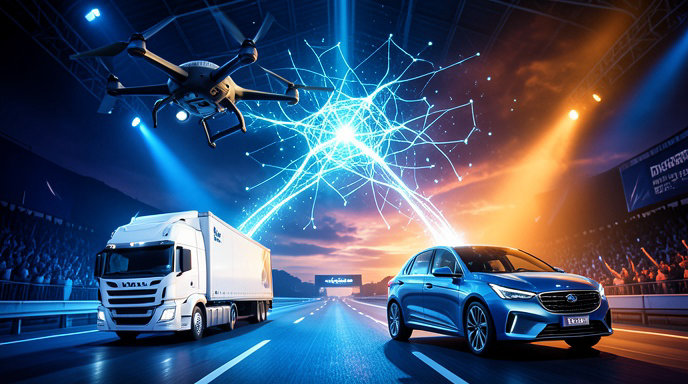
- The panel will dig into safety-critical autonomy across defense drones, autonomous trucking, and next-gen automotive, from validation and regulation to earning public trust.
- Disrupt 2026 takes place October 13-15 in San Francisco, with attendees able to save up to $200 plus get 50% off a second pass if they register before September 25.
Who Is Speaking
The Real World AI Stage session brings together three leaders operating where AI mistakes carry real-world consequences.
Representing defense tech is Brandon Tseng, Co-Founder and President of Shield AI, the company behind the Hivemind autonomy stack and V-BAT and X-BAT aircraft now deployed across U.S. and allied operations. Representing autonomous trucking is Raquel Urtasun, Founder and CEO of Waabi, whose AI-first, simulator-driven approach to driverless long-haul freight has made it one of the most closely watched autonomy startups in the world.
Rounding out the panel from automotive is Barak Turovsky, Executive Vice President and Chief AI Officer at General Motors, where he leads enterprise AI strategy spanning manufacturing, in-vehicle assistants, advanced driver assistance, and future autonomy efforts.
Together, the trio spans the full spectrum of mission-critical AI — from contested battlefields to interstate highways to consumer vehicles.
Why This Conversation Matters Now
AI has moved well beyond chatbots and copilots. In 2026, the most consequential race is in the physical world, where models control aircraft, 80,000-pound trucks, and cars carrying families.
That shift has raised the bar dramatically. Unlike software that can fail gracefully, safety-critical autonomy demands rigorous testing, redundancy, formal verification, and a culture built around reliability. It also faces intense scrutiny from regulators, the Pentagon, highway safety officials, and a skeptical public.
TechCrunch Disrupt 2026 is leaning into that moment with its dedicated Real World AI Stage, focused on founders and technologists deploying AI outside the data center. This session is positioned as its anchor panel — a look at what it actually takes to ship AI when lives are on the line.
Three Industries, One Challenge
Defense, Trucking, and Automotive
While the domains look different, the core engineering problem is strikingly similar: how do you prove an autonomous system is safe enough?
In defense, Shield AI is building AI pilots designed to operate without GPS or communications in contested environments. The company argues that autonomy, not just attrition, will define deterrence, and that means software must be trusted to make split-second decisions under fire.
In trucking, Waabi is tackling long-haul freight, one of the clearest near-term business cases for autonomy. With its closed-loop Waabi World simulator and end-to-end interpretable AI stack, the company is focused on solving the long tail of edge cases and scaling driverless operations with partners like Uber Freight and Volvo Autonomous Solutions.
At GM, the challenge is scale at a consumer level. With millions of vehicles on the road, Super Cruise hands-free driving, OnStar integration, and new generative AI features, GM has to balance rapid innovation with automotive-grade safety, cybersecurity, and quality control.
Expect the panel to compare notes on simulation vs. real-world miles, safety cases, human oversight, and how much autonomy is enough.
Key Themes To Watch
Building AI When Failure Is Not An Option
According to TechCrunch, the discussion will go beyond hype to the operational realities of mission-critical AI.
Key themes include verification and validation for neural networks, building redundant and interpretable systems, navigating FAA, FMCSA, NHTSA and DoD procurement hurdles, and earning trust from soldiers, truck drivers, and everyday drivers.
Another big topic will be the role of generative AI and foundation models in robotics. All three companies are now blending large-scale learning with physics-based safety guardrails — an approach that could define the next era of autonomy.
The panel will also likely address talent, cost, and competition with China, as U.S. defense primes, startups, and automakers all race to field reliable autonomous systems first.
How To See It At Disrupt 2026
Dates, Tickets and Discount Deadline
TechCrunch Disrupt 2026 runs October 13-15 at Moscone West in San Francisco, bringing together more than 10,000 founders, investors, and operators.
The Shield AI, Waabi, and GM session will take place on the Real World AI Stage, one of several specialized stages alongside the main Disrupt Stage, Startup Battlefield, and expo floor.
For readers planning to attend, TechCrunch is offering a limited-time deal: save up to $200 on Disrupt passes plus get 50% off a second pass when you register before September 25 at 11:59 p.m. PT. After that deadline, ticket prices increase.
With autonomy moving from pilot programs to real deployment in defense, freight, and personal mobility, this is one panel where the stakes — and the lessons — go far beyond Silicon Valley.

Get All The Latest Updates Delivered Straight To Your Inbox For Free!