
Snap Defends Its $2,200 Specs Smart Glasses and Why They Matter
TL;DR
- Snap is going all-in on its $2,200 Specs at Lens Fest 2026, arguing they are a standalone AR computer — not an accessory — built for creators, developers, and early adopters.
- The pitch centers on true see-through AR with dual displays, hands-free AI from OpenAI and Google, shared Lens experiences, and all-day utility like translation, navigation, and cooking help.
- With Meta's $299 Ray-Bans dominating sales and Apple’s Vision Pro stumbling at $3,499, analysts remain skeptical whether consumers will pay pro-level pricing for Snap’s vision-first bet.
Snap Is Done Apologizing For The Price
Snap CEO Evan Spiegel isn’t backing down. Speaking this week at Lens Fest in Los Angeles and in a round of interviews around the September 16th showcase, Spiegel framed the $2,200 Specs — which went on sale to consumers in the U.S. in late August after their debut earlier this year — as a deliberate, no-compromise bet on the future of computing.
The message is blunt: Specs aren’t meant to compete with Meta Ray-Bans. They aren’t a camera strapped to sunglasses with a speaker. They’re Snap’s attempt to ship a fully standalone augmented reality machine you wear on your face, no phone, no puck, no tether required.
That positioning is Snap’s entire justification for the price. Where Meta chased scale with a $299 AI glasses product that looks normal and does a few things well, Snap says it built for depth — real AR overlays that persist in the world, multi-user shared experiences, and deep Lens integration from its 400,000+ AR creator community.
Why $2,200, Really?
Spiegel and Snap’s hardware chief have spent the past 48 hours breaking down the cost in unusually frank terms. The Specs pack two custom waveguide displays, dual Snapdragon processors, four cameras for hand-tracking and 3D mapping, and a new vapor-chamber cooling system — all crammed into a 46-gram-lighter frame than last year’s developer-only Spectacles.
Snap executives argue you can’t get that hardware for $300 without gutting the AR part. In interviews, Spiegel compared Specs more to a high-end laptop or to Apple’s $3,499 Vision Pro than to other smart glasses. Snap is also bundling in a creator revenue program, free Lens Studio tools, and cloud processing for its multimodal AI features.
Still, Snap knows the optics are tough. Internally, the company is reportedly positioning the first consumer run as a limited “Founder-style” launch aimed at creators and developers, not a mass-market iPhone moment. The $2,200 tag filters for true believers while Snap scales manufacturing and waits for component costs to fall.
Standout AR Features Snap Wants You To Notice
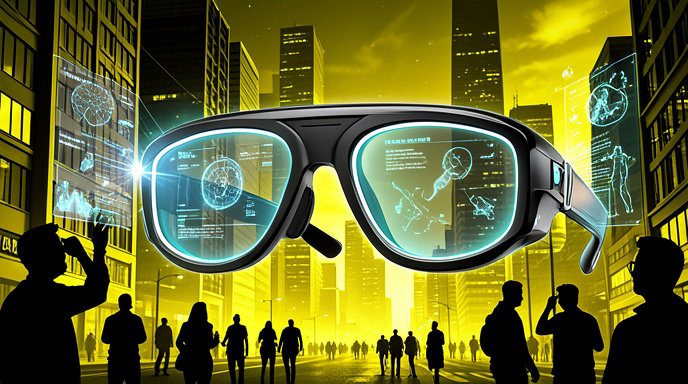
Strip away the pricing debate and Specs are genuinely the most advanced see-through AR glasses you can buy right now.
The headline spec is the display: a 46-degree field-of-view with automatic tinting for outdoor use, bright enough to be usable in daylight — a huge leap from the dim, indoor-only developer Spectacles. Overlays actually stay pinned to the real world as you walk around.
Snap is leaning hard into AI as the killer interface. Specs run a dual-model setup with OpenAI’s GPT and Google’s Gemini, letting you look at what’s in front of you and ask questions. Live demos this week showed real-time translation of street signs and menus, step-by-step recipe overlays that identify ingredients on your counter, 3D navigation arrows painted on the sidewalk, and a “memory” mode that recalls where you left your keys.
Gaming and social are the other pillar. Up to seven people wearing Specs can play in the same shared Lens — think tabletop AR board games, virtual pets running around the living room, or collaborative 3D sculpting. YouTube-style tutorials, Super Travel, pool coaching, and DJ decks were all trotted out as proof that this isn’t just tech-demo vaporware. Battery life remains the weak spot at around 3-4 hours of active AR, with a USB-C charging case for top-ups.
Built For Creators First, Consumers Second
If there’s one group Snap is actually trying to convince this week, it’s creators. More than 400,000 developers have built over 4 million Lenses, and Snap says Specs finally give them a real canvas — and a real payday.
Snap announced expanded monetization at Lens Fest, including rev-share for top-performing immersive Lenses and early access to its new AI Lens builder that turns text prompts into 3D effects in minutes. The idea is to replicate what TikTok and YouTube did for video: pay the people who make wearing the thing fun.
For everyday consumers, the use cases Snap keeps repeating are travel, learning, cooking, and hanging out. Point your glasses at the Eiffel Tower and get history narrated in your ear. Look at a broken bike and get repair steps overlaid. Video-call a friend who can see what you see and draw arrows in your vision to guide you. It’s compelling on stage, but Snap admits it still needs that one must-have Lens that makes $2,200 feel obvious.
Will Anyone Actually Buy In?
That’s the $2,200 question. Early reaction from press who have tried the consumer units is split: awe at the tech, sticker shock at the checkout.
Bulls point out that Apple normalized $3,499 for Vision Pro, and pro creators already pay $2,000+ for cameras, laptops, and camera phones. If Snap can sell even 50,000 to 100,000 units to developers, agencies, museums, classrooms, and hardcore Snapchatters, it buys time to make a cheaper version.
Bears note the brutal comparison: Meta has sold millions of Ray-Bans precisely because they’re cheap, normal-looking, and simple. Meta’s new $799 Display glasses with a monocular screen undercut Specs by $1,400. And history isn’t kind — Spectacles 1 through 4, Google Glass, Magic Leap, and HoloLens all wowed early adopters and then fizzled.
Spiegel’s counter is that someone has to ship the real AR future before it can get cheap. Snap isn’t trying to win 2026 on volume. It’s trying to prove that standalone, social AR is worth paying for at all.
What Comes Next
Snap says this renewed push is just phase one. A lighter Specs 2 is already in development for 2027-2028, with a target of halving the price as waveguide yields improve. More AI partners, offline mode improvements, prescription lens support through a new partnership, and an expanded retail footprint beyond Snap’s online store and a few pop-ups are all due in the next three months.
For now, Snap’s message to skeptics is simple: try them. The company is betting that five minutes of true shared AR — seeing digital objects that everyone in the room can touch and move — does more than any spec sheet or keynote to justify why these chunky $2,200 glasses matter.
Whether that’s enough to turn curiosity into credit-card swipes will decide if Specs become Snap’s iPhone moment, or its Vision Pro lesson.

Get All The Latest Updates Delivered Straight To Your Inbox For Free!