
TechCrunch Disrupt 2026 Launches Real World AI Stage With Nvidia, Robotics and De-Extinction Science
TL;DR
- TechCrunch Disrupt 2026 will debut a dedicated Real World AI Stage on October 27-29 at Moscone West in San Francisco, focused on how AI is moving from screens and chatbots into the physical world.
- The new stage will feature headliners from Nvidia on physical AI and industrial intelligence, alongside leaders in advanced robotics from humanoids to autonomous systems.
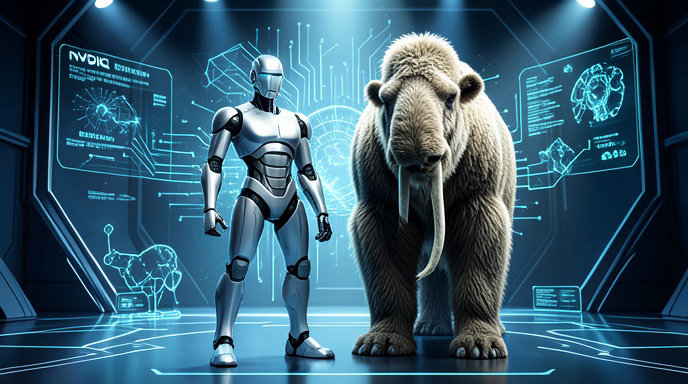
- The lineup also spotlights the controversial and ambitious field of de-extinction, exploring how AI, genomics, and bioengineering are being used in efforts to revive extinct species like the dire wolf and woolly mammoth.
Beyond the Chatbot: AI Steps Into the Physical World
For years, artificial intelligence has lived largely behind a screen — powering chatbots, image generators, and data analytics. TechCrunch Disrupt 2026 is betting that the next great leap is happening outside the data center.
This October, Disrupt is launching its brand-new Real World AI Stage, a full track dedicated to the convergence of digital intelligence and the physical world. The stage will examine the rise of physical AI — systems that can perceive, reason, and act in real environments — and how that shift is reshaping industries from manufacturing and logistics to healthcare and conservation.
Organizers say the stage was created in response to a surge in startups and research bridging AI with robotics, hardware, and biology, a trend that has accelerated as generative AI models become more capable of powering real-world action, not just digital output.
Nvidia to Headline the Physical AI Revolution
No company has been more central to the physical AI boom than Nvidia, and the chip giant will be a cornerstone of the new stage.
Nvidia executives are set to take the Real World AI Stage to break down its vision for physical AI and its growing suite of platforms for robotics, simulation, and industrial automation, including its Omniverse simulation platform and Jetson edge AI systems. Expect deep dives into how AI factories, digital twins, and synthetic data are being used to train robots and autonomous vehicles before they ever touch the real world.
The sessions will explore how accelerated computing is enabling a new generation of intelligent machines that can understand physics, navigate unstructured environments, and collaborate safely with humans — a major theme as AI moves from cloud to edge.
Robotics Gets Real: From Humanoids to Warehouse Floors
Robotics will be the other major pillar of the Real World AI Stage. After years of lab demos, humanoid and general-purpose robots are finally entering pilot programs in warehouses, factories, and even homes.
The stage will bring together founders and researchers behind some of the most watched robotics companies, including humanoid developers and industrial automation leaders, to discuss what it actually takes to deploy robots at scale. Panels will cover dexterity and locomotion breakthroughs, the role of large behavior models in robot learning, and the challenges of safety, cost, and human-robot interaction.
Rather than focusing on hype, the programming aims to give founders and investors a candid look at where robotics delivers ROI today — in logistics, manufacturing, and last-mile delivery — and what still needs to be solved before robots become ubiquitous coworkers.
De-Extinction Science: When AI Meets Ancient DNA
In one of the most eye-catching additions to the Disrupt lineup, the Real World AI Stage will also tackle de-extinction science — the effort to revive extinct animals using AI, genomics, and bioengineering.
Leaders from companies like Colossal Biosciences, which has made headlines for its work to bring back the dire wolf, woolly mammoth, and dodo, are expected to detail how AI is accelerating the process. Machine learning is now being used to reconstruct fragmented ancient genomes, predict viable gene edits, and model animal development — tasks that would have been impossible just a few years ago.
The sessions will go beyond the spectacle to examine the serious science, ethics, and conservation implications. Can de-extinction help restore lost ecosystems and preserve endangered species, or does it distract from protecting biodiversity today? The stage will host debates between scientists, ethicists, and investors funding the field.
Why It Matters for the Future of Tech
The launch of the Real World AI Stage signals a broader shift in Silicon Valley's priorities. As generative AI matures, the most valuable applications may not be another chatbot, but AI systems that can operate in and change the physical world.
For founders, that means new opportunities in embodied AI, advanced hardware, and bio-intelligence. For investors, it signals where the next wave of capital is flowing after the initial LLM boom. And for everyone else, it offers a glimpse of a near future where AI doesn't just answer questions — it builds, moves, heals, and even brings the past back to life.
TechCrunch Disrupt 2026 runs from October 27-29 at Moscone West in San Francisco, with the Real World AI Stage running alongside its long-standing tracks on fintech, space, SaaS, and startups.

Get All The Latest Updates Delivered Straight To Your Inbox For Free!